Treat and Reduce Obesity Act of 2021 This bill expands Medicare coverage of intensive behavioral therapy for obesity. Specifically, the bill allows coverage for therapy that is provided by (1) a physician who is not a primary care physician; or (2) other health care providers (e.g., physician assistants and nurse practitioners) and approved counseling programs, if provided upon a referral from, and in coordination with, a physician or primary care practitioner. Currently, such therapy is covered only if provided by a primary care practitioner. The bill also allows coverage under Medicare's prescription drug benefit of drugs used for the treatment of obesity or for weight loss management for individuals who are overweight.
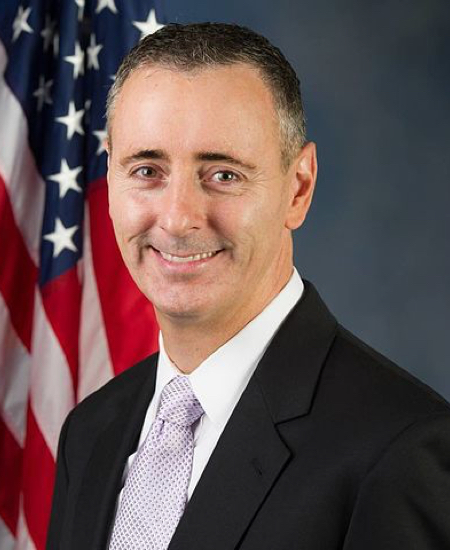
Rep. Brian K. Fitzpatrick
Sponsored bills
Preventing Future Pandemics Act of 2021 This bill establishes measures to address global public health risks posed by wildlife markets, which are commercial markets that sell or slaughter wildlife for human consumption as food or medicine in communities where alternative nutritional or protein sources are available. Specifically, the bill prohibits importing, exporting, purchasing, or selling live wild animals in the United States for human consumption as food or medicine. The Department of the Interior must hire, train, and deploy at least 50 new U.S. Fish and Wildlife Service law enforcement attachés around the world, and the U.S. Agency for International Development must increase specified activities to address the threats and causes of zoonotic (animal-to-human transmission) disease outbreaks. Additionally, the United States must work with other United Nations member states to urge a global ban on commercial wildlife markets and enforcement of laws to end wildlife trafficking. Further, the President may impose sanctions against a foreign country or foreign nationals that the Department of State has determined are taking certain actions that enable or facilitate commercial wildlife markets. Among other reports required by the bill, the National Academies of Sciences, Engineering, and Medicine must conduct a study and submit a report that includes an evaluation of (1) the impact that consumption of terrestrial wildlife as food or medicine has on the transmission of novel viral and other pathogens, (2) the role of consuming terrestrial wildlife as food or medicine in the transmission of microbes from animals to humans, and (3) the conditions at live wildlife markets that lead to this transmission.

Research Investment to Spark the Economy Act of 2021 or the RISE Act of 2021 This bill authorizes the Departments of Agriculture, Commerce, Defense, Education, Energy, the Interior, Health and Human Services, and Transportation, National Aeronautics and Space Administration (NASA), National Science Foundation, and Environmental Protection Agency to provide support for research regarding COVID-19 (i.e., coronavirus disease 2019) or research disrupted by the COVID-19 pandemic. Support may be used to provide supplemental funding to extend the duration of a grant to a research institution, national laboratory, or individual that was awarded prior to the enactment of this bill, or to expand the purposes of such a grant as specified; issue awards to research the effects of the current pandemic and potential future pandemics; and provide flexibility on awards to account for facility closures or other limitations during the COVID-19 public health emergency. Agencies must provide the support as rapidly as possible. Provided funds shall remain available through FY2021.
Clean Energy and Sustainability Accelerator Act This bill establishes and capitalizes a Clean Energy and Sustainability Accelerator. The independent, nonprofit accelerator must invest in clean energy technologies and infrastructure to reduce greenhouse gas emissions. The accelerator must make capital available to state, territorial, or local green banks. The banks must be public or nonprofit specialized finance entities that use finance tools to mitigate climate change. The accelerator may also provide technical assistance and funding to states and other political subdivisions that do not have green banks to establish such banks. When investing in projects that mitigate greenhouse gas emissions, the accelerator must prioritize investments that serve climate-impacted communities (e.g., communities of color or low-income communities). In addition, the accelerator must explore the establishment of a program to provide low-interest and zero-interest loans, up to 30 years in length, to any school, metropolitan planning organization, or nonprofit organization seeking financing for the acquisition of zero-emissions vehicle fleets or associated infrastructure. Finally, the accelerator must explore the establishment of an accelerated clean energy transition program to (1) expedite the transition within the power sector to zero-emissions power generation facilities or assets, and (2) invest in local economic development in communities affected by this transition away from carbon-intensive facilities or assets.
Revitalizing Economies, Housing, And Businesses Act of 2021 or the REHAB Act of 2021 This bill modifies provisions relating to the rehabilitation tax credit. Specifically, the bill allows an increased 15% credit for non-historic buildings placed in service 50 years prior to the current calendar year. It also allows the credit for buildings within a half-mile of public transportation facilities, for residential lodging purposes, and for expenses related to building expansion on the same block as a qualified rehabilitation building. The bill allows a 25% credit for rent-restricted housing units and for expenses related to public infrastructure projects required by state or local governments as a condition of project completion.
Fund for Innovation and Success in Higher Education Act or the FINISH Act This bill establishes and revises programs to increase access to higher education for high-need students, increase their graduation rates, improve the efficiency of postsecondary education, and evaluate higher education programs. Specifically, the bill authorizes the Department of Education to award grants to institutions of higher education (IHEs) and other entities to develop and implement evidence-based innovations, including pay-for-success initiatives, in order to improve postsecondary access and increase graduation rates of high-need students; approve up to five pay-for-success pilot initiatives each fiscal year to allow IHEs and private entities to use grants for improvement of student outcomes; and independently evaluate the effectiveness and efficiency of all higher education grant programs. The bill also encourages IHEs to make all forms of postsecondary instructional content, including open educational resources (e.g., textbooks), widely available. Open educational resources either reside in the public domain or have been released under a copyright license that permits their free use, reuse, modification, and sharing with others.
Alzheimer's Caregiver Support Act This bill authorizes grants to expand training and support services for families and caregivers of individuals living with Alzheimer's disease or a related dementia. The Department of Health and Human Services may award these grants to community organizations and health care and social service providers.
Military Spouses Retirement Security Act This bill allows a small business employer a tax credit for each employee who is a military spouse and eligible to participate in the employer's defined contribution retirement plan.
Access to Credit for Small Businesses Impacted by the COVID-19 Crisis Act of 2021 This bill temporarily provides credit unions with an exception to limits on outstanding member business loans. Specifically, a loan does not count towards this limit if (1) it is used for recovery from the COVID-19 (i.e., coronavirus disease 2019) emergency, (2) it is made by an insured credit union that has received a specified soundness rating, (3) it is made during a specified time period, and (4) it does not threaten the safety and soundness of the insured credit union.
The COVID-19 Hospital and Health Provider Loan Conversion Act of 2021 This bill establishes and otherwise modifies requirements for the Medicare Accelerated and Advance Payment Program during the public health emergency relating to COVID-19 (i.e., coronavirus disease 2019). The program provides Medicare payments in advance to eligible providers experiencing claims or cash flow disruptions, such as during national emergencies; the program was specifically expanded in response to COVID-19 to encompass more types of providers, subject to certain recoupment and repayment provisions. The bill requires the Centers for Medicare & Medicaid Services to waive recoupment and repayment for providers who meet specified requirements. Among other criteria, providers must not have engaged in surprise billing practices with respect to COVID-19 patients. Providers must still repay any amounts not used for COVID-19 expenses; the bill caps the interest rate on such repayments at 2% upon a demonstration of hardship. The bill also requires private health insurers to treat out-of-network COVID-19 services as in-network for purposes of payment and cost-sharing.