

Office of Manufacturing and Industrial Innovation Policy Act of 2021 This bill addresses the manufacturing capacity of the United States. The bill establishes the Office of Manufacturing and Industrial Innovation Policy, led by the Chief Manufacturing Officer, to serve as a source of manufacturing and industrial innovation analysis and judgment for the President with respect to the major policies, plans, and programs of the federal government. The office must establish a national strategic plan for manufacturing and industrial innovation that identifies critical needs to the manufacturing sector, including emergency readiness and resilience. Additionally, the bill establishes the President's Advisory Committee on Manufacturing and Industrial Innovation to promote regular communication between the federal government and the U.S. manufacturing sector. The Government Accountability Office must report on the efforts of the office along with recommendations for improvements. The bill also establishes the Federal Strategy and Coordinating Council on Manufacturing and Industrial Innovation within the executive branch to be chaired by the President to coordinate manufacturing and industrial innovation policy. Further, the bill establishes the Manufacturing and Industrial Innovation Policy Institute to assemble information relating to significant manufacturing and industrial development and trends in research and applications. Finally, the bill establishes the National Medal of Manufacturing and Industrial Innovation to be awarded for outstanding contributions to knowledge in manufacturing and industrial innovation.
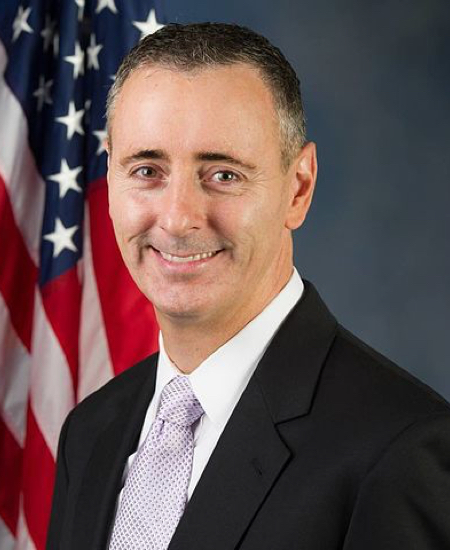
Rep. Brian K. Fitzpatrick
Sponsored bills
PPP Extension Act of 2021 This bill extends the Paycheck Protection Program, established to support small businesses in response to COVID-19 (i.e., coronavirus disease 2019), through June 30, 2021. Currently, the program is set to expire on March 31, 2021. For the final 30 days of the program (i.e., from June 1 until June 30), the Small Business Administration may only process applications submitted prior to June 1, and it may not accept any new loan applications. The bill excludes the budgetary effects of this bill from PAYGO scorecards under the Statutory Pay-As-You-Go Act of 2010 and from Senate PAYGO scorecards.
Investing in Our Communities Act This bill reinstates the exclusion from gross income for interest on certain bonds issued to advance the refunding of a prior bond issue. The exclusion was repealed for bonds issued after 2017.
Rural Behavioral Health Access Act of 2021 This bill allows for Medicare payment of outpatient critical access hospital (CAH) services consisting of telehealth behavioral therapy, including (1) audio-only services, if an individual does not have access to technology with both audio and visual capabilities; and (2) services provided to an individual who has not received in-person care at the CAH, if there is a plan of care that includes an in-person visit not later than one year after telehealth services are provided.
Tele-Mental Health Improvement Act This bill requires private health insurance plans that cover in-person mental health or substance use disorder services to cover such services on equal terms via telehealth (i.e., information technology used to aid treatment and diagnosis at a physical distance) during and shortly after the COVID-19 (i.e., coronavirus disease 2019) public health emergency. Specifically, this bill requires plans to, among other things, cover these services at the same rate as in-person services, exclude charges for facility fees, and provide information about how to access these services. Additionally, providers of these services may not charge facility fees to plan enrollees.
Fairness to Kids with Cancer Act of 2021 This bill requires the share of federal funds for cancer research that is allocated to pediatric cancer research to equal the percentage of the U.S. population that is under the age of 18.
Resident Physician Shortage Reduction Act of 2021 This bill increases the number of residency positions eligible for graduate medical education payments under Medicare for qualifying hospitals, including hospitals in rural areas and health professional shortage areas. Current law provides for an increase of up to 200 positions per fiscal year beginning in FY2023, with a total increase of 1,000 positions; each hospital may receive up to 25 additional positions. The bill provides for an additional increase of 2,000 positions per fiscal year from FY2023-FY2029; during this period, each hospital may receive up to 75 additional positions in total under the bill and current law. Additionally, one-third of the positions that are made available under the bill must be allocated to hospitals that are already operating above applicable resident limits. The bill also requires the Government Accountability Office to report on strategies to increase the diversity of the health professional workforce, including with respect to representation from rural, low-income, and minority communities.
Willie O'Ree Congressional Gold Medal Act This bill provides for the award of a Congressional Gold Medal to Willie O'Ree or, if unavailable, to a member of his family, in recognition of his contributions and commitment to hockey, inclusion, and recreational opportunity.
Colonel Young Oak Kim Congressional Gold Medal Act This bill directs the Speaker of the House of Representatives and the President pro tempore of the Senate to arrange for the posthumous award of a Congressional Gold Medal in commemoration of Colonel Young Oak Kim, in recognition of his achievements and contributions to heroism, leadership, and humanitarianism.
Military Retiree Survivor Comfort Act This bill addresses the overpayment of retired or retainer pay to a joint account (bearing the name of the decedent and the decedent's designated beneficiary) during the month of the death of a retired member of the armed forces. Specifically, the bill authorizes the Department of Defense (DOD) to forgive or offset the overpayment if the decedent was enrolled in the Survivor Benefit Plan (SBP). In the case of an offset, each of the first 12 SBP annuity payments after the death of the retired service member must be reduced by one-twelfth of the overpayment. If the decedent was not enrolled in the SBP, DOD is authorized to forgive the overpayment.