Chiropractic Medicare Coverage Modernization Act of 2021 This bill expands Medicare coverage of chiropractic services to include all services provided by chiropractors, rather than only subluxation corrections through manual manipulation of the spine.
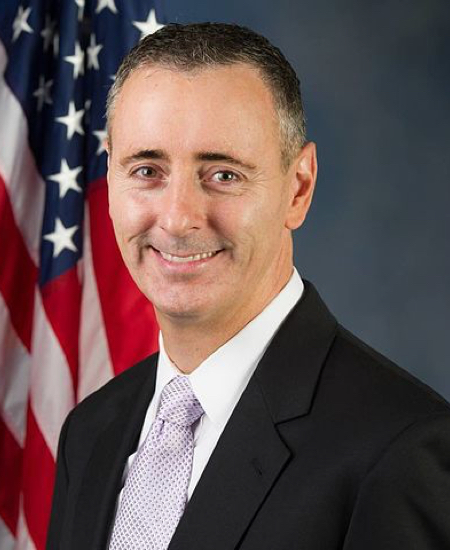
Rep. Brian K. Fitzpatrick
Sponsored bills
Driving for Opportunity Act of 202 1 This bill authorizes the Department of Justice to make grants to states that do not suspend, revoke, or refuse to renew a driver's license of an individual based on such individual's failure to pay a civil or criminal fine or fee. Grants shall be awarded to (1) cover the costs incurred by a state to reinstate driver's licenses previously suspended for unpaid fines and fees; (2) maximize the number of individuals with suspended driver's licenses eligible to have driving privileges reinstated or regained; (3) provide assistance to individuals living in areas where public transportation options are limited; and (4) ease the burden on states where the state or local law that permitted the suspension or revocation of, or refusal to renew, driver's licenses or the registration of a motor vehicle based on the failure to pay civil or criminal fines or fees was in effect during the three year period ending on the date on which a state applies for or receives a grant under this bill. The Government Accountability Office must study the implementation of the grant program authorized by this bill, including the known effects of repealing state laws that have permitted the suspension, revocation, or refusal of a driver's license or motor vehicle registration based on the failure to pay civil or criminal fines or fees.
This resolution supports the goals and ideals of National Public Safety Telecommunicators Week, honors and recognizes the contributions of public safety telecommunications professionals, and encourages the people of the United States to remember the value of these contributions.
This resolution condemns the actions taken by the governments of China and Hong Kong to put in place national security legislation that violates the freedoms and rights guaranteed to the people of Hong Kong. (Hong Kong is a part of China but, by agreement, has operated a legal and economic system largely separate from China's.)
Microloan Improvement Act of 2021 This bill revises the microloan program through which the Small Business Administration (SBA) provides, through designated intermediaries, certain financial assistance to small businesses. Specifically, the bill authorizes an intermediary to offer a line of credit to a small business, and it increases the average amount for loans from an intermediary to participating small businesses that makes the intermediary eligible for a reduced interest rate on SBA loans. The bill also places limits on the repayment term for a microloan, and it prohibits the SBA from imposing any additional limitation on the term for repayment of a microloan. Further, the SBA must (1) reserve 15% of new loan funds that are made available for disbursement as microloans to designated underutilized states and make the remaining 85% available for any state, (2) establish a process for an intermediary to provide the major credit reporting agencies with information about a borrower that is relevant to credit reporting, and (3) include information regarding equitable distribution of loan funds in its annual report.

504 Modernization and Small Manufacturer Enhancement Act of 2021 This bill modifies the Small Business Administration (SBA) 504 Loan Program, which provides a small business with SBA financing—through a certified development company (CDC) intermediary—for expansion or modernization. Specifically, the bill adds policy goals, at least one of which a CDC must demonstrate to be eligible for assistance. These include (1) enhancing the ability of a small business to reduce costs by using energy efficient products and generating renewable energy, and (2) aiding the revitalization of any area for which a disaster has been declared or determined. The bill also authorizes a CDC to take specified actions to facilitate the closing of a 504 loan, such as correcting borrower or lender information on loan documents or reallocating up to 10% of the cost of a project. For small manufacturers, the bill (1) increases the maximum loan amount from $5.5 million to $6.5 million, (2) reduces the amount that they must contribute to project costs, (3) increases job retention requirements, and (4) revises collateral requirements and debt refinancing considerations. Further, each SBA district office must partner with a resource partner to provide certain training for small manufacturers.
Workplace Violence Prevention for Health Care and Social Service Workers Act This bill requires the Department of Labor to address workplace violence in health care, social service, and other sectors. Specifically, Labor must issue an interim occupational safety and health standard that requires certain employers to take actions to protect workers and other personnel from workplace violence. The standard applies to employers in the health care sector, in the social service sector, and in sectors that conduct activities similar to those in the health care and social service sectors. In addition, Labor must promulgate a final standard within a specified time line.
Protecting Seniors from Emergency Scams Act This bill requires the Federal Trade Commission to report on, and increase awareness regarding, scams targeting older adults. Specifically, the commission must report on the number and type of scams that target older adults and provide policy recommendations to prevent such scams; revise the commission's web portal with current information about such scams, including contact information for law enforcement and adult protective services agencies; and coordinate with media outlets and law enforcement to disseminate such information.
Colorectal Cancer Payment Fairness Act This bill eliminates Medicare coinsurance requirements with respect to colorectal cancer screening tests, regardless of the code billed for a resulting diagnosis or procedure, beginning in 2023 (rather than 2030).
FDA Modernization Act of 2021 This bill allows an applicant for market approval for a new drug to use methods other than animal testing to establish the drug's safety and effectiveness. Under this bill, these alternative methods may include cell-based assays, organ chips and microphysiological systems, sophisticated computer modeling, and other human biology-based test methods.