

Fairness in Orphan Drug Exclusivity Act This bill limits which orphan drugs may be granted a market exclusivity period by the Food and Drug Administration (FDA). (Generally, an orphan drug is one that is not economically viable because of the rarity of the disease that it treats. The sponsor of an FDA-designated orphan drug may be granted various incentives, such as a seven-year period in which the FDA may not grant market approval to a different sponsor for the same drug to treat the same disease.) Under this bill, if a drug is designated as an orphan drug on the basis that there is no reasonable expectation that the sponsor will recover the costs of developing and distributing the drug from U.S. sales, the drug shall be granted the seven-year exclusivity period only if the sponsor demonstrates that there is no reasonable expectation that it will recover such costs specifically within its first 12 years of U.S. sales of the drug. This requirement shall also apply retroactively to an orphan drug that was granted such an exclusivity period before this bill's enactment. When deciding whether an orphan drug meets this requirement, the FDA shall consider the sales of all drugs from the sponsor that are covered by the same orphan drug designation.
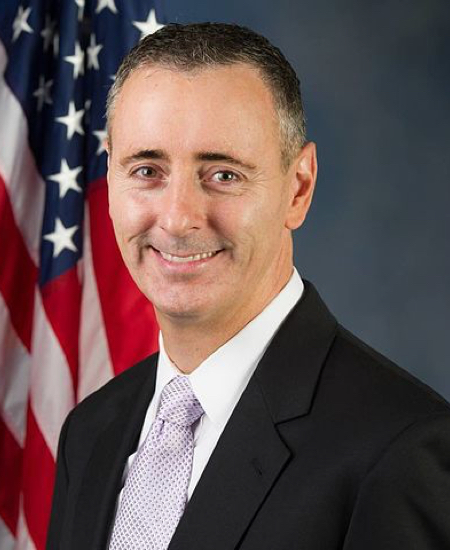
Rep. Brian K. Fitzpatrick
Sponsored bills
This resolution reaffirms the importance to U.S. national interests of combating corruption, strengthening democratic institutions, and supporting judicial independence in El Salvador. Further, it urges El Salvador to respect its democratic institutions, including by strengthening government transparency, and to uphold human rights.
This resolution states that the United Nations Security Council should immediately impose an arms embargo against the military of Burma (Myanmar) and hold it accountable for its ongoing violations of human rights.
Birth Access Benefiting Improved Essential Facility Services Act or the BABIES Act This bill requires the Centers for Medicare & Medicaid Services (CMS) to establish a Medicaid demonstration program to improve freestanding birth center services for women with low-risk pregnancies. Among other things, the CMS must (1) publish criteria for freestanding birth centers to participate in the program, including specified accreditation, licensure, and service requirements; (2) publish guidance for states to establish prospective payment systems under Medicaid for program participants; and (3) award planning grants for states to develop program proposals. The CMS may choose up to six states to participate in the program.
Helping American Victims Afflicted by Neurological Attacks Act of 2021 or the HAVANA Act of 2021 This bill specifically authorizes the Central Intelligence Agency, the Department of State, and other agencies to provide payments to agency personnel who incur brain injuries from hostilities while on assignment. Specifically, the bill allows agency personnel and their families to receive payments for brain injuries that are incurred (1) during a period of assignment to a foreign duty station; (2) in connection with war, insurgency, hostile acts, terrorist activity, or other agency-designated incidents; and (3) not as the result of willful misconduct. The bill's authority applies to injuries incurred before, on, or after the date of the bill's enactment. Agencies must submit classified reports on the bill's implementation, including the number of payments made and the amount of each payment. Since 2016, some intelligence, diplomatic, and other governmental personnel have reported experiencing unusual cognitive and neurological impairments while on assignment (particularly abroad), the source of which is currently under investigation. Symptoms were first reported by personnel stationed in Cuba and have since been collectively referred to as Havana Syndrome .
Youth Workforce Readiness Act of 2021 This bill requires the Department of Labor to award grants to certain national youth-serving organizations for comprehensive workforce readiness programs provided to youth that take place before or after school, during summer vacation or holiday, or on the weekend (i.e., out-of-school-time programs). Such grants must be used to develop and implement youth workforce readiness programs, including for activities such as on-the-job and leadership opportunities, internships, and other supportive services. The bill also requires local workforce development boards to establish youth councils as subgroups of the boards.
This bill requires the Department of Energy to establish a pilot program to award grants to nonprofit organizations for energy-efficiency materials to install in nonprofit buildings.
Combating Sexual Harassment in Science Act This bill addresses sexual harassment and gender harassment in the science, technology, engineering, and mathematics (STEM) fields by supporting research regarding such harassment and efforts to prevent and respond to such harassment. (Sec. 4) This bill directs the National Science Foundation (NSF) to award grants to institutions of higher education or nonprofit organizations (or their consortia) to expand research into sexual harassment and gender harassment in the STEM workforce, including students and trainees; and examine interventions for reducing the incidence and negative consequences of such harassment. (Sec. 5) The NSF must convene a working group composed of representatives of federal statistical agencies to develop questions on sexual harassment and gender harassment in STEM departments in order to gather national data on the prevalence, nature, and implications of such harassment in institutions of higher education. (Sec. 6) The NSF shall enter into agreements with the National Academies of Sciences, Engineering, and Medicine to (1) update a responsible conduct guide issued by the National Academies to include, among other things, updated professional standards of conduct in research and evidence-based practices for fostering a climate that is intolerant of sexual harassment and gender harassment; and (2) study the influence of such harassment in institutions of higher education on the career advancement of individuals in the STEM workforce. (Sec. 7) The National Science and Technology Council shall establish an interagency working group to coordinate the federal science agencies' efforts to reduce the prevalence of sexual harassment and gender harassment involving grant personnel. The Office of Science and Technology Policy must develop a uniform set of policy guidelines for such agencies to prevent and respond to reports of sexual harassment and gender harassment.
GI Bill National Emergency Extended Deadline Act This bill amends various provisions related to educational assistance benefits provided by the Department of Veterans Affairs (VA). First, the bill extends the time limitation for using educational assistance under the Montgomery GI Bill and the Post-9/11 GI Bill, and for eligibility under the Veteran Readiness and Employment program, when educational institutions are temporarily or permanently closed due to an emergency situation or another reason that prevents an individual from participating. Next, the bill requires the VA to disapprove of courses of education provided by public institutions of higher learning that charge higher tuition and fees than in-state tuition for individuals who are entitled to educational assistance under the Survivors' and Dependents' Educational Assistance program. The bill also makes adjustments to the time limitation for using educational assistance under this program. The VA must implement an information technology service using one or more commercial software systems to process claims for VA educational assistance benefits. Finally, the bill requires the Veterans' Employment and Training Service within the Department of Labor to implement a pilot program under which states may use grants or contracts to carry out a short-term fellowship program to provide veterans with opportunities for long-term employment.
MSI STEM Achievement Act (Sec. 4) This bill supports efforts to increase science, technology, engineering, and mathematics (STEM) education at minority-serving institutions of higher education (IHEs), including Historically Black Colleges and Universities and Tribal Colleges or Universities. The bill requires the National Science Foundation to award grants for purposes including building the capacity of such IHEs to increase the number and success of their students in the STEM workforce. (Sec. 5) The Office of Science and Technology Policy (OSTP) shall develop a uniform set of policy guidelines for federal science agencies to carry out a program of outreach activities to increase clarity, transparency, and accountability for federal science agency investments in STEM education and research activities at minority-serving IHEs. The OSTP shall submit to Congress a report containing a strategic plan for each federal science agency to increase the capacity of minority-serving IHEs to compete for grants, contracts, or cooperative agreements and to encourage such IHEs to participate in federal programs.