

Maddy summaryThe Mental Health Access and Provider Support Act of 2026 increases Medicare payments to psychologists by 10 percentage points, raising the reimbursement rate from 75 percent to 85 percent of the standard fee schedule. This change directly affects Medicare beneficiaries who receive mental health services from psychologists and the psychologists themselves who provide those services. The bill applies to services furnished on or after January 1, 2027, and modifies existing payment provisions in the Social Security Act without altering other aspects of mental health coverage.
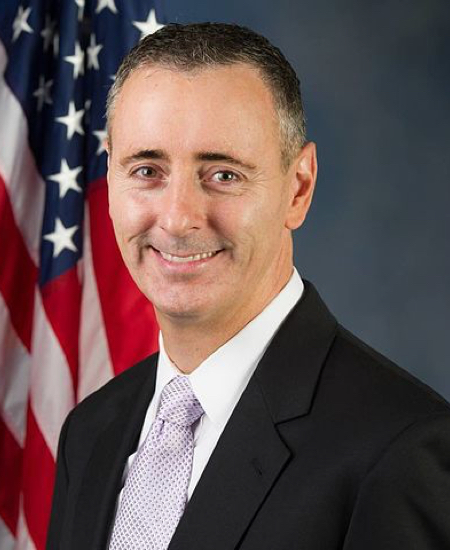
Rep. Brian K. Fitzpatrick
Sponsored bills
Maddy summaryThe PREDICT Act prohibits federal government officials, including Members of Congress, their spouses and dependents, high-ranking executive branch employees, and political appointees from trading on prediction markets tied to political events. This restriction applies to any agreement or transaction where payment depends on whether a specific political event occurs, does not occur, or happens to a certain degree. If a covered individual violates this rule, they must pay a 10% fee and forfeit any profits from the transaction, with penalties paid from personal funds rather than government salaries or allowances. The Office of Government Ethics will issue guidance on undefined terms and publish details of any fines on a public website.
Maddy summaryThis bill requires owners and operators of gas distribution pipelines to evaluate their systems for the presence of Aldyl-A polyethylene plastic within three years of enactment. The law mandates that pipeline companies report the total mileage of any identified Aldyl-A piping to the Secretary but does not require digging or excavation to find it. Additionally, the bill updates federal safety regulations to include historic plastics with known safety issues alongside cast iron and bare steel pipelines in risk assessment and integrity management programs. The legislation applies to all gas distribution pipeline facilities in the United States and aims to improve safety oversight without mandating immediate physical inspection or replacement.
Maddy summaryThe Military Financial Literacy Act of 2026 expands personalized financial and housing counseling services for members of the Armed Forces. It requires the Department of Defense to establish a one-on-one counseling program within one year that covers credit management, budgeting, anti-predatory lending, rental planning, VA home loans, and legal protections under the Servicemembers Civil Relief Act. The program must partner with HUD-approved, tax-exempt Veteran Service Organizations that have expertise in financial literacy and housing stability. The Secretary of Defense must submit a report to Congress within two years detailing the number of service members who received counseling, completion rates, and indicators of financial stress or housing instability among participants.
Maddy summaryThis bill establishes a federal grant program to help states fund advanced wastewater treatment projects, with $1 billion authorized for fiscal years 2026 through 2030. The Environmental Protection Agency will distribute funds based on a formula, requiring states to contribute at least 50 percent of project costs unless the project serves disadvantaged communities, which are exempt from this requirement. At least 49 percent of the funding must go to projects serving disadvantaged communities, rural or tribal facilities, or regional water providers that benefit multiple disadvantaged areas. The legislation also requires the EPA to conduct a study with the National Academies of Sciences, Engineering, and Medicine to evaluate how well advanced wastewater treatment technologies remove emerging contaminants like nanomaterials and certain chemicals.
Maddy summaryThe ACE Agriculture Act reauthorizes and expands the Agricultural Research, Extension, and Teaching Policy Act's AGARDA program, directly affecting USDA agricultural research initiatives and the scientists managing them. It increases annual funding from $50 million to $100 million for fiscal years 2027-2032 and broadens research priorities to include water conservation, greenhouse gas reduction, pest resilience, and export competitiveness. The bill removes "pilot" references throughout, clarifies reporting structures (requiring the AGARDA Director to report to the Chief Scientist), and allows flexible use of existing USDA personnel authorities. This creates a more permanent, well-funded framework for advancing agricultural technology research within the Department of Agriculture.
Maddy summaryThis resolution formally recognizes Mae Krier on her 100th birthday for her contributions as a World War II aircraft worker and advocate for women's history. The bill highlights her work building over 6,000 aircraft at Boeing during the war and her efforts to preserve the legacy of Rosie the Riveters. It notes that she has already received the Congressional Gold Medal and expresses appreciation for her service and advocacy.
Bill to Outlaw Wounding of Official Working Animals Act or the BOWOW Act This bill establishes that a non-U.S. national ( alien under federal law) convicted of, or who admits to having committed, an offense related to harming animals used in law enforcement is inadmissible and deportable.
Maddy summaryThe Fiscal Contingency Preparedness Act (HR 4642) requires the Treasury Secretary and OMB Director to annually examine how the federal government would respond to major crises like recessions, pandemics, natural disasters, or cyberattacks, including their short- and long-term fiscal impacts. It mandates these assessments be included in an existing annual report and specifies key crisis types to evaluate. The Government Accountability Office (GAO) must then review the methodology and results of these assessments within one year of the first report. The bill directly affects federal agencies responsible for fiscal planning (Treasury and OMB) but does not create new spending or alter existing programs. It focuses solely on improving preparedness through structured risk analysis.
Governing Unaccredited Representatives Defrauding VA Benefits Act or the GUARD VA Benefits Act This bill imposes fines on individuals for soliciting, contracting for, charging, or receiving any unauthorized fee or compensation with respect to the preparation, presentation, or prosecution of any claim for Department of Veterans Affairs benefits. The attempted commission of such offenses is also punishable by fine.