

Maddy summaryThe Ensuring Excellence in Mental Health Act expands federal support for certified community behavioral health clinics (CCBHCs) by modifying how these facilities are funded under Medicaid and Medicare. Under the new rules, states and the federal government will use a prospective payment system to pay CCBHCs based on the cost of providing care rather than per-visit fees, while also extending coverage to additional services like primary health care. The legislation establishes a new grant program to help clinics operate and expand, creates a national data system to track clinic performance, and introduces an accreditation requirement to ensure quality standards are met. Additionally, the bill extends liability protections to clinicians working in these clinics and removes certain financial barriers for Medicare patients seeking care at CCBHCs.
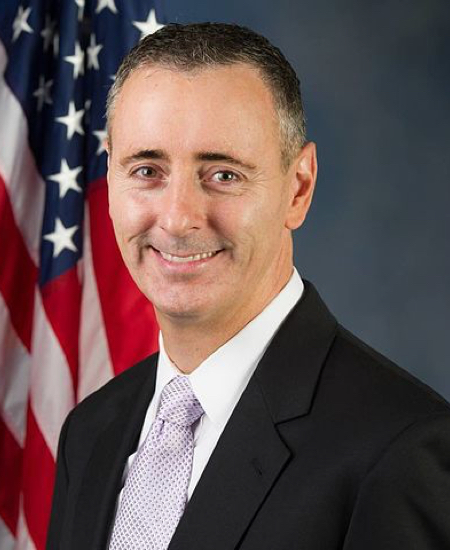
Rep. Brian K. Fitzpatrick
Sponsored bills
Maddy summaryThis bill, known as the Protecting Consumers from Deceptive AI Act, aims to combat the spread of misleading deepfakes by requiring clear labeling for content created or significantly altered by artificial intelligence. It mandates that developers of AI applications embed machine-readable watermarks and metadata into audio and visual files to identify their AI origins, while also requiring online platforms to display this information to users. To support these efforts, the legislation directs the National Institute of Standards and Technology to form task forces that will develop technical standards for content verification and establish guidelines for privacy and interoperability. Enforcement of these labeling requirements will be handled by the Federal Trade Commission, which can penalize violations as unfair or deceptive practices and may approve self-regulatory guidelines to help companies achieve compliance.
Maddy summaryThis bill proposes to reverse several tax incentives for energy efficiency and clean energy that were previously extended by a 2024 law. It would end the tax deduction for energy-efficient commercial buildings, shorten the expiration date for the energy-efficient home credit, and delay the deadline for constructing clean hydrogen facilities. Additionally, the legislation would remove limits on the amount of credits available for clean electricity production and change how the phase-out of these credits is triggered. These changes directly affect property owners, builders, and businesses that currently rely on these specific tax breaks to fund green projects.
Maddy summaryThe PRIMATE Act prohibits the importation of live nonhuman primates into the United States, with specific exceptions for accredited zoos and aquariums. Under this law, importers must certify that these animals will not be used for experiments, testing, or breeding for such purposes. U.S. Customs and Border Protection will deny entry to shipments containing these animals, and violators face civil penalties of up to $50,000 per violation or forfeiture of the animals. The Department of the Treasury is required to issue detailed regulations to enforce these rules within one year of the bill's enactment.
Maddy summaryThis bill establishes a federal system to protect and restore wildlife corridors on public lands, aiming to help native species move safely across fragmented habitats affected by development and climate change. It creates a new mapping and science program to identify critical wildlife pathways, designates specific federal lands as National Wildlife Corridors, and sets up a coordinating committee of federal agencies and stakeholders to manage these areas. The legislation also authorizes grants for private landowners, states, tribes, and local governments to implement conservation projects that improve habitat connectivity on non-federal lands.
Maddy summaryThe Countering Russia's War on Faith Act requires the U.S. government to produce annual reports detailing how Russian forces in occupied Ukrainian territories are persecuting religious groups such as Christians, Jews, and Muslims. These reports must document specific actions like the destruction of religious sites, the detention of clergy, and efforts to force local faith communities to align with the Russian Orthodox Church. If the President certifies that specific individuals or entities are responsible for these violations, the law mandates imposing sanctions on them under existing U.S. regulations. The bill focuses on gathering factual information and enforcing penalties against those directly involved in religious persecution, without speculating on the broader geopolitical outcomes of these actions.
Maddy summaryThis bill establishes a framework to protect American-owned closed-source AI models from unauthorized extraction by foreign entities, particularly those from China and Russia. It requires the Secretary of State to conduct assessments identifying which foreign entities are conducting model extraction attacks or facilitating them through fraudulent account networks, then publish a public list of these actors for up to five years. The legislation authorizes the President to impose economic sanctions on identified entities and their affiliates, while also creating mechanisms for industry coordination and sharing information about threats. Importantly, the bill distinguishes between legitimate AI research conducted under contractual terms and unauthorized extraction attempts that bypass access controls or violate usage agreements.
Maddy summaryHR 5543, the Baltic Security Assessment Act of 2025, requires the U.S. State and Defense Departments to submit a report within 180 days of enactment. The report will assess emerging military, cyber, hybrid, and political threats to Estonia, Latvia, and Lithuania, including the roles of Russia, Belarus, China, Iran, and other actors. It will also evaluate U.S. and NATO military presence in the region, opportunities for defense cooperation, and recommendations to strengthen deterrence, cybersecurity, and democratic resilience in the Baltic countries. This bill directly affects U.S. foreign policy and defense planning regarding the Baltics, but does not create new programs or funding.
Maddy summaryThis bill requires the Bureau of Industry and Security (BIS) to modernize its outdated information technology systems by 2030, focusing on streamlining export license reviews and enhancing national security monitoring. Key provisions include replacing legacy systems with a unified platform for case management, adopting advanced data analytics tools to track military-related trade patterns, and improving data sharing with industry and government partners. It directly affects BIS operations, industry stakeholders using export systems, and federal agencies collaborating on security enforcement. The bill authorizes $25 million annually (2026-2029) for this modernization, aiming to reduce manual processing, strengthen cybersecurity, and improve efficiency in reviewing entities on the Entity List.
Maddy summaryHR 2319, the Women and Lung Cancer Research and Preventive Services Act of 2025, requires the Secretary of Health and Human Services (HHS) to lead an interagency review with Defense and Veterans Affairs. This review will assess current research on lung cancer in women and underserved populations, identify gaps in knowledge, and evaluate opportunities to improve access to preventive screenings and develop public awareness campaigns. The bill mandates a comprehensive report to Congress within two years, detailing findings on collaborative research, environmental/genomic factors, imaging technology, national screening strategies, and education efforts. The review directly involves federal agencies but will ultimately aim to inform future policy changes affecting women and underserved groups eligible for lung cancer screening.