

Maddy summaryHR 6576, the Full-Service Community School Expansion Act of 2023, authorizes $500 million to $1 billion annually for fiscal years 2024-2028 to expand full-service community schools. The bill directly affects public elementary and secondary schools with at least 40% of students eligible for free or reduced-price lunch or identified for improvement under federal education law. Key mechanisms include funding planning grants to develop community-wide leadership teams, implementation grants for schools to provide integrated student supports (health, mental health, housing services), expanded learning opportunities (after-school programs, career training), and family engagement activities. The bill requires schools to establish collaborative leadership structures, maintain public transparency, and ensure services complement rather than replace existing programs. This legislation aims to create school environments that address students' academic, social, emotional, and health needs through coordinated community partnerships.
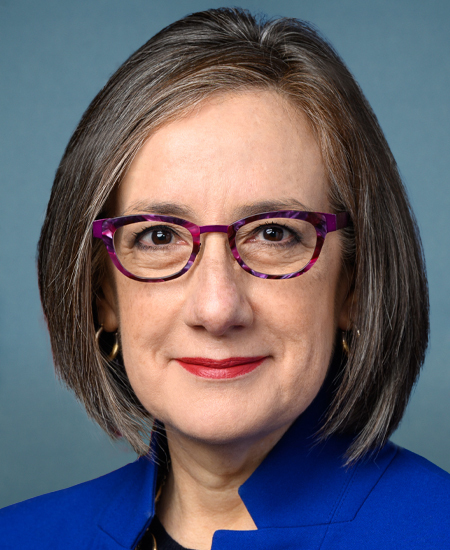
Rep. Andrea Salinas
Sponsored bills
Maddy summaryHRES 793 is a resolution passed by the U.S. House of Representatives calling on Hamas to immediately release all 199 hostages taken during Hamas' October 7, 2023 attack on Israel. The resolution condemns Hamas for the attack, the taking of hostages, and threats against hostages, while stating that holding hostages violates international humanitarian law under the Geneva Conventions. It demands the immediate release of all hostages and expresses sympathy for victims and their families. As a symbolic resolution, it does not create legal obligations but formally expresses the House's position.
Maddy summaryThis bill establishes a two-year pilot program within the Department of Veterans Affairs (VA) to improve data collection and analysis of suicides and suicide attempts by veterans occurring on VA property (e.g., at medical centers or facilities). It creates a cross-departmental working group - including staff from mental health, health care, benefits, and cemetery offices - to conduct root cause analyses, interview families, and standardize data collection through updated reports and a unified management system. The program requires annual briefings to Congress on findings and mandates annual VA reports starting in 2025 to track trends and recommend prevention strategies. Additionally, it directs the Comptroller General to assess the VA’s suicide prevention efforts, including staffing, policies, and organizational structure.
Maddy summaryThis bill creates a pathway to conditional permanent residency for certain undocumented immigrants working in critical sectors. It directly affects individuals present in the U.S. without lawful status as of January 1, 2023 - including DACA recipients - who have worked at least 100 days in one of the designated "covered professions" (like healthcare, education, agriculture, food service, construction, or essential infrastructure work). To qualify, applicants must maintain continuous U.S. presence, work 100 days annually for two years, and meet specific criminal inadmissibility standards. If eligible, their conditional status automatically converts to full permanent residency after two years, without being subject to annual visa quotas.
Maddy summaryHR 6451, the Mental Health Justice Act of 2023, provides $250 million in federal grants to states, tribes, and localities to hire mental health professionals as first responders for specific emergencies. It directs these professionals to replace police in situations involving mental health crises, substance use, or intellectual/developmental disabilities - such as when a 911 caller describes a mental health emergency or a first responder identifies someone needing mental health support. The bill requires grantees to train responders in de-escalation techniques, link individuals to community-based services (not incarceration), and report on outcomes like reduced arrests or use of force. It also mandates data collection on demographics and prevents funneling people into institutional settings, with annual reports to Congress on program effectiveness.
Maddy summaryHR 6415, the CARE for First Responders Act, creates targeted mental health support for first responders, including law enforcement, firefighters, EMTs, and 911 operators (previously excluded from many services). It establishes a 24/7 confidential mental health hotline integrated with the 988 Suicide Lifeline, funds mobile crisis teams for disaster response, and mandates specialized training to reduce stigma and improve access to culturally competent care. The bill requires the development of peer support programs and education for responders and their families on mental health coping strategies. It authorizes $5 million annually (2024-2028) for grants to states and organizations to implement these services, specifically addressing the higher rates of mental health challenges and suicide among first responders compared to the general population.
Maddy summaryHR 6433, the PARA-EMT Act of 2023, creates a federal grant program to address critical shortages in emergency medical services (EMS) personnel. It authorizes $50 million annually (2024-2028) for grants to EMS agencies to fund recruitment, training, and retention programs - including initiatives for veterans, rural communities, and youth - while requiring 20% of grants to support rural agencies. The bill also establishes a separate $20 million annual grant program to help veterans with military EMS training meet civilian certification requirements and mandates a federal study on projected EMS workforce needs through 2032. These provisions directly affect EMS agencies, training programs, and veterans seeking civilian EMS careers.
Maddy summaryHR 3601, the Student Veteran Work Study Modernization Act, expands eligibility for a Veterans Affairs work-study allowance to veterans enrolled at least half-time in rehabilitation, education, or training programs - lowering the previous requirement from three-quarter-time. The bill establishes a five-year pilot program to test this change, requiring the VA to apply the same allowance rules to these veterans as to other participants, except for the enrollment threshold. It also mandates annual reports to Congress tracking participation numbers, four-year degree completion rates, and full-time VA employment outcomes for participants. The policy directly affects veterans seeking education benefits while balancing academic and personal responsibilities.
Maddy summaryThis bill amends federal transit grant rules to encourage housing near transit by adding incentives for projects that support "pro-housing policies." It defines such policies as local actions removing regulatory barriers to housing construction, including reducing parking minimums, creating faster approval processes for multi-family housing, and eliminating height restrictions. Transit project applicants can earn an extra point in their grant rating if they submit evidence of these policies in areas near transit, with the Department of Transportation consulting the Housing Secretary to assess how the policies will increase housing supply. The bill directly affects state and local governments implementing these policies and transit project applicants seeking federal capital investment grants.
Maddy summaryThis bill creates specialized training programs at Civilian Conservation Centers (CCCs) operated by the Interior or Agriculture Departments, focusing on wildfire firefighting, forestry, and conservation skills. It directly affects underserved youth enrolled in CCC programs (covered students) and graduates who complete them (covered graduates), requiring agencies to set annual hiring goals for graduates in firefighting and related fields. Key mechanisms include direct hiring authority for covered graduates without standard civil service rules, signing bonuses for rural housing, and using covered students to renovate federal housing for firefighters. The bill also mandates a report assessing CCC capacity and needed improvements within one year.