

Maddy summaryThis bill, HR 3916 (My Body, My Data Act of 2025), requires businesses and other "regulated entities" to minimize collection and sharing of personal reproductive or sexual health data - such as pregnancy status, contraceptive use, or abortion-related information - and gives individuals specific rights. It mandates that entities provide individuals with easy access to their data, the ability to correct inaccuracies, and the right to request deletion of such information within 15 days. The law also requires clear privacy policies detailing data practices and prohibits retaliation against individuals who exercise these rights, such as charging higher prices or denying services. It applies broadly to most businesses (excluding HIPAA-covered healthcare providers) and is enforced by the FTC with private lawsuits allowed for violations.
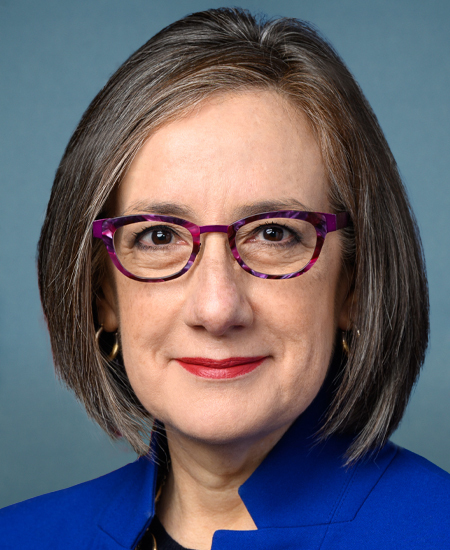
Rep. Andrea Salinas
Sponsored bills
Maddy summaryHR 3906, the Medical Research for Our Troops Act, restores funding levels for military medical research by increasing the Defense Health Agency's research budget from $40.395 billion to $41.576 billion in the 2025 appropriations act. It ensures Congressionally Directed Medical Research Programs funds are used consistently with the Consolidated Appropriations Act, 2024, requiring the Defense Secretary to support all previously identified research programs and maintain existing funding allocations. The bill directly affects military medical research initiatives and the Defense Health Agency's budget implementation. This is a procedural funding adjustment, not a new policy, maintaining continuity for ongoing research projects.
Maddy summaryThis bill requires private firearm transfers between individuals to go through a licensed dealer who must conduct a background check. It applies to most private sales but includes exceptions for transfers between family members (like parents and children), law enforcement, emergencies preventing harm, and temporary loans at shooting ranges or for hunting. Dealers must provide background check notices in both English and Spanish. The law aims to prevent prohibited individuals from obtaining firearms through private transactions while maintaining existing state authority on firearm laws.
Maddy summaryHR 3868, the Enhanced Background Checks Act of 2025, modifies federal firearm background check procedures to address delays. It requires federal firearms licensees to wait 10 business days after a background check query if the system doesn’t immediately flag a transfer, unless the buyer submits an electronic petition confirming they aren’t prohibited from owning firearms. The petition process includes a 10-day response deadline from the Attorney General, with licensees allowed to proceed if the system remains silent after 10 days. The bill also mandates detailed annual reports from the FBI on petition delays and GAO reports on implementation, focusing on how these changes affect firearm transfers to prohibited individuals.
Maddy summaryThe Elder Pride Protection Act of 2025 establishes a federal task force (the ELDER Task Force) within the Department of Justice to address elder abuse targeting LGBTQI+ individuals. The task force, created within 90 days of the bill’s passage, will study the rise in such abuse, develop national best practices for law enforcement, and create educational materials for prevention and response. It will coordinate efforts across local, state, and federal agencies and submit a report to Congress within one year. The bill directly affects older LGBTQI+ adults (aged 60+) facing abuse, which includes physical, sexual, emotional, or financial harm, but does not create new funding or penalties.
Farmers Feeding America Act of 2025 This bill reauthorizes The Emergency Food Assistance Program (TEFAP), increases funding for the program, and provides additional delivery options for geographically isolated states (i.e., Hawaii, Alaska, Puerto Rico, the Northern Mariana Islands, the U.S. Virgin Islands, and Guam). TEFAP is a federal program that helps supplement the diets of people with low income by providing them with emergency food assistance at no cost. Through TEFAP, the Department of Agriculture (USDA) purchases a variety of commodities and makes those food products (e.g., canned, frozen, dried, and fresh fruits and vegetables, eggs, meat, dairy, and whole-grain and enriched grain products) available to state distributing agencies. The bill increases funding for purchasing commodities under the program. Further, the bill directs USDA to coordinate with geographically isolated states to (1) establish alternative delivery options for allocated commodities, and (2) allow for the states to order commodities through the USDA Department of Defense Fresh Fruit and Vegetable Program. USDA may also provide geographically isolated states the ability to directly purchase domestically grown food in lieu of receiving a portion of the commodities. Under this option, USDA may distribute as cash to the state up to 20% of the cash value of the commodities that are allocated to the state under TEFAP. Further, USDA may consider additional factors beyond lowest price in determining winning bids for contracts for fresh produce packages (including product variety and transportation distance).
Maddy summaryHR 3757, the Pride In Mental Health Act of 2025, provides $20 million annually (2026-2030) to fund grants for mental health services targeting LGBTQ+ youth, including nonbinary, intersex, and Two Spirit youth, and their families/caregivers. The bill mandates grantees to provide trauma-informed care, cultural competency training, school bullying prevention guidelines, and evidence-based practices while explicitly prohibiting the use of funds for conversion therapy or its promotion. It also requires the federal government to restore mental health reports on LGBTQ+ youth, conduct a national survey measuring mental health distress, and produce a report on mental health services for LGBTQ+ youth in foster care. The law directly affects these youth populations by expanding access to tailored mental health resources and data collection, with funding administered through the Substance Abuse and Mental Health Administration.
Maddy summaryHR 649, the Whole Milk for Healthy Kids Act of 2025, amends the National School Lunch Act to allow schools participating in the program to offer students both organic and non-organic whole milk, in addition to reduced-fat, low-fat, and fat-free options. Key provisions include clarifying that milk fat in whole milk should not count toward saturated fat limits for meal compliance, prohibiting schools from purchasing milk from Chinese state-owned enterprises, and ensuring schools cannot be barred from offering the full range of milk types listed. The bill directly affects public and private schools serving the National School Lunch Program by expanding their milk options for students. It focuses on concrete policy changes to dietary offerings and sourcing restrictions within the school nutrition program.
Maddy summaryHR 3707, the NSF and USDA Interagency Research Act, requires the U.S. Department of Agriculture (USDA) and the National Science Foundation (NSF) to coordinate research efforts through formal agreements. It directs them to jointly fund collaborative projects focused on agricultural challenges, food security, rural economic development, and emerging technologies like AI and precision agriculture. The bill establishes mechanisms for awarding grants to universities, community colleges, and nonprofits to create centers for agricultural research and workforce development, while mandating annual reports to Congress on coordination progress. This legislation directly affects USDA, NSF, and institutions seeking federal research funding in agricultural science.
Maddy summaryThis bill repeals key provisions of the Protection of Lawful Commerce in Arms Act (PLCAA), which previously shielded gun manufacturers and dealers from civil lawsuits. It allows gun trace data from the federal Firearms Trace System to be used as evidence in civil court cases involving gun violence. Victims of gun violence (or their families) who sue gun manufacturers, dealers, or distributors in state or federal court can now access and rely on this trace information. The bill directly changes the legal landscape by removing a major barrier to holding gun industry entities accountable in civil cases. It does not alter criminal proceedings or affect gun ownership rights.