

Maddy summaryThe Head Start for Our Future Act amends Section 441(c)(1) of the Higher Education Act of 1965 to replace "literacy training" with "child development and early learning (including Head Start programs and Early Head Start programs carried out under the Head Start Act), literacy training." This technical change formally integrates Head Start and Early Head Start programs into the federal definition of early learning initiatives under the Higher Education Act, while maintaining a separate reference to literacy training. The bill directly affects how federal grants for early childhood education are categorized and administered under the Higher Education Act. It does not alter funding levels, program requirements, or operations but updates administrative terminology to explicitly include Head Start services.
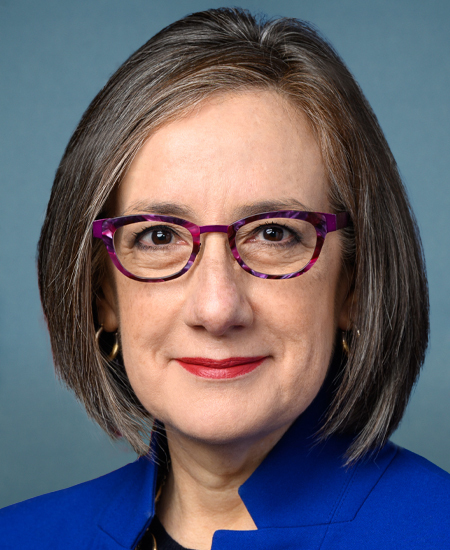
Rep. Andrea Salinas
Sponsored bills
Maddy summaryHR 4338, the Weather-Safe Energy Act of 2025, directs the Department of Energy to create and maintain a free online tool called the Weather-Safe Energy Platform. This platform will provide electricity utilities, grid operators, and regulators with high-resolution weather and hydrological data - showing how patterns change over time and location - to improve planning for extreme events like hurricanes or wildfires. The bill requires the tool to include historical data, projections, stakeholder input, and research findings on extreme weather impacts, with technical assistance training provided to users. The platform must be launched within two years of the bill's enactment, and the Department will report on its use and effectiveness to Congress every three years.
Maddy summaryThis bill prohibits federal agency personnel from using physical force, detaining, or interfering with Members of Congress while they conduct official oversight activities on federal property. It requires Members to identify themselves with valid congressional ID and confirms the law does not override standard security procedures or prevent action against immediate physical threats. The bill specifically protects oversight activities like investigations, reviews of federal programs, or site visits at government-owned or leased facilities (including detention centers), ensuring Congress can carry out its constitutional oversight role without physical obstruction.
Maddy summaryThis bill authorizes $15 million annually (2026-2030) for competitive grants to state agencies to build better data systems for SNAP employment and training programs. It requires states to create longitudinal databases linking SNAP data with education and workforce programs (like WIOA), while protecting participant privacy and ensuring funds supplement - not replace - existing state investments. States must use grants to improve program quality, reduce administrative burden, and enable better coordination across federal workforce initiatives. The bill also mandates annual reports to Congress and a GAO study on implementation effectiveness.
Maddy summaryHR 4295, the Wildfire Resilient Communities Act, allocates $30 billion for hazardous fuels reduction projects on federal lands near communities at high wildfire risk and in specific fire-prone areas. It directly affects at-risk communities and local governments by funding vegetation removal, prescribed burns, and thinning to reduce wildfire danger. The bill also adds $3 billion for community wildfire defense grants and reauthorizes forest restoration programs with updated requirements for landscape-scale projects. Key mechanisms include prioritizing work adjacent to high-risk communities, integrating wildfire management strategies, and creating a County Stewardship Fund to distribute 25% of forest contract receipts to local governments for community use. These provisions aim to reduce wildfire risk through proactive land management rather than reactive firefighting.
Maddy summaryThe Expanding Access to Mental Health Services in Schools Act of 2025 creates a federal grant program to help high-need schools hire and retain mental health professionals like counselors, psychologists, and social workers. It targets schools in the top 15% of need (based on student poverty or counts) that lack required staff ratios, such as one counselor per 250 students. Grants fund recruitment incentives (e.g., student loan repayment), retention programs, and evidence-based mental health services, with recipients required to contribute 25% of costs from non-federal funds. Schools must report annually on staff numbers, student-to-staff ratios, and retention rates to track progress toward improved mental health access.
Maddy summaryHRES 550 is a non-binding House resolution recognizing June 2025 as LGBTQIA+ Pride Month. It formally encourages all U.S. citizens to celebrate Pride Month to learn about LGBTQIA+ history, including the Stonewall Inn and Compton's Cafeteria uprisings. The resolution affirms that LGBTQIA+ rights are human rights and emphasizes the ongoing struggle for equality. It has no legal effect but serves as a symbolic statement of support for the LGBTQIA+ community and its history.
Maddy summaryHRES 543 is a symbolic House resolution (not a law) introduced by multiple representatives. It affirms the constitutional right to peaceful protest under the First Amendment and condemns violent acts by some individuals during demonstrations, such as vandalism and looting. The resolution specifically criticizes the President’s 2025 deployment of National Guard and Marines to Los Angeles without proper legal authority (violating 10 U.S.C. § 12406 and the Posse Comitatus Act) and without coordination with California’s governor. It also denounces inflammatory rhetoric that escalated tensions and supports law enforcement efforts to protect public safety during protests. The resolution has no binding effect but formally expresses congressional position on these issues.
Maddy summaryThe No Secret Police Act of 2025 requires U.S. Immigration and Customs Enforcement (ICE) and other Department of Homeland Security officers working on border security or immigration enforcement to visibly display their official badges or uniforms and provide identification during detentions or arrests. It prohibits officers from wearing face coverings that conceal their face during these interactions. The bill also mandates that the Department report to Congress about tactical gear policies and research technology to improve badge visibility in different conditions like weather or lighting. These changes aim to increase transparency in immigration enforcement encounters.
Maddy summaryThe CONNECT for Health Act of 2025 expands Medicare telehealth coverage by removing geographic restrictions that limited where patients could receive care, expanding the types of health care providers who can offer telehealth services, and eliminating the requirement for an in-person visit before receiving telemental health services. The bill includes specific provisions to support telehealth use for Native American health facilities, rural health clinics, and Federally Qualified Health Centers. It requires the Centers for Medicare & Medicaid Services to collect and publish data on telehealth usage and impacts, and to develop resources to improve accessibility for people with disabilities and limited English proficiency. Program integrity measures are added to monitor telehealth billing practices and prevent fraud while maintaining coverage for telehealth services during public health emergencies.