

Maddy summaryThis bill requires the Department of Homeland Security (DHS) to create a system tracking all detentions or removals of U.S. citizens and lawful permanent residents (LPRs) during immigration enforcement. DHS must report these cases quarterly to Congress, including instances where minors were removed alongside undocumented parents. The system must also include cases involving citizens or LPRs detained by other agencies and transferred to DHS. A separate process for individuals to prove citizenship or LPR status during detention must be established within 180 days.
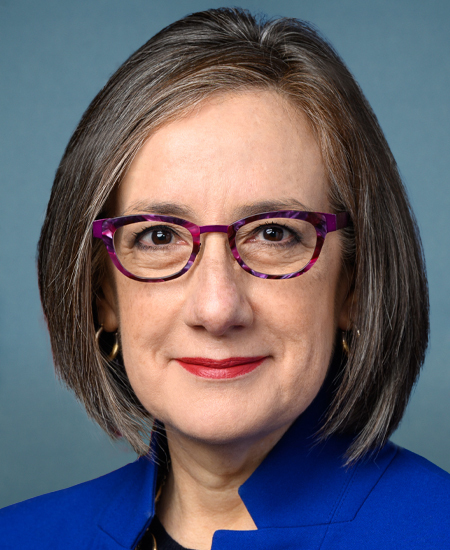
Rep. Andrea Salinas
Sponsored bills
Maddy summaryThe Healthy H2O Act creates a federal grant program to help rural households and small facilities (like child-care centers) install certified water filtration systems that remove health contaminants such as lead, arsenic, and PFAS. Eligible recipients must live in rural areas, have tested water containing contaminants, and meet income limits (under 150% of their state’s median nonmetropolitan household income). Grants cover the cost of purchasing, installing, maintaining, and testing certified point-of-use or point-of-entry filtration systems. The program requires annual reports to Congress analyzing water quality trends, filter effectiveness, and emerging needs in affected communities. This initiative addresses immediate drinking water safety gaps where long-term infrastructure projects cannot yet provide solutions.
Maddy summaryHR 4702, the National Fire Academy Reporting Act, requires the National Fire Academy Administrator to submit an annual report to Congress by November 30 each year. The report must detail specific data about courses, programs, and funding from the previous fiscal year, including the number of fire departments and personnel (categorized as career or volunteer) that attended, the total courses offered and cancelled, and how funds were distributed to state/local training programs and student participants. This bill does not change funding levels or program requirements but mandates standardized reporting to Congress. The requirement begins after the bill's enactment, with the first report due November 30 of the first full year following enactment.
Maddy summaryHR 4734, the "Hands Off Our Social Security Act," prohibits federal actions that would alter Social Security benefits, data handling, workforce levels, office locations, or communication systems without explicit congressional approval. It directly protects Social Security beneficiaries and the Social Security Administration (SSA) by banning unauthorized changes to benefits, data mining, privatization, staff cuts, office closures, or reduced phone/in-person services. Key provisions require Congress to approve any modifications to benefits, workforce reductions, or office closures, and mandate the SSA to maintain existing communication channels. The bill also mandates annual GAO audits to ensure compliance with these restrictions. This legislation focuses on preserving current Social Security operations and access, not creating new benefits or altering eligibility.
Maddy summaryH.J. Res. 108 proposes a constitutional amendment to remove legal immunity for federal officials, including the President, from criminal prosecution for actions taken while performing official duties. It would prohibit the President from granting pardons to themselves and eliminate the defense that "official authority" excuses violations of federal or state law (with limited exceptions for certain congressional actions). If ratified, this amendment would require Congress to pass implementing laws to enforce these changes. The proposal is currently in the House Judiciary Committee and requires approval by three-fourths of state legislatures to become part of the Constitution.
Maddy summaryHR 4606, the Ally’s Act, requires private health insurance plans (including employer-sponsored plans and individual coverage) to cover hearing implants and related services. It directly affects people with hearing loss who need cochlear implants, bone conduction devices, or external sound processors, as determined by a physician or audiologist. The bill mandates coverage for devices, maintenance, repairs, upgrades every 5 years, hearing assessments, surgery, and rehabilitation - without separate cost-sharing or stricter limits than other medical services. Insurers cannot deny coverage if a provider deems the service medically necessary. The law applies to all applicable health plans and takes effect for plan years beginning January 1, 2026.
Maddy summaryThis bill establishes two grant programs to support construction and manufacturing apprenticeship colleges. It provides up to $500,000 per college for community outreach (e.g., connecting with high schools, rural businesses, and workforce boards) and student support services (e.g., academic advising, mental health resources, childcare). The grants target increasing enrollment and completion rates for underrepresented groups, including rural students, first-generation college students, and minorities. Funding of $5 million annually (2026-2030) requires colleges to report on program outcomes like retention rates and diversity metrics. The law directly affects apprenticeship colleges offering work-based training in construction and manufacturing fields.
Maddy summaryThis bill modifies the tax treatment of certain alcoholic beverages by merging the classification for mead and low-alcohol wine under a single tax category. It defines "low alcohol by volume wine" as still wine containing less than 8.5% alcohol by volume and no more than 0.64 grams of carbon dioxide per 100 milliliters. This change directly affects winemakers and honey-based beverage producers who previously faced different tax rules for these products. The updated definition takes effect for wine produced after December 31, 2025.
Maddy summaryHR 1522, the Federal Retirement Fairness Act, changes federal retirement rules to include temporary employees' service after January 1, 1988, in retirement benefit calculations. It directly affects temporary federal employees (including U.S. Postal Service workers) and Members of Congress who served after that date. The bill removes a previous cutoff date in retirement law, allowing their temporary service to count toward retirement eligibility. This means eligible temporary workers can now have their full service period considered when calculating retirement benefits.
Maddy summaryThe SUPPLY Act establishes a federal program to insure second loans (additional financing) for building accessory dwelling units (ADUs) on single-family properties. This insurance, administered by the Department of Housing and Urban Development, covers up to 30% of a standard one-unit home loan amount or 100% of the property value after construction (with potential increases based on 50% of projected rental income). Homeowners seeking to add ADUs - such as backyard cottages, converted basements, or detached units - can use this insurance to secure financing, with a government premium of up to 1% annually. The bill also requires Fannie Mae and Freddie Mac to purchase and securitize these insured loans, potentially expanding access to ADU financing.