

Maddy summaryThe Healthcare Workforce Resilience Act (HR 5283) increases U.S. immigration visas for healthcare workers by recapturing unused employment-based visas from 1992-2024. It directly affects foreign nurses and physicians who filed petitions before 2027 (three years after enactment), reserving 25,000 visas for nurses and 15,000 for physicians. Key provisions include exempting these visas from country caps, requiring labor attestations to ensure no U.S. worker displacement, and establishing fee-free premium processing for applications. The bill aims to address healthcare staffing shortages by making these visas immediately available to qualifying professionals and their families.
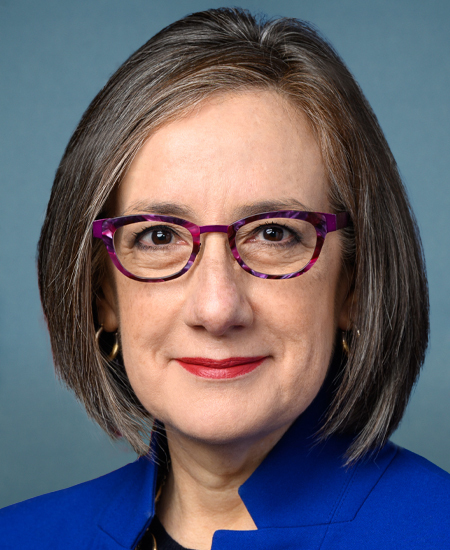
Rep. Andrea Salinas
Sponsored bills
Maddy summaryThis bill directs the U.S. President to identify Pakistani officials responsible for undermining democracy and human rights within 180 days of enactment, then impose Global Magnitsky sanctions on them. It targets senior government, military, or security officials found to have committed gross human rights violations or interfered with democratic processes, such as during Pakistan’s 2024 elections or through constitutional changes. Sanctions would include asset freezes and travel bans, with exceptions for humanitarian aid, UN obligations, and national security activities. The bill expires on September 30, 2030, and aims to pressure Pakistan to uphold democratic norms, human rights, and judicial independence.
Maddy summaryThis bill modifies the Family and Medical Leave Act (FMLA) to extend eligibility to school support staff, including paraprofessionals, cafeteria workers, bus drivers, and clerical staff. It allows these employees to qualify for FMLA leave if they work 60% of their expected monthly hours (instead of the standard 1,250 hours), based on their school’s assigned schedule. Employers must maintain records of expected hours for each staff member. The change directly benefits part-time and seasonal education support staff who previously faced barriers to FMLA coverage.
Maddy summaryThis bill amends the Social Security Act to remove a payment limitation for certain Medicaid Home and Community-Based Services (HCBS) waivers. Specifically, it strikes a provision (subparagraph (C) of Section 1915(c)(11)) that restricted how states could fund these waivers under Medicaid. The change directly affects state Medicaid programs that use HCBS waivers to provide home and community care for people with disabilities or elderly individuals. By removing this restriction, states gain more flexibility in allocating Medicaid funds for these services, without altering eligibility or service requirements.
Maddy summaryThis resolution (HRES 677) is a formal statement by the House of Representatives affirming the Federal Reserve's independence from political influence. It specifically supports Chairman Jerome Powell and the Board of Governors in making monetary policy decisions based on economic data, not political pressure. The resolution urges the President and executive branch to respect the Fed's statutory independence and avoid actions or rhetoric that could undermine its credibility. It emphasizes that maintaining this independence is critical for economic stability, price control, and global confidence in U.S. financial markets.
Maddy summaryThis bill requires the EPA to establish guidelines for indoor air contaminants like radon, formaldehyde, and carbon monoxide that affect schools and childcare facilities. It mandates a national assessment of indoor air quality in these buildings, with updates every five years, and provides technical assistance to schools and childcare providers to implement air quality improvements. The EPA must publish science-based guidelines with recommended concentration limits for key contaminants and support voluntary building certifications for healthier indoor environments. These provisions directly impact local schools, childcare centers, and state/local governments responsible for building maintenance and health standards.
Maddy summaryThis bill prohibits Members of Congress, their spouses, and dependent children from owning or trading certain investments, including stocks, commodities, and derivatives (referred to as "covered investments"). It requires affected individuals to divest these investments within 90-180 days, with specific exemptions for Treasury bonds, diversified mutual funds, small business interests, and family trusts meeting strict conditions. Violations incur penalties of 10% of the investment's value plus disgorgement of profits, paid directly to the U.S. Treasury. The law applies to all covered individuals during federal service, with exceptions for investments acquired through inheritance or occupational trading (e.g., a spouse’s finance job).
Maddy summaryThe Tipped Worker Protection Act eliminates the sub-minimum wage for tipped workers, requiring employers to pay the full minimum wage instead of the current $2.13/hour rate that relies on tips to make up the difference. During a transition period, tipped workers would receive a minimum cash wage of $3.60/hour in the first year, increasing by $1.50 annually until reaching the full minimum wage. The bill also prohibits employers from keeping tips or using them for anything other than distributing to employees, requires transparency about service charges, and establishes rules for voluntary tip pooling. This bill directly affects workers in restaurants, bars, and other service industries who traditionally receive tips as part of their compensation.
Maddy summaryHR 5105, the UNLOCK Act, amends the Housing and Community Development Act of 1974 to expand eligibility for federal housing funds. It allows metropolitan cities, urban counties, states, local governments, insular areas, and tribal entities to use Section 106 funds for constructing new residential housing for low- and moderate-income residents, with or without nonprofit partnerships. The key change adds a new funding category (paragraph 27) to existing housing programs, streamlining access to resources for affordable housing projects. This bill directly affects local governments and tribal entities seeking to build or support affordable housing without requiring mandatory nonprofit involvement.
Maddy summaryHR 5073, the INFORM Act of 2025, requires immigration authorities to notify the immediate family of a detained individual within 24 hours if they are transferred to a different detention facility. This applies directly to immigrants held under U.S. immigration law and their immediate family members, defined as parents, children, spouses, and certain extended family like step-relatives or domestic partners. The law mandates that notifications include the reason for the transfer and full contact details (name, address, phone number, and point of contact) for the new facility. It establishes a specific timeline and content requirement for these notifications to improve transparency during detention transfers. The bill focuses on procedural changes for facility transfers, not on altering detention policies or immigration eligibility.