

Maddy summaryHR 698, the Assault Weapons Ban of 2023, prohibits the sale, manufacture, transfer, and possession of specific firearms and ammunition devices commonly referred to as "assault weapons" and "large capacity magazines" in interstate commerce. The bill defines "semiautomatic assault weapons" to include rifles like AR-15s and AK-47s, as well as firearms with specific features such as folding stocks, pistol grips, threaded barrels, and detachable magazines holding more than 15 rounds. It exempts law enforcement, military, antique firearms, and weapons already lawfully owned before the law's enactment (known as "grandfathered" weapons). The bill also requires new identification markings on these weapons and large capacity magazines, and adds background check requirements for transfers of grandfathered weapons.
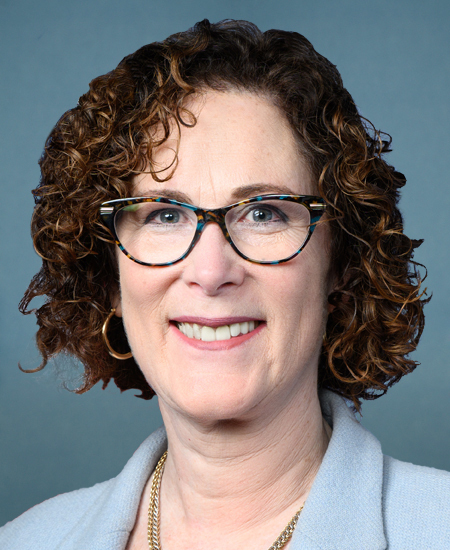
Rep. Val T. Hoyle
Sponsored bills
Maddy summaryThis bill removes a barrier for college students seeking food assistance by amending the SNAP program rules. It directly affects students enrolled at least half-time in recognized colleges or training programs, who were previously automatically ineligible unless they met separate requirements. The key change eliminates the prior restriction (in section 6(e)) that barred most higher education students from SNAP, allowing them to qualify under the new provision in section 3(m)(5)(F). The changes take effect January 2, 2024.
Maddy summaryHR 3036, the Increased TSP Access Act of 2023, amends conservation program rules to expand access to third-party providers (TSPs) who offer technical assistance to farmers on conservation practices. It creates new pathways for non-Federal entities like agricultural cooperatives or professional associations to certify TSPs, streamlines certification processes (requiring Secretary review within 10 business days), and sets payment rates for TSPs equivalent to government-provided technical assistance. The bill mandates public reporting on certification numbers, payment details, and a target utilization rate for TSPs to improve conservation program delivery. It directly affects farmers participating in USDA conservation programs by increasing options for technical support and requiring transparency in how TSPs are certified and compensated.
Maddy summaryHR 3776, the Family Stability and Opportunity Vouchers Act of 2023, creates a new housing voucher program targeting families with young children facing instability. It provides up to 50,000 incremental vouchers annually (2024-2029) for families who either have a child under 6, will welcome a minor child within 300 days, and are homeless, unstably housed, living in high-poverty areas, or at risk of displacement from neighborhoods with high-performing schools. Public housing agencies receiving funds must offer mobility services to help these families relocate to areas with quality schools or childcare, without requiring participation as a voucher condition. The bill defines key terms like "opportunity area for children" and mandates evidence-based services to support family transitions. This policy directly affects low-income families with young children in unstable housing situations seeking better educational opportunities.
This bill directs the Council on Environmental Quality to study the potential for online and digital technologies, including a unified permitting portal, to address any delays in environmental reviews of federal actions and improve public accessibility and transparency under the National Environmental Policy Act of 1969.
Secure Testing Resources Instead of Prosecuting Act or the STRIP Act This bill exempts the possession, sale, or purchase of fentanyl drug testing equipment, including test strips, from criminal penalties under the Controlled Substances Act.
Reward Work Act This bill prohibits issuers from purchasing their own securities on a national exchange. The bill also requires one-third of an issuer's board of directors to be elected by employees in order for the issuer to be allowed to register securities.
Maddy summaryThis bill allows the U.S. Postal Service to ship alcoholic beverages under specific conditions. It enables registered businesses (like wineries, breweries, and retailers) to mail alcohol directly to consumers, provided the recipient is at least 21 with valid ID, the shipment isn’t for resale, and state alcohol taxes are paid upfront. The Postal Service must establish rules for delivery, registration, and verification, while explicitly preserving all existing state, local, or tribal laws governing alcohol sales and shipments. The bill does not override state restrictions on alcohol delivery, and the Postal Service remains liable for violations under state law.
Maddy summaryHRES 439 is a non-binding resolution expressing the House of Representatives' support for keeping the U.S. Postal Service (USPS) as an independent federal agency, not subject to privatization. It highlights USPS's constitutional role, self-sustaining nature (relying on service revenue, not taxpayer funds), and its importance to rural communities, e-commerce, and over 600,000 employees. The resolution urges Congress to take action to preserve USPS's independence, emphasizing that privatization could raise prices, reduce services, and harm the nation's mail infrastructure. As a procedural resolution, it does not change law but formally states the House's position.
Maddy summaryThe AIR PUMP Act requires airlines to provide nursing crew members (like flight attendants and pilots) with reasonable break time to express breast milk for up to one year after their child's birth, as well as a private, non-bathroom space for this purpose. It specifically excludes breaks during critical flight phases and ensures accommodations won't compromise safety, security, or require significant costs (e.g., aircraft modifications). The bill includes anti-retaliation protections for employees who request accommodations or file complaints, and enforces these requirements through the Department of Labor using existing Fair Labor Standards Act mechanisms. This directly affects airline employees who are nursing parents and their employers, aligning airline workplace policies with federal breastfeeding protections.