

Maddy summaryHRES 379 is a symbolic resolution recognizing the contributions of elementary and secondary school teachers to U.S. civic, cultural, and economic well-being. It specifically honors teachers during National Teacher Appreciation Week (May 5-9, 2025), urging students, parents, and officials to acknowledge their work. The resolution has no legal effect or policy changes - it simply expresses gratitude and promotes awareness of the teaching profession. It was introduced by Rep. Graves and co-sponsors and referred to the Education and Workforce Committee.
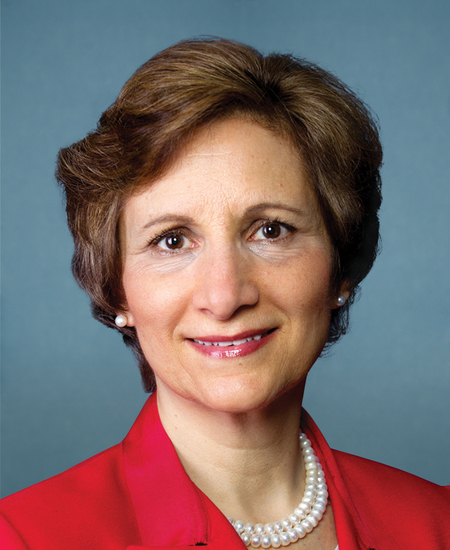
Rep. Suzanne Bonamici
Sponsored bills
Maddy summaryHRES 383 is a symbolic resolution expressing congressional support for designating May 4-10, 2025, as Wildfire Preparedness Week. It aims to raise public awareness about wildfire safety and preparedness through educational initiatives, encouraging communities to adopt preventive measures like evacuation planning and reducing human-caused ignitions. The resolution does not create new laws, allocate funds, or directly affect any specific group - it solely promotes awareness of existing wildfire safety practices. It references wildfire statistics and safety strategies but only formally recognizes the week without implementing policy changes.
Maddy summaryHRES 381 designates May 5, 2025, as the "National Day of Awareness for Missing and Murdered Indigenous Women and Girls," calling for public commemoration of victims and solidarity with their families. The resolution urges the public and groups to honor both documented and undocumented cases while recommending the Department of Justice commission a new study on the crisis, citing that the last major study was published in 2016. It does not create new laws or funding but aims to raise awareness about ongoing issues, referencing recent data showing 5,614 Indigenous women and girls reported missing in 2024. This symbolic resolution directly affects Indigenous communities, families, and the public, aligning with prior federal efforts like Savanna’s Act and the Not Invisible Act.
Community Services Block Grant Improvement Act of 2025 This bill reauthorizes the Community Services Block Grant (CSBG) program through FY2032 and makes certain changes to the program and associated eligibility requirements. The CSBG program supports various antipoverty activities, primarily through formula-based allotments to states, tribes, and territories, the majority of which must be made available in grants to eligible local entities. Specifically, the bill permanently sets the measure of eligibility for services, assistance, or resources provided directly to individuals or families under the program at 200% of the poverty line. (Under current law, the eligibility measure is temporarily set at 200% of the poverty line, an increase from the previous measure of 125% of the poverty line.) The bill also makes certain changes to the permitted uses of funding, including by allowing CSBG funds to be used to facilitate low-income individuals’ and communities’ access to high-speed broadband, digital literacy training, technical support, and other services. States may also use certain funds allocated for training and technical assistance to assist eligible entities in responding to statewide and regional conditions that create economic insecurity, including emergency conditions. The bill also expands requirements for the plans that states must submit to the Department of Health and Human Services in order to receive CSBG funds (e.g., transparency assurances), and sets deadlines by which states must make funds available to eligible entities. Finally, the bill repeals a provision that allowed states to use CSBG funds to offset revenue losses associated with state charity tax credits.
Maddy summaryThis bill expands OSHA safety protections to cover public employees, including teachers, police, and sanitation workers, who were previously excluded from federal workplace safety regulations. It directly affects state and local government workers by amending the Occupational Safety and Health Act to explicitly include "the United States, a State, or a political subdivision of a State" under OSHA coverage. The key mechanism is a technical amendment to the law’s definition of covered employees, ensuring public service workers fall under the same safety standards as private-sector employees. The bill takes effect 90 days after enactment for most workplaces, with a 36-month delay for state/local governments without existing OSHA plans.
Maddy summaryHR 3171, the Reduction in Force Review Act, requires federal agencies to provide detailed justifications before implementing workforce reductions. It directly affects agencies conducting reductions in force under specific federal workforce rules (subchapter I of chapter 35), mandating they include five specific elements: the specific reasons for the reduction, its impact on employees and operations, alternatives considered and rejected, summaries of consultations with affected employees and their representatives, and how veterans will be impacted. The bill adds these requirements to the existing Congressional review process for agency workforce actions under Title 5 of the U.S. Code. This creates a standardized transparency framework for agency decisions affecting federal workers.
Maddy summary# Summary of the SHIPS for America Act This comprehensive legislation focuses on strengthening the U.S. maritime industry, shipbuilding capacity, and maritime workforce to enhance national security and economic competitiveness. ## Key Areas of Focus 1. **Shipbuilding & Maritime Infrastructure** - Establishes a United States Center for Maritime Innovation to accelerate adoption of commercial technologies - Creates a National Shipbuilding Research Program - Requires an annual survey of anticipated commercial vessel construction - Includes provisions for streamlined environmental reviews of maritime infrastructure 2. **Workforce Development** - Establishes the United States Merchant Marine Career Retention Program to maintain mariner qualifications - Creates Centers of Excellence for Domestic Maritime Workforce Training and Education - Implements military-to-maritime transition programs - Establishes a Maritime Career and Technical Education Advisory Committee 3. **Education & Training** - Expands educational assistance for merchant mariners - Creates eligibility for Naval Postgraduate School for merchant mariners - Establishes maritime education programs from K-12 through higher education - Provides for international exchanges for mariners and naval architects 4. **National Security & Strategic Readiness** - Requires reports on National Defense Reserve Fleet utilization - Includes measures to de-risk the maritime sector from Chinese influence - Enhances shipbuilding capacity for national security needs - Establishes programs to ensure sufficient mariner workforce for national defense 5. **Funding Mechanisms** - Authorizes appropriations from the Maritime Security Trust Fund - Includes funding for workforce programs, education, and shipbuilding initiatives - Establishes specific funding levels for various programs over multiple fiscal years The legislation aims to create a sustainable domestic maritime industrial base that supports both commercial shipping and national defense requirements, with a particular emphasis on developing and retaining a skilled U.S. maritime workforce.
Fentanyl Awareness for Children and Teens in Schools Act or the FACTS Act This bill establishes grant programs and requires strategies and studies to address the misuse of synthetic opioids (i.e., laboratory-derived substances such as fentanyl and its derivatives) among youth. The bill requires the Department of Health and Human Services (HHS) to award grants to partnerships between educational and health organizations for prevention, treatment, and recovery efforts related to the use of synthetic opioids by middle and high school-aged children. It also allows school-based health centers to use existing HHS grants to purchase naloxone to reverse the effects of opioid overdoses and to establish programs to address misuse of synthetic opioids. Also, the bill authorizes state educational agencies to use certain Department of Education (ED) grant funds to provide training to school personnel on addressing students’ misuse of synthetic opioids. State and local educational agencies must also address such misuse in their educational plans in order to qualify for certain ED grants. Finally, the bill (1) establishes an interagency taskforce to coordinate federal efforts to address synthetic opioid misuse among youth, (2) requires an evaluation of the State Unintentional Drug Overdose Reporting System’s effectiveness in identifying the specific synthetic opioids causing youth overdoses, (3) expands the data reported by the National Center for Education Statistics to include information about the use of synthetic opioids in schools, and (4) requires two recurring HHS surveys to include questions on youth exposure to synthetic opioids.
Maddy summaryHR 3112, the Better CARE for Animals Act of 2025, strengthens enforcement of the federal Animal Welfare Act by requiring dealers and exhibitors to hold valid licenses for animal sales or transport (Section 4). It expands enforcement authority by allowing the Attorney General to sue violators for up to $10,000 per day, seize animals, and seek injunctions (Section 20), while clarifying that courts can address violations of related rules and regulations. The bill directly affects animal dealers, exhibitors, the USDA, and the Department of Justice, creating clearer pathways for holding violators accountable. Key provisions include updating definitions, broadening inspection powers to cover all regulations, and directing penalty funds toward temporary animal care costs during legal proceedings.
Maddy summaryHR 3094, the PREP Act, shortens probationary periods for new federal employees. It reduces the standard 1-year probation to 6 months for individuals who previously worked in the executive branch civil service, and to 12 months for all other new hires. This applies to competitive service positions (most federal jobs), excepted service roles, and the Senior Executive Service. The bill directly affects new federal employees by accelerating their transition to permanent status based on prior federal experience. It makes no changes to current employees or existing probationary terms.