Juror Non-Discrimination Act of 2021 This bill prohibits the exclusion of individuals from jury service on the basis of their sexual orientation or gender identity.
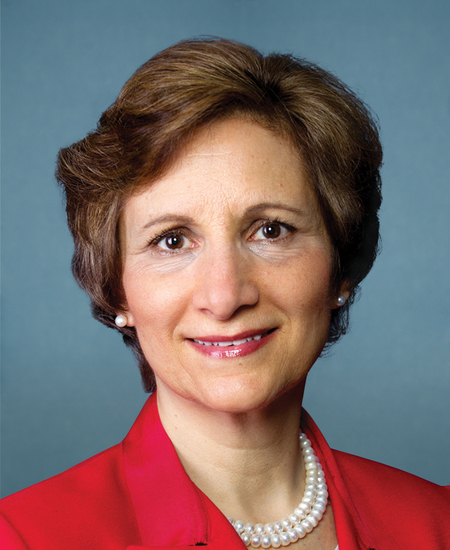
Rep. Suzanne Bonamici
Sponsored bills
U.S. Citizenship Act This bill establishes a path to citizenship for certain undocumented individuals. The bill also replaces the term alien with noncitizen in the immigration statutes and addresses other related issues. Specifically, the bill establishes a new status of lawful prospective immigrant . This status shall be available to an applying noncitizen who meets certain requirements, including being continually present in the United States from January 1, 2021, and passing background checks. After at least five years with this status, an eligible noncitizen may apply for and receive permanent resident status. The bill also provides permanent resident status to certain applying noncitizens, specifically for eligible noncitizens who (1) entered the United States as a minor, (2) were eligible for temporary protected status or deferred enforced departure on January 1, 2017, or (3) worked a certain amount of agricultural labor in the five years prior to applying. Among other things, the bill also redefines for immigration purposes the term conviction to exclude convictions that have been expunged or vacated, requires the Department of State to implement a strategy to advance reforms in Central America and address key factors contributing to migration from the region to the United States, requires the State Department to establish refugee processing centers in Central America, requires Customs and Border Patrol sectors and stations to have a certain number of employees with certain qualifications such as paramedic training, generally prohibits religious discrimination in granting or denying immigration benefits, and establishes grant programs for providing training and services to immigrants.

Affordable Housing Preservation Act of 2021 This bill directs the Department of Housing and Urban Development (HUD) to implement a demonstration program for the establishment or preservation of limited- or zero-equity resident-controlled housing. Limited- or zero-equity resident-controlled housing (e.g., a housing cooperative) restricts the initial and resale price of shares of stock or membership interests in a residence so that the shares or interests remain affordable to families of certain incomes. Specifically, HUD may assist nonprofit organizations to establish or preserve such housing through providing (1) mortgage insurance; and (2) grants for predevelopment costs, monitoring fees, technical assistance, gap funding, and intermediary financing. Housing receiving such assistance must be governed by a board of directors elected by members of a limited- or zero-equity resident-controlled housing corporation with voting structured equitably among all members. A limited- or zero-equity resident-controlled housing corporation may sell corporate shares in such housing to an eligible household for a purchase price that ensures dwelling units in the housing will remain affordable for at least 30 years to households earning less than a certain income.
This joint resolution proposes a constitutional amendment to lower the minimum age for the right to vote from 18 to 16.
This resolution urges (1) the President to issue a proclamation recognizing Earth Day; and (2) governments and people to continue building upon the Paris Agreement and other efforts to ensure that future generations inherit a livable, sustainable, and ecologically rich planet. The resolution reaffirms that immediate action is needed to reduce greenhouse gas emissions and ameliorate environmental injustices in order to protect our planet, public health, and overall well-being of all people and wildlife. In addition, it encourages the American people to mark Earth Day by working to address environmental challenges, educate others about the need for year-round action, and honor the stewardship ethic for which Senator Gaylord Nelson stood.
This resolution condemns the bigotry that fueled those who stormed the U.S. Capitol, the elected officials who stoked that bigotry, including former President Trump, and the Members of Congress who have continued to support those individuals. It reaffirms that harmful rhetoric and violent behavior against individuals based on factors including religion, race, immigration status, and sex will not be tolerated.
Agriculture Resilience Act This bill establishes, expands, and revises multiple programs and activities of the Department of Agriculture (USDA) primarily to reduce carbon emissions from the agriculture sector. Specifically, USDA must finalize and implement a plan to achieve net-zero emissions from the sector by 2040. USDA must periodically review and revise the plan, as necessary, and annually report on its implementation. Additionally, the bill expands the scope of various USDA research, extension, and education programs; conservation programs; and livestock programs to incorporate climate change adaption and mitigation. Expanded activities include efforts to improve soil health and preserve farmland and grassland. Further, the bill changes programs that support renewable energy in rural areas to address carbon emissions in the agriculture sector. Among these changes, the bill provides statutory authority for a program for reducing methane emissions from livestock waste that is carried out by the Environmental Protection Agency and transitions the program to USDA. The bill also addresses food waste, for example, by (1) standardizing the voluntary labels used by food producers to indicate the date by which food should be used or discarded, and (2) making composting activities eligible for support through USDA conservation programs. Moreover, the bill establishes grants to reduce and prevent food waste in landfills and in schools.
Fairness in Nursing Home Arbitration Act This bill prohibits, and nullifies any existing, pre-dispute arbitration agreements with respect to Medicare skilled nursing facilities or Medicaid nursing facilities, home- and community-based services, or home health care services.
Pharmacy and Medically Underserved Areas Enhancement Act This bill provides for Medicare coverage and payment with respect to certain pharmacist services that (1) are furnished by a pharmacist in a health-professional shortage area, and (2) would otherwise be covered under Medicare if furnished by a physician.
Community Solar Consumer Choice Act of 2021 This bill supports the expansion of community solar energy and doubles the allowable time period for a long-term contract between the General Services Administration (GSA) and a public utility. Specifically, the bill requires the Department of Energy (DOE) to establish a program for expanding community solar energy options, including options for low-income and moderate-income individuals. In addition, DOE must expand existing grant, loan, and financing programs to include community solar projects as specified by the bill. Further, the bill revises requirements for electric utilities, including by requiring each electric utility to offer a community solar program. Finally, the bill allows the GSA to make a public utility contract for a period of up to 30 years. Currently, the GSA may make a public utility contract for up to 10 years.