

Gay and Trans Panic Defense Prohibition Act of 2021 This bill generally prohibits a federal criminal defendant from asserting, as a defense, that the nonviolent sexual advance of an individual or a perception or belief of the gender, gender identify or expression, or sexual orientation of an individual excuses or justifies conduct or mitigates the severity of an offense.
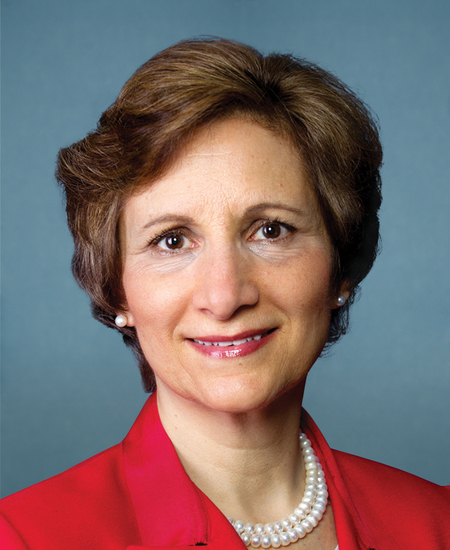
Rep. Suzanne Bonamici
Sponsored bills
Fair Housing for Domestic Violence and Sexual Assault Survivors Act of 2021 This bill prohibits discrimination against survivors of domestic violence, sexual assault, or sex trafficking in the sale or rental of housing and other related real estate activities.
Keep Americans Safe Act This bill establishes a new criminal offense for the import, sale, manufacture, transfer, or possession of a large capacity ammunition feeding device (LCAFD). The bill does not prohibit certain conduct with respect to an LCAFD, including the following: importation, sale, manufacture, transfer, or possession related to certain law enforcement efforts, or authorized tests or experiments; importation, sale, transfer, or possession related to securing nuclear materials; and possession by a retired law enforcement officer. The bill permits continued possession of, but prohibits sale or transfer of, a grandfathered LCAFD. Newly manufactured LCAFDs must display serial number identification and the date of manufacture. Additionally, the bill allows a state or local government to use Edward Byrne Memorial Justice Assistance Grant Program funds to compensate individuals who surrender an LCAFD under a buy-back program.
Immigrants' Mental Health Act of 2021 This bill directs Customs and Border Protection (CBP) to take steps to address mental health issues among immigrants and CBP agents and officers. It also restricts the sharing of mental health information for use in certain immigration proceedings. CBP shall develop training to enable its agents and officers to (1) identify mental health issues and risk factors in immigrants and refugees, (2) provide crisis intervention using a trauma-informed approach, and (3) better manage work-related stress and psychological pressures. CBP shall assign at least one qualified mental or behavioral health expert to each Border Patrol station, port of entry, checkpoint, forward operating base, secondary inspection area, and short-term custody facility. The Department of Health and Human Services may not provide to the Department of Homeland Security information about the mental health of an alien that was obtained by a mental health professional while the alien was in federal government custody if the information will be used for (1) an asylum determination, (2) an immigration hearing, or (3) a deportation hearing.
Khalid Jabara and Heather Heyer National Opposition to Hate, Assault, and Threats to Equality Act of 2021 or the Jabara-Heyer NO HATE Act of 2021 This bill creates grants for state and local governments to combat hate crimes. It also authorizes additional penalties for hate crime offenses. Specifically, it establishes grants for states to create state-run hate crimes reporting hotlines. It also authorizes grants for states and local governments to implement the National Incident-Based Reporting System and to conduct law enforcement activities or crime reduction programs to prevent, address, or respond to hate crimes. Finally, in the case of an individual convicted of a hate crime offense and placed on supervised release, the bill allows a court to order that the individual participate in educational classes or community service as a condition of supervised release.
Federal Correctional Facilities COVID-19 Response Act This bill establishes requirements to prevent and limit the spread of COVID-19 in federal correctional facilities (e.g., prisons). Among the requirements, correctional facilities must do the following: conduct weekly COVID-19 tests and offer vaccinations for incarcerated individuals and employees; submit weekly reports to the Department of Justice, the Centers for Disease Control and Prevention (CDC), and state public health authorities on COVID-19 cases, vaccinations, and outcomes; and report outbreaks to the CDC, which must deploy staff to prevent and mitigate the spread. Finally, the bill requires the Bureau of Prisons, in consultation with the CDC, to update its guidelines on managing COVID-19 in correctional facilities.
Gun Records Restoration and Preservation Act This bill amends several appropriations laws to remove limitations on the authority of the Bureau of Alcohol, Tobacco, Firearms and Explosives to conduct activities related to the administration of federal firearms laws. Specifically, the bill removes provisions that limit the use of firearms tracing data, limit the disclosure of data under the Freedom of Information Act, prohibit imposing a requirement that gun dealers conduct a physical inventory, prohibit consolidating or centralizing records maintained by federal firearm licensees (e.g., gun dealers), and require national instant criminal background check records to be destroyed within 24 hours.
Camp Lejeune Justice Act of 2021 This bill allows certain individuals to sue and recover damages for harm from exposure to contaminated water at Camp Lejeune in North Carolina between August 1, 1953, and December 31, 1987. This action is available only to individuals who were exposed to contaminated water for at least 30 days. The bill prohibits the U.S. government from asserting specified immunity from litigation in response to such a lawsuit. The bill also prohibits an individual who brings such an action from bringing a separate tort action against the United States based on the same harm.
Guaranteed Refugee Admission Ceiling Enhancement Act or the GRACE Act This bill establishes that the maximum number of refugees admitted each fiscal year shall be no less than 125,000 and that the maximum number shall be treated as the numerical goal for refugee admissions for the applicable fiscal year. The President may set a higher number if it is justified by humanitarian concerns or is otherwise in the national interest. Currently, the number admitted each fiscal year may not exceed 50,000 unless the President determines that a higher number is justified by humanitarian concerns or is otherwise in the national interest. The bill directs the President to take into consideration information from the United Nations High Commissioner for Refugees when establishing the maximum admission number and making certain other related decisions. The President shall report to Congress quarterly on (1) the number of refugees admitted during the preceding quarter, (2) the number of aliens who were security-cleared during the preceding quarter, (3) a plan to reach the numerical goal for admitted refugees for that fiscal year, and (4) other related information.
Healthcare Workforce Resilience Act This bill makes previously unused immigrant visas available to nurses and physicians who petition for such a visa before the date that is 90 days after the end of the declared national emergency relating to the COVID-19 (i.e., coronavirus disease 2019) outbreak. The number of visas available shall be the total number of unused employment-based immigrant visas from FY1992-FY2020, up to 40,000. Of such visas, 25,000 shall be reserved for nurses and 15,000 for physicians. Certain family members may accompany the principal beneficiary of a visa provided under this bill, and visas for such family members shall (1) be made available from the unused visas from FY1992-FY2020, and (2) not be counted against the 40,000 cap. Visas provided under this bill shall be exempt from per-country limitations.