

Regional Clean Energy Innovation Act This bill requires the Department of Energy to establish an Office of Advanced Clean Energy Technologies to advance mid-stage and late-stage innovation, development, demonstration, and commercialization of clean energy technologies to further regional net-zero greenhouse gas emissions pathways.
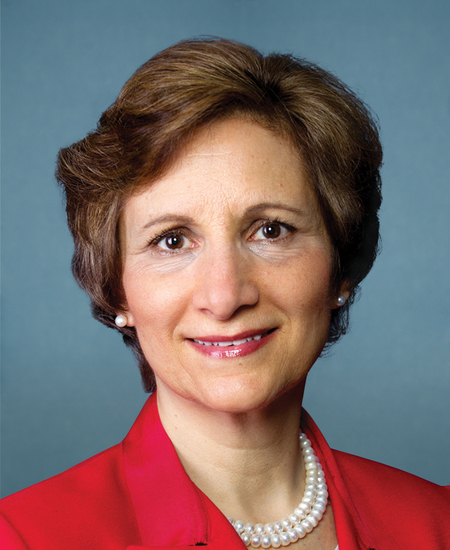
Rep. Suzanne Bonamici
Sponsored bills
Funding Early Childhood is the Right IDEA Act This bill authorizes through FY2027 specified provisions of the Individuals with Disabilities Education Act for early childhood education. Specifically, the bill authorizes Part B, Section 619 (grants to states for preschool programs serving children with disabilities ages three to five) and Part C (grants to aid states in implementing early intervention services for infants and toddlers with disabilities and their families).
Pell Grant Sustainability Act This bill requires the Department of Education to calculate the maximum award amount for Pell Grants for award year 2022-2023 and each subsequent award year by indexing the award amount to the rate of inflation.
Healthy Meal Time Act of 20 22 This bill requires the Department of Agriculture (USDA) to enter into an agreement with an independent, nonpartisan, science-based research organization to carry out a study on the time lunches are served, the time that recess is offered, and the duration of lunch periods at schools participating in the National School Lunch Program. USDA must also make the findings of the study publicly available online; establish a task force, in coordination with the Department of Education, to review the study, review other related research, and develop best practices for lunch and recess periods to ensure student health, including appropriate nutritional intake; and issue guidance regarding such best practices to schools participating in the National School Lunch Program.
Maddy summaryThis resolution (HRES 884) symbolically recognizes January 2022 as "National Mentoring Month" to highlight the value of mentoring relationships for youth. It does not create new laws or provide funding, but instead acknowledges mentoring's role in supporting young people's education, career development, and well-being. The resolution encourages promoting mentoring programs across communities, schools, and workplaces to address the "mentoring gap" where one in three youth lacks a supportive adult outside their home. As a procedural resolution, it has no direct legal effect on individuals or programs.
Climate Risk and Emergency Support In Livable Inclusive and Equitable Neighborhoods and Communities Everywhere Act or the Climate RESILIENCE Act This bill makes changes to the Robert T. Stafford Disaster Relief and Emergency Assistance Act to take into account climate change. The bill includes extreme temperature events, such as heat waves or freezes, within the scope of the act and defines resilience for purposes of disaster assistance and mitigation efforts. Federal and state preparedness and mitigation assistance may be used for reducing the impacts of extreme temperatures and improving air quality and mitigating against wildfire smoke.. The bill authorizes implementing predisaster hazard mitigation measures that will be cost-effective and equitable long-term and provide enhanced protection to the community. The Federal Emergency Management Agency (FEMA) must (1) provide technical assistance to underserved and disadvantaged communities for such measures; and (2) provide guidance to implement the latest published editions of relevant consensus-based codes, specifications, and standards that incorporate the latest hazard-resistant designs. The bill includes within the hazard mitigation program requirements the abatement of lead, mold, mildew, radon, asthma, and allergen triggers, or other pollutants and hazardous materials directly caused by a major disaster or emergency. FEMA must report to Congress regarding challenges posed by FEMA requirements for determining the cost-effectiveness of mitigation activities and how such requirements may disproportionately burden underserved or disadvantaged communities.
Federal Adjustment of Income Rates Act or the FAIR Act This bill modifies pay rates for federal employees in 2023. Specifically, the bill increases rates under the statutory pay systems and for prevailing rate employees by 4.1% and increases locality pay by 1%.
Comprehensive Resources for Entrepreneurs in the Arts to Transform the Economy Act of 2022 or the CREATE Act of 2022 This bill expands financial assistance for, and establishes measures to support, the creative economy and art entrepreneurs. Specifically, the bill requires (1) the Small Business Administration to develop loan criteria, evaluation procedures, and technical assistance programs for small business concerns that are owned by artists and support the creative economy; and (2) the Department of Commerce to ensure that traditional economic development tools, such as business incubators and grant programs, support the arts industry and creative economy.
PrEP Access and Coverage Act This bill requires private health insurance plans to cover prescription drugs that prevent HIV, including related screenings, diagnostic procedures, administrative fees, and clinical follow-ups, without any cost-sharing obligation for the plan holder. Further, insurance plans must not impose any preauthorization requirement for this coverage. These coverage requirements also apply to public health insurance programs, including Medicare, Medicaid, and the Children's Health Insurance Program. Additionally, the bill prohibits denying, limiting, or qualifying coverage or increasing premiums for disability insurance, long-term care insurance, or life insurance policies based on an individual taking medication for HIV prevention. The bill further requires the Department of Health and Human Services to award grants to states, or directly to eligible local organizations, to provide uninsured individuals and underinsured individuals access to prescription drugs and related services that prevent HIV. The Centers for Disease Control and Prevention also must develop a public awareness campaign that focuses efforts in communities with a high need for HIV prevention treatment.
This bill revises enforcement provisions under the Animal Welfare Act (AWA), including by directing inspectors to confiscate or destroy in a humane manner animals found to be suffering physical or psychological harm as a result of failure to comply with the AWA.