Alan Reinstein Ban Asbestos Now Act of 2022 This bill generally prohibits the manufacture, process, use, and distribution in commerce of commercial asbestos or any mixture or article containing commercial asbestos and requires the Environmental Protection Agency to publicize the prohibition and provide assistance to those who must comply with the prohibition.
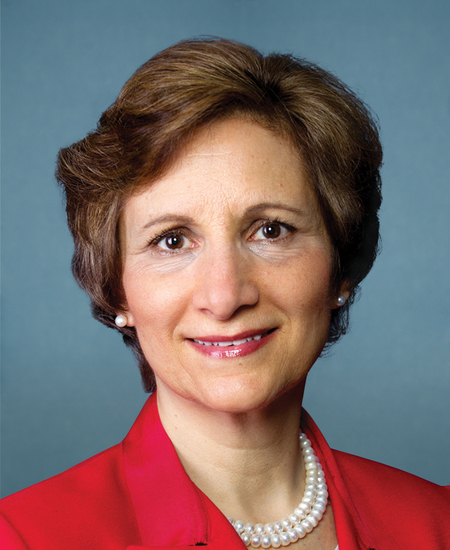
Rep. Suzanne Bonamici
Sponsored bills
Health Care Providers Safety Act of 2022 This bill authorizes the Department of Health and Human Services to award grants to health care providers for security services and other expenses related to physical security and cybersecurity.
Workforce Innovation and Opportunity Act of 2022 This bill reauthorizes through FY2028 and expands programs under the Workforce Innovation and Opportunity Act (WIOA). The bill also revises workforce investment, vocational rehabilitation, employment, training, and literacy programs for eligible individuals. For example, the bill increases workforce representation on state and local workforce investment boards from 20% to 30%; reworks one-stop center infrastructure funding by requiring costs to be covered by state allocations of WIOA funds; establishes subsidized youth employment programs that include work-readiness training and mentoring; allows states and localities to partner with educational institutions to address the skill needs for in-demand jobs; establishes grants to connect youth in communities disproportionately affected by gun violence with in-demand jobs; eliminates a requirement that the Department of Labor ensure that individuals participating in WIOA activities comply with Selective Service laws; modifies the allotment of youth workforce investment funds to states; requires Labor to prioritize providing access to certain services to girls and women and applications for assistance from minority-serving institutions; expands the Job Corps program, including by serving individuals in outlying areas and relaxing age requirements; establishes grants to expand training programs through industry or sector partnerships; expands grants for integrated English literacy and civics education to outlying areas; and expands Wagner-Peyser employment services to the Northern Mariana Islands and American Samoa. The bill also provides statutory authority for Labor to award competitive grants, contracts, and cooperative agreements to improve employment and training outcomes and reduce recidivism of justice-involved youth; and competitive grants for states to create workforce longitudinal administrative databases.
Community Services Block Grant Modernization Act of 2022 This bill reauthorizes the Community Services Block Grant program through FY2032 and otherwise modifies the program. The program supports various antipoverty activities, primarily through formula-based allotments to states, Indian tribes, and territories. In particular, the bill makes changes to the program's administration and leadership; performance measurement; and allotments to states and territories. The bill also expands eligibility for services and activities funded by the program to 200% of the federal poverty line (FPL). Under current law, eligibility is generally set at the FPL.
Rights for the Transportation Security Administration Workforce Act of 2022 or the Rights for the TSA Workforce Act of 2022 This bill modifies the workplace rights, protections, and benefits applicable to Transportation Security Administration (TSA) personnel. Specifically, the bill by December 31, 2022, eliminates personnel authorities of the Department of Homeland Security (DHS) and the Department of Transportation governing the conditions of employment for TSA employees, thus making TSA employees subject to the personnel management system applicable to other federal employees; sets forth transition rules that protect the pay rates, leave rights, and other rights of TSA employees; and requires DHS to consult with the exclusive representative of TSA screening employees to carry out the conversion of those positions. The bill also permits the TSA to consult with organizations representing federal air marshals to address concerns, including mental health and suicide rates; directs the TSA to ensure its employees are provided proper guidance regarding prevention and protections against COVID-19; requires the TSA to provide a one-time bonus payment of $3,000 to each TSA employee carrying out duties that require substantial contact with the public during the COVID-19 national emergency; and requires the Government Accountability Office to report on implementation of the bill, TSA recruitment efforts, and specified TSA personnel policies.
Community-Based Workforce Development Act This bill provides grants to expand workforce training programs for high-skill, high-wage, or in-demand industry sectors.
NOAA Weather Radio Modernization Act of 2021 or the NWR Modernization Act of 2021 This bill provides for the expansion of, and upgrades to, the National Oceanic and Atmospheric Administration (NOAA) Weather Radio All Hazards network (NWR). NOAA shall expand coverage of NWR and ensure its reliability by maintaining support for existing systems serving areas not covered by cellular service or having poor quality cellular service; ensuring consistent maintenance of, and timely repairs to, broadcast transmitter site equipment and antennas; and enhancing the ability to amplify Non-Weather Emergency Messages via NWR as necessary. NOAA shall complete an assessment of access to NWR. NOAA shall enhance NWR to ensure its capabilities and coverage remain valuable to the public. In carrying out such activities, NOAA must prioritize practices, capabilities, and technologies recommended by the assessment to maximize accessibility, particularly in remote and underserved areas of the country.
Federal Firefighters Fairness Act of 2022 This bill makes it easier for federally employed firefighters who contract certain illnesses to qualify for federal workers' compensation. Specifically, the bill provides that chronic obstructive pulmonary disease, mesothelioma, and specified other cancers of those employed in fire protection activities for at least five years are presumed to be proximately caused by such employment for purposes of a disability or death claim under the federal workers' compensation program. This presumption also applies to federal employees employed in fire protection activities for at least five years who experience a sudden cardiac event or stroke within 24 hours of performing a fire protection activity. The bill also requires the Department of Labor to conduct a review to determine whether breast cancer, gynecological cancer, and rhabdomyolysis should be included under the presumption and to conduct periodic reviews to determine whether other diseases should be included. In addition, a person may petition Labor to include another disease under the presumption. An employee in fire protection activities is a firefighter, paramedic, emergency medical technician, rescue worker, ambulance personnel, or hazardous material worker who (1) is trained in fire suppression; (2) has the legal authority and responsibility to engage in fire suppression; (3) is engaged in the prevention, control, and extinguishing of fires or response to emergency situations where life, property, or the environment is at risk, including the prevention, control, suppression, or management of wildland fires; and (4) performs such activities as a primary responsibility.

CFPB Student Loan Integrity and Transparency Act of 2022 This bill requires the Department of Education (ED) to provide information related to student loans to the Consumer Financial Protection Bureau (CFPB). The bill prohibits ED from entering into an agreement with a contractor or vendor that services student loans unless the contractor or vendor agrees to provide requested information to the CFPB. It also requires the CFPB to maintain adequate staffing levels to carry out its duties.
Mt. Hood and Columbia River Gorge Recreation Enhancement and Conservation Act of 2022 or the REC Act of 2022 This bill establishes programs and requirements to support the conservation of and recreational access to the Mount Hood National Forest and the Columbia River Gorge National Scenic Area in Oregon. Specifically, the bill establishes within Mount Hood National Forest one or more Indian Treaty Resources Emphasis Zones to protect and enhance treaty resources, protect reservations from wildfires, and enable a co-management strategy between the Forest Service and the Confederated Tribes of Warm Springs. The bill expands the Mount Hood National Recreation Area. The bill also requires the publication of a comprehensive sustainable recreation management plan for the recreation area and Columbia River Gorge National Scenic Area. It also establishes Centers for Recreation Excellence to support the management and enhancement of outdoor recreation in these areas. Additionally, the bill provides for a wildfire assessment that covers Mount Hood National Forest, federal land within the Columbia River Gorge National Scenic Area, and any adjacent private, state, or tribal land; designates specified river segments in Oregon as components of the National Wild and Scenic Rivers System and specified areas in Oregon as components of the National Wilderness Preservation System; establishes committees to develop strategies for sustainable access to the Columbia River Gorge National Scenic Area and Mount Hood National Forest; and requires the Department of Agriculture to enter into cooperative agreements with certain entities to provide search and rescue, firefighting, and law enforcement services.