

Maddy summaryHR 4263, the ADINA Act, requires drug manufacturers to clearly label human-use drugs containing major food allergens (like peanuts or shellfish) or ingredients derived from gluten-containing grains (such as wheat or barley). This affects drug producers and pharmacies by mandating that labels state the presence of these allergens and specify the exact gluten source if applicable. The law aims to inform consumers with allergies about potential risks in medications. It applies to all drugs meeting these criteria, with implementation beginning within two years of the bill's enactment.
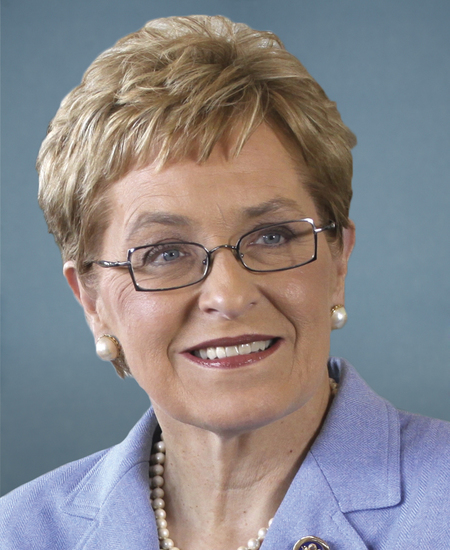
Rep. Marcy Kaptur
Sponsored bills
Maddy summaryThe SAFE Act of 2023 extends a 2018 law that prohibits slaughtering animals for human consumption to include horses, donkeys, and other equine animals, such as ponies. It amends Section 12515 of the Agriculture Improvement Act of 2018 by updating the language to replace "dog or cat" with "dog, cat, or equine" in both the section title and the main prohibition. This change directly affects the livestock industry and slaughter facilities by banning the processing of equines for food. The bill modifies existing law without adding new enforcement mechanisms, closing a gap in animal protection.
Maddy summaryThe Housing Crisis Response Act of 2023 authorizes over $100 billion in funding for housing programs, including $10 billion for public housing capital improvements, $9.9 billion for the HOME Investment Partnerships Program, and $1.77 billion for energy efficiency improvements in affordable housing. It creates new down payment assistance programs for first-time and first-generation homebuyers, expands housing vouchers for vulnerable populations including those experiencing homelessness, and establishes new requirements for accessible housing units. The bill mandates that many housing projects maintain affordability for at least 20 years and includes specific provisions for rural housing, Native American communities, and lead-based paint hazard control. It also creates a new Housing Investment Fund to support affordable housing development and preservation, primarily for low-, very-low, and extremely low-income renters.
Maddy summaryThe Equality Act (HR 15) would amend federal civil rights laws to explicitly prohibit discrimination based on sexual orientation and gender identity in public accommodations, housing, employment, credit, and jury service. It amends the Civil Rights Act of 1964 to include sexual orientation and gender identity as protected characteristics under existing sex discrimination provisions. The bill would require businesses, housing providers, employers, and government entities to provide equal access and services without regard to a person's sexual orientation or gender identity. It includes specific definitions for gender identity and sexual orientation to clarify protections across all covered areas. The law would apply to all entities covered by the Civil Rights Act of 1964, including those receiving federal funding.
Maddy summaryHR 4121, the Right to Contraception Act, establishes a federal statutory right for individuals to access contraceptives and contraception services without government restriction or coercion, directly affecting all people seeking reproductive care and health care providers. The bill prohibits state or federal laws that limit access to contraceptives (defined broadly to include devices, drugs, and fertility methods), prevent individuals from obtaining or using them, or allow providers to refuse services based on personal beliefs. It preempts conflicting state laws, requires any restrictions to be justified by "clear and convincing evidence" of advancing access with no less restrictive alternative, and allows private lawsuits to challenge violations. The Act applies nationwide to all health care providers and individuals, protecting access regardless of factors like race, income, or location.
Maddy summaryHR 4052, the National Infrastructure Bank Act of 2023, would establish a federally chartered National Infrastructure Bank to address the estimated $2.6 trillion infrastructure financing gap identified by the American Society of Civil Engineers. The bank would provide loans, loan guarantees, and blended financing for infrastructure projects in transportation, energy, environmental systems, broadband, and community development, with a total loan limit of $5 trillion. Projects must demonstrate public benefits including economic growth, job creation, environmental improvements, and community development, with priority given to disadvantaged communities and projects meeting specific criteria. The bank would be capitalized with up to $500 billion through the purchase of Treasury securities and other means, operating under a 25-member Board of Directors with oversight mechanisms to ensure accountability.
Maddy summaryThe American Dream and Promise Act of 2023 would create two pathways to permanent residency for certain immigrants. The "Dream Act" portion would provide conditional permanent resident status to individuals who entered the U.S. as children, have lived continuously in the U.S. since January 1, 2021, and meet educational requirements (such as completing high school, earning a degree, or enrolling in education programs). The "American Promise Act" portion would provide permanent residency to individuals eligible for Temporary Protected Status (TPS) or Deferred Enforced Departure (DED) as of specific dates (January 1, 2017, or January 20, 2021). The bill includes provisions for background checks, fee exemptions for low-income applicants, and processes for removing conditional status after meeting specific criteria like completing higher education or earning income.
Maddy summaryThe CARE Act of 2023 strengthens protections for child farmworkers by amending the Fair Labor Standards Act. It raises minimum age requirements (restricting 14-15 year olds to family farms outside school hours, and limiting 16-17 year olds to family farm work outside school hours), repeals a waiver allowing children in hand-harvest labor, and increases penalties for violations (up to $60,115 for serious injury or death). The bill requires employers to report work-related injuries or deaths of child farmworkers under 18 and mandates annual reports to Congress on child farmworker safety data. It also prohibits children under 18 from working as pesticide handlers, directly affecting an estimated 100,000+ child farmworkers in the U.S.
Ukrainian Adjustment Act of 2023 This bill provides a streamlined process for certain Ukrainian nationals (including accompanying spouse and children) who are living in the United States to receive lawful permanent resident status. Specifically, the bill permits Ukrainian nationals who have been paroled into the United States after February 20, 2014, to apply for and receive lawful permanent resident status. Additionally, the Department of Homeland Security (DHS) may waive grounds for inadmissibility (excluding certain crimes or security related grounds) for individuals who apply for status adjustment. DHS must establish vetting requirements (including an interview) for applicants that are equivalent to those under the United States Refugee Admissions Program. The bill also preserves eligibility for the status adjustment of certain battered spouses whose eligibility for such status stemmed from a marriage that has terminated. Finally, the bill requires DHS to issue guidance to implement these requirements and establishes a deadline for eligible individuals to apply for adjustment.
Bob von Schwedler Permanent Health Coverage Tax Credit Expansion Act This bill permanently reauthorizes and expands the Health Coverage Tax Credit. As previously enacted, the Health Coverage Tax Credit covered 72.5% of health insurance costs for certain Trade Adjustment Assistance (TAA) recipients, alternative TAA recipients, and Pension Benefit Guaranty Corporation pension recipients. The credit expired in December 2021. The bill permanently reauthorizes the credit and expands the credit to cover 80% of health insurance costs.