

Preventing Labor Union Slowdowns Act of 2022 or the PLUS Act of 2022 This bill makes it unlawful for a labor organization or its agents while representing, or seeking to represent, employees engaged in maritime employment to engage in a labor slowdown at any time, including when a collective-bargaining agreement is in effect. It also prohibits a labor organization from impeding (1) modernization efforts at a port, or (2) the servicing of any automated vessel. The bill allows a party injured by such conduct to recover two times the amount of damages sustained and reasonable attorney fees and expert witness fees.
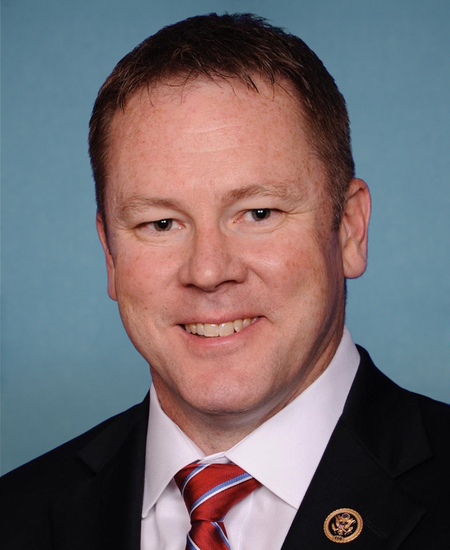
Rep. Warren Davidson
Sponsored bills
This resolution calls on the Biden administration and its officials to maintain the sanctions on the repressive regimes in Venezuela and Iran. The resolution also expresses the sense of the House of Representatives that American energy independence should be achieved again for the sake of U.S. national security and the security of U.S. allies; and President Biden should immediately rescind his Executive Orders that prohibit the approval of new leases on federal lands and waters, and should immediately take actions to reestablish American energy independence.
Supply Chain Disruptions Relief Act This bill modifies the treatment of liquidations of new motor vehicle inventory as qualified LIFO (last in first out accounting method) inventory. It allows new motor vehicle dealers to elect to wait until the end of 2025 to replace their inventory for purposes of determining income attributable to the sale of such inventory during 2020 and 2021.
Reversing Every Vaccine Emergency Requirement and Stopping Employee OSHA Mandates Act or the REVERSE OSHA Mandates Act This bill limits the authority of the Occupational Safety and Health Administration (OSHA) to regulate workplace safety and health matters. Specifically, the bill repeals OSHA's authority to issue emergency temporary standards related to workplace safety and health. The bill further specifies that OSHA may not, under its authority to regulate workplace safety and health, require the administration of any drug, vaccine, or other biological product to an employee.
This resolution supports the preservation of the stepped-up basis tax rule that allows recipients of inherited assets such as land, equipment, or buildings to adjust the cost basis of the assets to reflect their fair market value. The resolution opposes any efforts to impose new taxes on family farms or small businesses and recognizes the importance of generational transfers of farm and family-owned businesses.
This resolution honors the life and legacy of the late Representative Don Young and directs the Sergeant at Arms to designate a Don Young Reserved Seat on the floor of the chamber of the House of Representatives.
This joint resolution nullifies the rule titled Patient Protection and Affordable Care Act; Updating Payment Parameters, Section 1332 Waiver Implementing Regulations, and Improving Health Insurance Markets for 2022 and Beyond , which was issued by the Centers for Medicare & Medicaid Services and the Department of the Treasury on September 27, 2021. The rule expands the open enrollment period for individual health coverage and rescinds the previous interpretation of certain requirements relating to Section 1332 waivers (also known as State Innovation Waivers or State Relief and Empowerment Waivers).
This bill revises oversight and disclosure requirements related to foreign sources and institutions of higher education (IHEs). For example, the bill establishes the Office for Foreign Gifts and Contracts Oversight within the Department of Education. Additionally, the bill requires an IHE to disclose to the office any gift or contract from a foreign source that (1) is valued at $50,000 or more, considered alone or in combination with all other gifts or contracts within a calendar year (current disclosure threshold is $250,000 or more); or (2) has an undetermined monetary value.
Maddy summaryH.J. Res. 46 is a joint resolution seeking to terminate the national emergency declared by President Trump on March 13, 2020, under the National Emergencies Act. If enacted, it would end the legal authority allowing federal agencies to bypass standard procedures during the pandemic response. This action would directly affect government operations relying on emergency powers, requiring agencies to revert to regular processes for ongoing programs. The resolution does not alter existing laws or create new policies - it solely ends the emergency designation.
Federal Student Loan Integrity Act This bill limits the authority of the Department of Education (ED) to waive or modify statutes and regulations in response to military contingencies or national emergencies, including by prohibiting ED from further using this authority in connection with the COVID-19 national emergency. Under the Higher Education Relief Opportunities for Students (HEROES) Act of 2003, ED may waive or modify any statutory or regulatory provision applicable to federal student-aid programs as ED deems necessary in connection with a war or other military operation or national emergency. This bill prohibits ED from issuing a waiver or modification that (1) provides for a period that exceeds 30 days during which payments of principal or interest due on federal student loans are suspended or interest does not accrue on such loans, or (2) results in the discharge or cancellation of federal student loans. Further, the bill prohibits ED from using this authority to waive or modify any statutory or regulatory provision applicable to federal student-aid programs in connection with the national emergency declared by the President on March 13, 2020, to respond to COVID-19.