

Stop the Cartels Act This bill addresses various issues including matters relating to immigration, law enforcement cooperation with Mexico, and drug cartels. The bill bars federal financial assistance for state or local jurisdictions that (1) restrict compliance with immigration detainers issued by the Department of Homeland Security, or (2) have any law or policy that violates immigration laws. Furthermore, under this bill, the detention of alien minors must be governed by specified sections of the Immigration and Nationality Act and not any judicial decree or settlement. (A 1997 settlement agreement imposes requirements related to the treatment of such minors, including limits on how long they may be detained under certain conditions.) The bill also makes various changes to asylum applications, including by (1) increasing the burden that an asylum applicant must meet to establish a credible fear of persecution, and (2) establishing refugee application and processing centers in Central America. In addition, certain Department of State and U.S. Agency for International Development assistance may not be made available to Mexico's government until the State Department certifies that Mexico has removed certain barriers to law enforcement cooperation and intelligence sharing between the United States and Mexico. The bill also establishes the foreign Special Transnational Criminal Organization designation and establishes penalties related to designated organizations, such as making it a crime to knowingly provide material support to such an organization. The State Department must designate specified organizations, including the Sinaloa Cartel, with the designation, and may designate other organizations that fit criteria established in this bill.
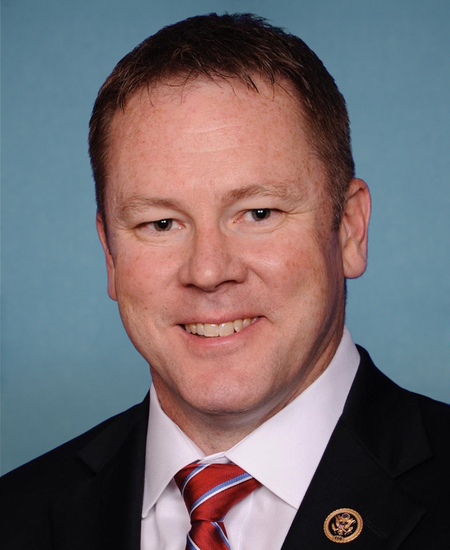
Rep. Warren Davidson
Sponsored bills
Shall Not Be Infringed Act This bill repeals the Bipartisan Safer Communities Act, which was signed into law on June 25, 2022. The act makes various changes to federal firearms laws, including to expand background check requirements, broaden the scope of existing restrictions, and establish new criminal offenses. The act also reauthorizes, funds, and supports various programs, grants, and activities to promote access to behavioral and mental health services, enhance school safety and security initiatives, and address gun violence in communities.
Maddy summaryThis bill prohibits federal funding for any activities related to Executive Order 14074 (issued May 25, 2022), which aimed to improve policing and criminal justice practices. It directly affects federal agencies that would otherwise implement the executive order's requirements using taxpayer dollars. The key provision blocks all federal funds from being used to carry out the order's provisions, effectively halting its implementation through budgetary means. The bill does not alter the executive order itself but prevents its federal financial support.
National Education Association Charter Repeal Act This bill repeals the federal charter granted to the National Education Association of the United States.
Maddy summaryHR 7415 would repeal the 1990 Gun-Free School Zones Act, which prohibited firearms within 1,000 feet of school grounds. It removes specific references to school zones from federal gun law provisions in Title 18 of the U.S. Code. This change would eliminate the federal prohibition on firearms in designated school zones, altering the scope of existing gun law enforcement. The bill does not create new safety measures but modifies how federal gun laws apply to school areas.
Government Surveillance Transparency Act of 2022 This bill requires that law enforcement authorities notify subjects of criminal surveillance orders that cover emails, texts, and similar electronic data and limits the ability of authorities to delay or preclude the required notice. In addition, the bill (1) prohibits, subject to exceptions, courts from sealing criminal surveillance orders; (2) generally requires that public docket records related to criminal surveillance orders be made publicly available; and (3) permits any person to request that a court unseal a surveillance order.
No Retaining Every Gun In a System That Restricts Your Rights Act This bill modifies the retention requirements for firearm transaction records of federal firearms licensees (FFLs) that go out of business. Current law generally requires FFLs that go out of business to deliver their firearm transaction records to the Bureau of Alcohol, Tobacco, Firearms and Explosives (ATF). This bill removes the requirement for FFLs that go out of business to deliver their firearm transaction records to the ATF. Further, the bill requires the ATF to destroy all out-of-business records it has collected from FFLs.
Immigration Transparency and Transit Notification Act of 2022 This bill requires notifications to certain officials before an unaccompanied alien child or a non-U.S. national ( alien under federal law) without lawful immigration status may be placed in or transported to a state or local jurisdiction. The bill also authorizes the office of the governor of the relevant state to prohibit the placement or transportation. At least seven calendar days before taking such an action, the Department of Homeland Security (DHS) or the Department of Health and Human Services (HHS) must notify (1) the relevant state governor's office, (2) the state attorney general's office, (3) the county or municipal government, (4) local law enforcement, and (5) federal and state legislators representing the relevant jurisdiction. The action may not take place if the state governor's office objects no later than three calendar days after receiving the notification. This authority to object shall not apply if the action is to place an unaccompanied child with, or transport the child to, a family member.
Restoring America's Leadership in Innovation Act of 2021 This bill revises several aspects of patent law. The bill changes the U.S. patent system back to a first-to-invent system, in which the first inventor to conceive of an invention is entitled to a patent. Currently, the first person to file an application that meets all the necessary requirements is entitled to the patent. Several types of administrative patent challenge proceedings are abolished, as well as the Patent and Trademark Office (PTO) body that decides those proceedings. The bill relaxes the standard for what constitutes patent-eligible subject matter. The only ineligible inventions shall be those that exist in nature independent or prior to human activity or that exist solely in the human mind. The bill also makes it easier for a patent owner that has won an infringement case in court to secure a permanent injunction against the infringing defendant. Specifically, there shall be a presumption that further infringement would cause irreparable harm to the prevailing patent owner, and the burden shall be on the infringer to prove otherwise. (Currently, a prevailing patent owner seeking a permanent injunction must prove, among other things, that further infringement would cause irreparable harm.) The bill limits what types of publications shall be treated as prior art that could be used to make an invention be considered to be anticipated or obvious (and therefore not patentable). The bill authorizes the PTO to keep and spend all the fees that it collects.
Illegal Immigrant Payoff Prohibition Act This bill prohibits the payment of a settlement to an alien for a civil action brought against the United States in connection with the alien's inadmissibility to, or unlawful presence in, the United States.