

FairTax Act of 2023 This bill imposes a national sales tax on the use or consumption in the United States of taxable property or services in lieu of the current income taxes, payroll taxes, and estate and gift taxes. The rate of the sales tax will be 23% in 2025, with adjustments to the rate in subsequent years. There are exemptions from the tax for used and intangible property; for property or services purchased for business, export, or investment purposes; and for state government functions. Under the bill, family members who are lawful U.S. residents receive a monthly sales tax rebate (Family Consumption Allowance) based upon criteria related to family size and poverty guidelines. The states have the responsibility for administering, collecting, and remitting the sales tax to the Treasury. Tax revenues are to be allocated among (1) the general revenue, (2) the old-age and survivors insurance trust fund, (3) the disability insurance trust fund, (4) the hospital insurance trust fund, and (5) the federal supplementary medical insurance trust fund. No funding is authorized for the operations of the Internal Revenue Service after FY2027. Finally, the bill terminates the national sales tax if the Sixteenth Amendment to the Constitution (authorizing an income tax) is not repealed within seven years after the enactment of this bill.
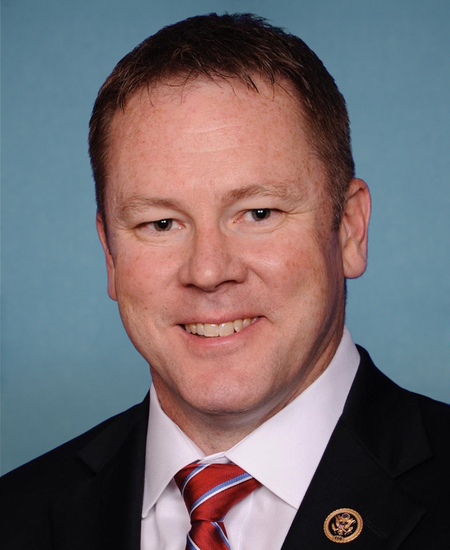
Rep. Warren Davidson
Sponsored bills
No Frivolous Application for Short-Barreled Shotguns Act or the NFA SBS Act This bill removes certain short-barreled shotguns from the definition of firearms for purposes of the National Firearms Act. It also eliminates the prohibition on the sale or transportation of such shotguns in interstate commerce and treats persons who acquire or possess a short-barreled shotgun as meeting the registration or licensing requirements for such shotguns where such requirements are determined by reference to the National Firearms Act. The bill preempts state or local laws that impose a tax or recordkeeping requirements on short-barreled shotguns. The Department of Justice must destroy records relating to the registration of shotguns described by this bill within one year after the enactment of this bill.
Maddy summaryThis bill establishes nationwide recognition for valid concealed carry permits. It allows permit holders from any state to carry concealed handguns in states that either issue such permits or don't ban concealed carry, provided they carry a photo ID and their valid permit. Key provisions include making presentation of a valid permit and ID prima facie evidence of compliance, shifting the burden of proof to prosecutors if challenged, and requiring courts to award attorney fees to successful defendants. It does not override state laws prohibiting concealed carry on private property or government lands, nor does it affect restrictions on federal lands like national parks.
Maddy summaryThis bill would block federal funding to any state or local government that permits non-citizens to vote in federal, state, or local elections. States and localities seeking federal funds must certify they do not allow non-citizen voting as a condition of receiving those funds. The rule applies only to new funding agreements entered into after the bill's enactment, not existing contracts. It directly affects state and local government budgets by tying federal financial assistance to compliance with citizenship requirements for voting.
Maddy summaryHR 146, the "Old Glory Only Act," prohibits U.S. diplomatic and consular posts from flying any flag other than the U.S. flag above the buildings. This law directly affects all U.S. embassies, consulates, and other official diplomatic facilities abroad. The Secretary of State is required to ensure compliance with this rule, mandating that only the U.S. flag be displayed at these locations. The bill makes no exceptions for foreign flags or other symbols at these specific government properties.
Maddy summaryHR 53 (FIND Act) requires federal contractors to certify they do not refuse to work with firearm manufacturers, dealers, ammunition sellers, or related safety device companies based on bias. It prohibits main contractors from awarding subcontracts exceeding 10% of a contract’s value to entities that fail to make this certification, and bans efforts to circumvent the rule through complex subcontract tiers. The law applies to all federal procurement contracts, directly affecting businesses bidding on government work. Violations risk contract termination and suspension from future government contracts.
This act designates the facility of the United States Postal Service located at 226 North Main Street in Roseville, Ohio, as the Ronald E. Rosser Post Office.
This act designates the facility of the United States Postal Service located at 82422 Cadiz Jewett Road in Cadiz, Ohio, as the John Armor Bingham Post Office.
This act designates the facility of the United States Postal Service located at 275 Penn Avenue in Salem, Ohio, as the Howard Arthur Tibbs Post Office.
This act directs the Speaker of the House of Representatives and the President pro tempore of the Senate to arrange for the posthumous award of a Congressional Gold Medal to commemorate Glen Doherty, Tyrone Woods, J. Christopher Stevens, and Sean Smith, four Americans killed in the September 11, 2012, attack on the U.S. consulate in Benghazi, Libya. (Stevens was the U.S. Ambassador to Libya at the time, Smith was an officer in the Foreign Service, and Doherty and Woods were both government contractors and former Navy SEALs.) After the medal has been awarded, it shall be given to the Central Intelligence Agency Museum.