

Let Experienced Pilots Fly Act of 2023 This bill raises the mandatory retirement age for pilots engaged in commercial aviation operations from 65 to 67 years of age, unless the operation takes place in (1) the territorial airspace of a foreign county where such operations are prohibited by the foreign country, or (2) international airspace where such operations are not in compliance with the Annexes to the Convention on International Civil Aviation. The Federal Aviation Administration must also submit a report to Congress on further increasing the age limitation for pilots engaged in commercial aviation operations.
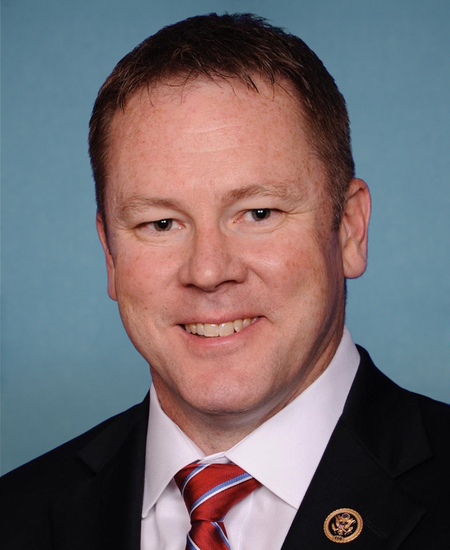
Rep. Warren Davidson
Sponsored bills
Maddy summaryH.J. Res. 30 seeks to block a Department of Labor rule that would have required retirement plan managers (like those handling 401(k)s) to follow strict "prudence and loyalty" standards when selecting investments and voting on company matters. The rule, published in December 2022, aimed to protect retirement savings by ensuring fiduciaries prioritize participants' interests. This resolution, if passed, would prevent the rule from taking effect, avoiding new compliance requirements for retirement plan managers and sponsors. It directly affects retirement plan administrators and the millions of participants in these plans.
This resolution supports the preservation of the stepped-up basis tax rule that allows recipients of inherited assets such as land, equipment, or buildings to adjust the cost basis of the assets to reflect their fair market value. The resolution opposes any efforts to impose new taxes on family farms or small businesses and recognizes the importance of generational transfers of farm and family-owned businesses.
Maddy summaryHR 1703, the SECURE Flights Act, prohibits the use of specific immigration forms (like I-94 arrival records or I-200 warrants) as valid ID at airport security checkpoints. If such a document is presented, TSA must notify U.S. immigration and law enforcement agencies, and the individual may be barred from entering secure airport areas unless traveling for deportation or presenting a valid "covered ID" (e.g., passport, Global Entry card, or driver’s license). The bill also requires TSA to collect biometric data (like fingerprints or facial scans) from travelers who cannot verify U.S. citizenship and lack a covered ID, submitting this to the Homeland Security IDENT system. It directly affects travelers using non-standard immigration documents at airports, aiming to enhance security coordination between TSA and immigration authorities.
Maddy summaryH.J. Res. 26 is a congressional disapproval resolution blocking the District of Columbia Council's approval of its Revised Criminal Code Act of 2022 (D.C. Act 24-789). It directly affects the District of Columbia by preventing the new criminal code from taking effect, as Congress disapproved the Council's action under the Home Rule Act. The resolution formally rejects the Council's enactment of the code, which was transmitted to Congress on January 27, 2023. This procedural action stops the District from implementing the revised criminal code without further congressional action.
No Federal Funds for Abortion Travel Expenses Act of 2023 This bill prohibits the use of federal funds to support interstate travel to obtain an abortion.
Maddy summaryHR 1574, the Risk Disclosure and Investor Attestation Act, requires individual investors to confirm they understand the risks of investing in private companies before purchasing shares. It directly affects people investing in private issuers (like startups or private firms) by mandating a standardized attestation form. The bill adds a new requirement to securities law that investors must use a form created by the Securities and Exchange Commission (SEC), limited to two pages, to attest they comprehend the risks. The SEC must issue implementing rules within one year of the law's enactment to establish this form.
Maddy summaryHR 1492, the CBO Show Your Work Act, requires the Congressional Budget Office (CBO) to publicly publish its fiscal models, data, and detailed methodologies used when estimating the costs and effects of legislation. Specifically, the bill mandates that the CBO make available all models, data preparation routines, and the specific assumptions and computations behind its cost estimates - enabling independent verification by non-CBO staff. This applies to all estimates prepared under the law, with limited exceptions for data protected by other statutes (requiring only descriptive statistics and access details for such data). The changes take effect six months after the bill becomes law. The bill directly affects the CBO’s internal processes and transparency practices, not the legislative content itself.
Maddy summaryHR 1392 extends the National Flood Insurance Program (NFIP) through December 31, 2024, by updating its funding and expiration dates. This directly affects homeowners and property owners in flood-prone areas who rely on NFIP policies for coverage. The bill amends two key provisions of the 1968 law to push the program’s end date from 2022 to 2024, ensuring continued access to federally backed flood insurance. It does not change coverage terms or costs but maintains the existing program structure. The extension applies to all current NFIP policyholders and properties enrolled in the program.
Maddy summaryHR 1414, the Keep Innovation in America Act, clarifies the definition of "broker" under tax law to include entities facilitating digital asset sales at customer direction, directly affecting digital asset exchanges and platforms. It defines "digital asset" as value recorded on a secure ledger and requires brokers to report certain transactions involving digital assets starting in 2025. The bill also mandates a Treasury study on treating digital assets as "cash" under specific tax rules, analyzing privacy, innovation, and competitiveness impacts. These changes aim to align tax reporting with digital asset technology while avoiding burdens on non-broker developers like miners or validators.