

Maddy summaryHR 4726 terminates the requirement that aliens (non-citizens) must be vaccinated against COVID-19 to obtain visas, adjust to permanent residency, or naturalize as U.S. citizens. The bill immediately ends this mandate upon enactment and prohibits federal funding for any administration or enforcement of the vaccination rule. It specifically targets requirements set by the CDC and DHS under existing public health laws. This change directly affects non-citizens applying for visas, green cards, or U.S. citizenship who previously faced this vaccination condition. The policy shift removes a specific health-related barrier from three key immigration processes.
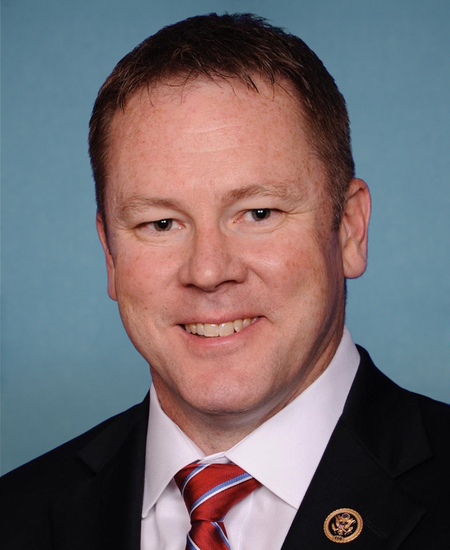
Rep. Warren Davidson
Sponsored bills
This resolution denounces NATO member countries that have not met their obligations under the 2014 Wales Summit Defense Spending Benchmark, a pledge by member countries to spend a minimum of 2% of their nation's gross domestic product on their defense. The resolution affirms that the benchmark is the best common defense to safeguard members in the event a mutual military response is warranted.
Maddy summaryHR 4740, the Streamline Pentagon Budgeting Act of 2023, removes specific reporting requirements for the Department of Defense and related agencies. It repeals sections requiring reports on unfunded priorities (10 U.S.C. § 222a, 222b), military construction project reporting (Military Construction Authorization Act for FY2018), and nuclear security administration reporting (Atomic Energy Defense Act § 4716). This bill directly affects Pentagon budget offices, military construction planners, and the National Nuclear Security Administration by eliminating these administrative obligations. The change simplifies budgeting processes without altering funding levels or policy decisions.
Maddy summaryHR 592 requires the Department of Veterans Affairs (VA) to obtain specific certifications before expanding or continuing its electronic health record system at VA facilities. For existing facilities, the VA must certify the system achieves 99.9% monthly uptime for four consecutive months and completes all pre-enactment system improvements. For new facility implementations, the VA must certify the system build is accurate, staff/infrastructure are ready, and implementation won’t harm patient safety, wait times, or care quality. This bill directly affects VA hospitals and the Veterans Health Administration by setting concrete technical and operational requirements before system changes can proceed.
Maddy summaryThis bill requires the Federal Housing Finance Agency (FHFA) to revert mortgage guarantee fees for single-family homes to the rates in effect before May 1, 2023, effectively undoing a 2023 fee increase. It prohibits fees based on a borrower’s debt-to-income ratio and restricts future fee adjustments without following standard federal rulemaking procedures. The bill directly affects mortgage borrowers (particularly middle-class homeowners) and lenders who pay these fees, as it changes how mortgage finance agencies charge for loan guarantees. A GAO study will also examine the FHFA’s previous fee changes and their economic impact, with a report due within 14 months.
Maddy summaryHR 4258 would allow parents to claim the federal Child Tax Credit for unborn children in specific circumstances. It permits taxpayers to claim the credit for the year before a child is born (if they provide a Social Security number) or for the year of a miscarriage or stillbirth (using a medical certificate). The bill requires new certificates from healthcare providers documenting miscarriages (under 20 weeks) or stillbirths (20+ weeks), which include parental information and a statement confirming the death wasn't due to abortion. This directly affects pregnant individuals, particularly biological mothers or spouses on joint returns, who qualify for the credit and experience pregnancy loss or wish to claim the credit prenatally. The policy change applies to taxable years beginning after the bill's enactment.
Maddy summaryHJRES 44 is a congressional resolution seeking to block a 2021 rule by the Bureau of Alcohol, Tobacco, Firearms, and Explosives (ATF). The rule classified firearms with stabilizing braces as "short-barreled rifles," which would have required additional licensing and regulation. This resolution uses a specific legal process (under Title 5, U.S. Code) to formally disapprove the ATF rule, meaning the rule would no longer be in effect. It directly affects firearm owners, manufacturers, and dealers who would have been subject to the rule’s requirements.
Maddy summaryThis resolution (HRES 544) states that the House believes the U.S. President cannot bypass Congress's constitutional authority to declare war or authorize military force when acting under the North Atlantic Treaty (specifically Article 5, which triggers collective defense). It clarifies that even if military action is taken to protect NATO allies, Congress must still formally approve such hostilities through a declaration of war or specific authorization. The resolution does not change existing law but expresses the House's position on the separation of powers regarding military engagements. It directly addresses the relationship between treaty obligations and Congress's constitutional role in authorizing war.
Maddy summaryHJRES 45 is a congressional disapproval resolution targeting a specific Department of Education rule about federal student loans. It seeks to block the rule implementing "One-Time Federal Student Loan Debt Relief" (including modifications to Perkins, FFEL, and Direct Loan programs) by invoking the Congressional Review Act. If passed, this resolution would nullify the rule, preventing the Department of Education from using it to modify or waive student loan obligations. The bill directly affects borrowers who might have qualified for debt relief under the targeted rule.
Maddy summaryHRES 521 is a formal resolution censuring Representative Adam Schiff (D-CA, 30th District) for conduct deemed "unbecoming" of a House member. The resolution alleges Schiff repeatedly made false claims about Trump-Russia collusion, including spreading Steele Dossier information and releasing a flawed FISA memo, and misled the public during impeachment proceedings. If passed, it would require Schiff to appear in the House chamber for a public reading of the censure resolution. The resolution also directs the House Ethics Committee to investigate Schiff's "falsehoods and misrepresentations." This is a symbolic procedural action, not a law changing policy or affecting constituents.