

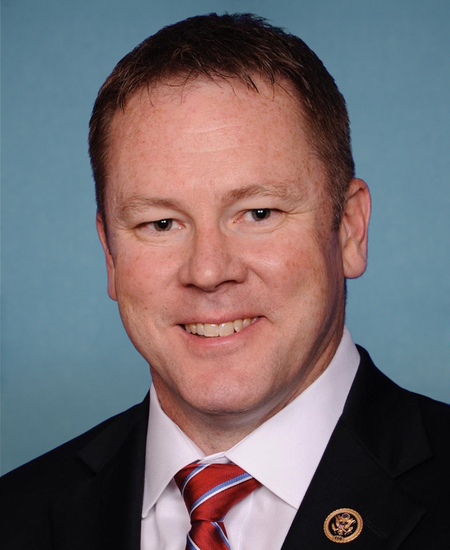
Photo of Warren Davidson
R United States House · District 8 · Ohio On the 2026 ballot

Rep. Warren Davidson

Compare
Total votes
2,837
all sessions
Attendance
98%
50 missed
Near the chamber average
With party
86%
of cast votes
Lower than 95% of chamber peers
Bipartisan score
7%
crosses aisle rarely
Higher than 94% of chamber peers
Sponsored
723
bills & resolutions
Near the chamber average
Committees
7
assignments
723 bills and resolutions

Sponsored bills

Total
723
Primary
104
Co-sponsor
619
This page
723
matching current filters
Primary HR 386
Passed · Indiana House · Lead sponsor
Chinese Currency Accountability Act of 2025

Maddy summaryThis bill requires the U.S. Treasury to instruct U.S. representatives at the International Monetary Fund (IMF) to oppose any increase in the Chinese renminbi's weight in the IMF's reserve currency basket (Special Drawing Rights, or SDR). It mandates that the Treasury submit a certification to Congress confirming China's compliance with IMF rules, no recent findings of currency manipulation under U.S. law, and adherence to international export credit rules before U.S. opposition can be lifted. The requirement would expire 10 years after enactment. The bill directly affects U.S. voting at the IMF regarding China's currency role in global financial markets.

Passed Feb 11, 2025 0 co-sponsors
Co-sponsor HR 1138
In committee · Indiana House · Co-sponsor
Payment Choice Act of 2025

Maddy summaryHR 1138, the Payment Choice Act of 2025, requires most retail businesses to accept cash for in-person purchases up to $500 per transaction and prohibits charging higher prices for cash payments compared to other methods. Businesses may temporarily refuse cash only due to system failures, insufficient change, or if they offer a prepaid card conversion device meeting strict conditions (no fees, no minimum deposit, no expiration). The bill allows businesses a 5-year period to phase in accepting $50 bills or larger, after which the Treasury Secretary must mandate acceptance of $1-$20 bills. Consumers can send a 45-day notice to businesses for violations before pursuing legal action, with potential damages of at least $250 per violation. The law does not override stricter state cash acceptance protections.

In committee Feb 7, 2025 1 co-sponsor
Primary HR 150
In committee · Indiana House · Lead sponsor
People CARE Act

Maddy summaryThe People CARE Act establishes a commission to review federal means-tested welfare programs that assist low-income Americans, including cash assistance, healthcare, food programs, housing, and education. The commission would evaluate opportunities to consolidate programs, improve efficiency, and eliminate "benefit cliffs" where people lose benefits when earning slightly more income. Within 18 months, the commission would submit a report with findings and a proposed bill to Congress, which would receive expedited consideration. The goal is to streamline programs to help individuals transition off welfare and maintain income above poverty levels without government assistance.

In committee Feb 7, 2025 0 co-sponsors
Primary HJRES 37
In committee · Indiana House · Lead sponsor
Proposing an amendment to the Constitution of the United States to provide that Representatives shall be apportioned among the several States according to their respective numbers, counting the number of persons in each State who are citizens of the United States.

Maddy summaryHJRES 37 proposes a constitutional amendment to change how U.S. Representatives are apportioned among states. It would require counting only U.S. citizens in each state when determining representation, rather than the current total population (including non-citizens). This would directly affect states with large non-citizen populations, potentially reducing their number of House seats. The amendment, if ratified, would replace the current constitutional standard for apportionment. It is a procedural proposal seeking constitutional change, not an enacted law.

In committee Feb 6, 2025 0 co-sponsors
Co-sponsor HR 1057
In committee · Indiana House · Co-sponsor
Safe Passage on Interstates Act of 2025

Maddy summaryHR 1057, the Safe Passage on Interstates Act of 2025, creates a new federal criminal offense for intentionally obstructing interstate highways. It makes it illegal to deliberately delay traffic, stand near vehicles, or endanger movement on interstates with the intent to block normal use. The bill directly affects individuals who engage in such obstruction, with penalties including fines up to $15,000 or imprisonment up to 20 years (or life if death results). Exceptions cover lawful activities authorized by federal, state, or local governments. This bill amends Title 18 of the U.S. Code to establish specific penalties for highway obstruction.

In committee Feb 6, 2025 1 co-sponsor
Primary HR 149
In committee · Indiana House · Lead sponsor
Lead by Example Act of 2025

Maddy summaryHR 149, the Lead by Example Act of 2025, requires Members of Congress and their staff to use Department of Veterans Affairs (VA) healthcare instead of other federal health plans for their service-related coverage. Beginning January 3, 2027, the VA would be the sole provider of health care for these individuals, including at VA facilities and non-VA facilities under existing VA authority, treating them as veterans. The bill mandates that the VA Secretary and Office of Personnel Management submit an implementation plan to Congress by September 15, 2025, detailing how to execute this change. This policy directly affects all current and future Senators, Representatives, Delegates, and Resident Commissioners, along with their defined staff members.

In committee Feb 6, 2025 0 co-sponsors
Co-sponsor HR 991
In committee · Indiana House · Co-sponsor
Cost Estimates Improvement Act

Maddy summaryHR 991, the Cost Estimates Improvement Act, requires the Congressional Budget Office (CBO) and Joint Committee on Taxation (JCT) to include debt servicing costs (interest payments on the national debt) in their budget estimates "to the extent practicable." This change directly affects how Congress evaluates the fiscal impact of proposed legislation, as these estimates determine whether bills qualify for budget reconciliation and influence funding decisions. The key mechanism amends the 1974 Congressional Budget Act to mandate this inclusion within existing cost estimation processes. The bill does not alter spending or tax policy but aims to make budget scoring more comprehensive by accounting for ongoing interest costs.

In committee Feb 5, 2025 1 co-sponsor
Co-sponsor HR 987
In committee · Indiana House · Co-sponsor
Fair Access to Banking Act

Fair Access to Banking Act This bill places restrictions on certain banks, credit unions, and payment card networks if they refuse to do business with a person who complies with the law. Restrictions include prohibiting the use of electronic funds transfer systems and lending programs, termination of an institution's depository insurance, and specified civil penalties. Banks and other specified financial institutions are allowed to deny financial services to a person only if the denial is justified by a documented failure of that person to meet quantitative, impartial, risk-based standards established in advance by the institution. This justification may not be based upon reputational risks to the institution. The bill establishes the right for a person to bring a civil action for a violation of this bill.

In committee Feb 5, 2025 1 co-sponsor
Co-sponsor HR 925
In committee · Indiana House · Co-sponsor
Dismantle DEI Act of 2025

Maddy summaryHR 925, the "Dismantle DEI Act of 2025," would eliminate diversity, equity, and inclusion (DEI) programs across federal government operations. The bill requires federal agencies to close DEI offices, rescind related executive orders, and prohibit the use of federal funds for DEI training, offices, or initiatives. It defines "prohibited diversity, equity, or inclusion practice" as any activity that discriminates based on race, ethnicity, religion, biological sex, or national origin, or requires employees to complete training asserting that certain groups are inherently superior or inferior. The legislation also prohibits requiring employees to sign statements about race, ethnicity, or gender, and establishes private lawsuits for violations with potential damages of $1,000 per violation per day. This bill would directly affect federal agencies, contractors, grantees, and advisory committees receiving federal funding.

In committee Feb 4, 2025 1 co-sponsor
Co-sponsor HR 899
In committee · Indiana House · Co-sponsor
To terminate the Department of Education.

Maddy summaryHR 899 would end the U.S. Department of Education by December 31, 2026, terminating its federal agency status. This bill directly affects all federal education programs and operations currently managed by the Department, such as student aid and school funding. The key mechanism is a fixed termination date, requiring the transfer of the Department's responsibilities to other federal agencies without specifying new administrative structures. The bill focuses solely on ending the agency's existence, not altering education policy or funding mechanisms.

In committee Jan 31, 2025 1 co-sponsor
Showing 191 to 200 of 723 bills
Previous 1 … 19 20 21 … 73 Next