

Maddy summaryHR 7015, the CAREERS Act, expands federal funding for workforce training programs to better serve rural communities. It modifies eligibility to include career and technical education schools and requires training programs to align with specific rural industry sectors like broadband, healthcare, agriculture, manufacturing, and water services. The bill mandates grantees to report on employment outcomes for participants and addresses rural workforce challenges such as worker displacement and youth migration. This directly affects rural workforce development boards, training providers, and workers in designated rural industries seeking job skills and career pathways.
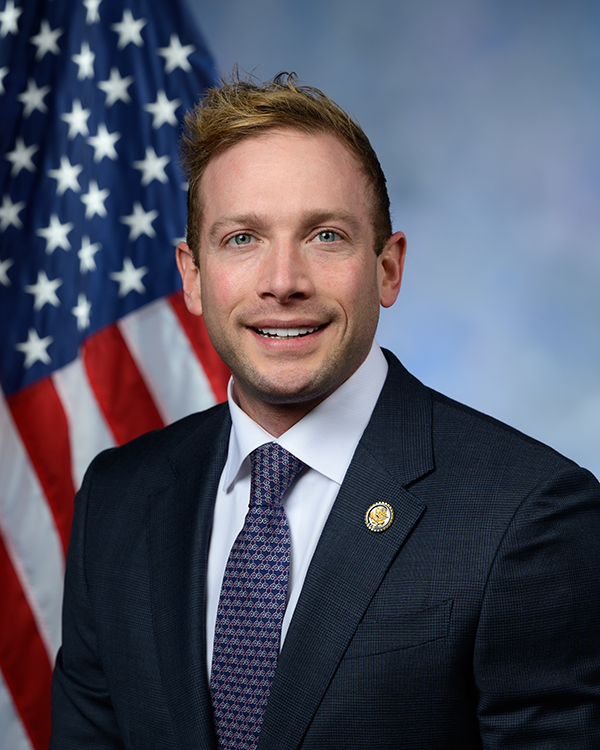
Rep. Max L. Miller
Sponsored bills
This bill disallows the advanced manufacturing production tax credit for components, including battery components, produced by, or in connection with, foreign entities of concern (e.g., terrorist organizations).
Maddy summaryHR 9263 creates a new 30% federal tax credit for businesses investing in qualifying agricultural technology projects focused on specialty crops. It directly affects farmers and agribusinesses adopting precision agriculture (like GPS-guided equipment or soil sensors) or controlled environment agriculture (such as indoor vertical farms with climate control systems). The credit applies to qualified property like equipment, software, and infrastructure placed in service before 2035, with specific definitions for eligible technologies. Businesses cannot double-benefit by claiming this credit alongside certain existing grant programs for similar projects. The credit is available for investments completed after January 1, 2023, and integrates into the existing tax code via amendments to sections 48F and 6417.
Maddy summaryThis bill establishes the Federal Commission on Weather Risk Data and Modeling to set standards for validating weather risk data and models used by federal agencies. The Commission will assess private sector data on natural hazards (like floods and wildfires), infrastructure vulnerability, and damage relationships to ensure accuracy, reliability, and transparency. Federal departments must stop using unvalidated models after two years and will rely on the Commission’s standards for purchasing such data. It directly affects federal agencies purchasing weather risk data, including those in emergency management, energy, and environmental protection. The Commission will include diverse stakeholders like insurance and banking representatives to coordinate data standards across government and industry.
Maddy summaryHR 9136 (IMPACT Act 2.0) provides federal funding to help states cover the extra costs of using low-emission cement, concrete, and asphalt in highway projects. It requires states to adopt new performance-based standards for these materials and creates a faster 180-day approval process for new low-emission products. The bill also establishes a program where the government commits to purchasing future supplies from manufacturers to create market demand. This directly affects state transportation departments and construction material producers by incentivizing cleaner infrastructure materials.
Maddy summaryThe National Quantum Initiative Reauthorization Act (HR 6213) reauthorizes and expands federal efforts to advance quantum information science, engineering, and technology in the United States. It establishes new programs including National Quantum Centers, Quantum Testbeds, and a Quantum Reskilling and Workforce Coordination Hub to develop domestic talent and infrastructure. The bill creates an International Quantum Cooperation Strategy to build partnerships with allies while restricting collaboration with "foreign countries of concern" as defined in the legislation. It provides funding for research, workforce development, and commercialization of quantum technologies across government agencies, universities, and industry. The act aims to strengthen U.S. leadership in quantum technology through coordinated federal investment and international collaboration.
Maddy summaryThis is a commemorative resolution (HRES 1369) honoring Corey Comperatore, a volunteer firefighter, U.S. Army Reserves veteran, and community leader from Sarver, Pennsylvania, who died on July 13, 2024. The resolution formally mourns his passing and celebrates his life, noting he left behind his wife, Helen, and two daughters, Allyson and Kaylee. It recognizes his service to the Buffalo Township Volunteer Fire Department, his military service, and his role as a devoted member of Cabot Methodist Church. As a ceremonial resolution, it has no policy impact or direct effect on legislation or constituents beyond this formal acknowledgment.
Maddy summaryHRES 1362 is a House resolution condemning political violence and specifically denouncing the attempted assassination of former President Donald J. Trump. It calls on all elected officials and citizens to reject violence, promote respectful political discourse, and recognize that such attacks undermine democratic principles. The resolution does not create new laws or policies but formally expresses the House's position that political violence threatens democracy and requires collective responsibility. Introduced in July 2024 by Representatives Miller and Moskowitz, it emphasizes peaceful resolution of differences as essential to U.S. democracy.
Maddy summaryThis bill amends two key laws to extend protections to U.S. citizens serving in the Israeli Defense Forces (IDF). Under the Uniformed Services Employment and Reemployment Rights Act (USERRA), it treats IDF service "in the same manner as uniformed services" for veterans' benefits, requiring the Secretary to issue implementing regulations. For the Servicemembers Civil Relief Act (SCRA), it adds that U.S. citizens serving in the IDF qualify for civil protections if their service is "similar to military service," with benefits ending upon discharge. The changes apply to service starting on or after the bill's enactment date.
Maddy summaryThis resolution honors Corey Comperatore, a former Buffalo Township Volunteer Fire Department chief from Pennsylvania, who was killed shielding his family during the July 13, 2024, attempted assassination of former President Donald J. Trump at a rally in Butler. It recognizes his service and sacrifice, specifically noting he died protecting his wife and two daughters. The resolution also condemns the assassination attempt and political violence in all forms. As a commemorative resolution, it has no binding policy effect.