

Maddy summaryHR 2871, the Safeguarding U.S. Supply Chains Act, blocks tax credits for manufacturers using components made by certain foreign entities deemed security risks. It specifically prohibits the advanced manufacturing production tax credit (Section 45X of the tax code) for components produced by "foreign entities of concern" as defined in a 2021 defense law. The bill also extends this restriction to qualifying battery components made using technology from those same entities. This directly affects manufacturers seeking the tax credit who rely on supply chains involving designated foreign entities. The changes apply to components produced and sold after the bill's enactment date.
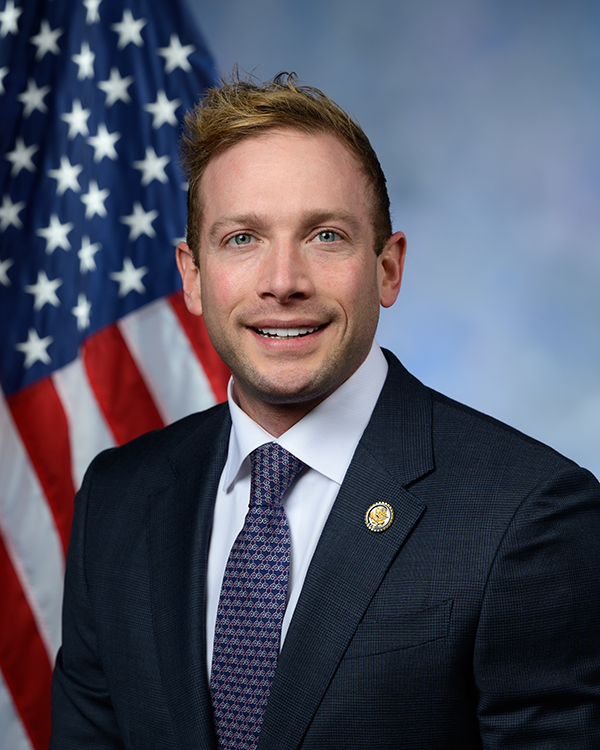
Rep. Max L. Miller
Sponsored bills
Maddy summaryThe National Biotechnology Initiative Act of 2025 establishes a coordinated federal strategy for biotechnology across 14 participating departments and agencies, including Agriculture, Defense, and Health and Human Services. It creates a National Biotechnology Coordination Office and an Interagency Committee to oversee activities related to research, regulatory streamlining, workforce development, and international partnerships. The bill authorizes $22 million in fiscal year 2026, increasing to $35 million by 2027, and requires annual reports and a national strategy every five years. Key provisions include developing a centralized website for biotechnology information, standardizing regulatory pathways for biotechnology products, and improving workforce development programs. This legislation aims to reduce duplication, improve coordination across government departments, and enhance U.S. competitiveness in biotechnology.
Maddy summaryThe NO FAKES Act of 2025 establishes legal rights for individuals to control how their voice and visual likeness are used in digital replicas, which are defined as highly realistic computer-generated representations readily identifiable as a specific person. The bill requires authorization from the individual or their designated right holder before using their likeness in digital replicas, with specific rules for minors (limiting licenses to 5 years) and post-mortem rights (allowing 10 years of protection with possible 5-year renewals). It creates civil liability for unauthorized use of digital replicas or for distributing products/services designed to create such replicas without authorization, with penalties ranging from $5,000 to $750,000 per violation depending on the entity involved. Online services are provided safe harbor protections if they follow procedures for handling takedown notices and have designated agents for copyright issues, while also including exemptions for news, commentary, criticism, and historical uses. The law preempts most state laws regarding digital likeness rights but has exceptions for certain historical uses, news, and sexually explicit content.
Maddy summaryThe Affordable Housing Credit Improvement Act of 2025 would reform the Low-Income Housing Credit program, which provides tax credits to developers of affordable housing. It would increase state allocations based on population with annual cost-of-living adjustments, modify tenant eligibility rules to allow higher income limits for some residents, and add protections for domestic violence victims in housing. The bill would simplify rules for rural and Native American housing projects, clarify credit eligibility requirements, and require greater transparency in program administration. These changes would directly affect developers, property owners, and low-income tenants in housing projects that receive LIHC tax credits.
Maddy summaryThis bill, HR 2102 (Major Richard Star Act), allows veterans with combat-related disabilities to receive both full military retired pay and veterans' disability compensation simultaneously, without the previous offset that reduced retired pay. It directly affects veterans already eligible for both benefits due to combat-related injuries, removing the requirement that their retired pay be reduced by the disability compensation amount. The key provision amends Title 10 and Title 38 to eliminate the offset rule (sections 5304 and 5305 of Title 38) for these veterans. The change applies to payments starting after the bill’s enactment date, effective for all qualifying veterans. This is a policy change to increase financial support for affected veterans, not a new benefit.
Maddy summaryThis bill codifies a "maximum pressure" policy toward Iran, requiring the U.S. to maintain all sanctions until Iran meets specific conditions related to its nuclear program, missile development, support for terrorism, and human rights violations. It expands sanctions on Iran's Revolutionary Guard Corps (IRGC) and entities supporting Iran's ballistic missile program, while prohibiting waivers of sanctions on these entities. The bill mandates regular reports to Congress on Iran's nuclear activities, support for terrorist groups like Hamas and Hezbollah, and human rights abuses within Iran. It also directs the use of frozen Iranian assets to support victims of state-sponsored terrorism and prevents the release of funds that could benefit Iran's terrorist proxies. The bill aims to maintain economic and diplomatic pressure on Iran until it changes its behavior across multiple fronts.
Maddy summaryHR 2585, the Armenian Genocide Education Act, establishes a federal program through the Library of Congress to develop educational resources about the 1915-1923 Armenian Genocide for K-12 schools. It requires the Librarian to create and distribute accurate teaching materials, provide teacher training workshops, and maintain an online resource hub focused on the genocide's history, lessons, and prevention of hate. The program directly supports local educational agencies, independent schools, and educators by offering professional development and curriculum resources. It defines key terms like "denial" and "distortion" to guide the educational content, aiming to improve understanding of this historical event and its relevance to preventing modern-day hate crimes.
Maddy summaryHR 2567 amends tax code rules to prevent certain financial guaranty insurance companies from being classified as passive foreign investment companies (PFICs). It directly affects insurers whose sole business is financial guaranty insurance (e.g., insuring bonds) and meet specific exposure thresholds: at least 15-to-1 financial guaranty exposure or 9-to-1 state/local bond exposure relative to total assets. The bill creates new rules requiring these companies to include unearned premium reserves in insurance liabilities for PFIC calculations, while mandating separate reporting of key financial metrics. This change provides clarity for insurers meeting the defined criteria, avoiding unintended PFIC classification under current tax rules.
Maddy summaryThis bill, titled "Secure Family Futures Act of 2025" but actually focused on tax code changes, primarily affects a specific subset of insurance companies. It amends the Internal Revenue Code to exclude certain debts (like bonds or notes) held by these companies from being counted as capital assets (Section 2), and extends their capital loss carryover period to 10 years for losses from foreign expropriation or losses incurred by these companies (Section 3). The changes apply to debts acquired and losses arising after December 31, 2025. The bill's title is misleading, as it does not relate to family policy but is a technical tax amendment targeting defined insurance industry entities.
Sanctioning Russia Act of 2025 This bill imposes penalties on certain persons (individuals and entities) if the President determines that the Russian government or a person acting at Russia's direction is involved with (1) refusing to negotiate a peace agreement with Ukraine; (2) violating a negotiated peace agreement; (3) initiating another invasion of Ukraine; or (4) overthrowing, dismantling, or seeking to subvert the Ukrainian government. If the President makes such a determination, the bill requires certain actions including the President must impose visa- and property-blocking sanctions on specified persons such as the Russian president, certain Russian military commanders, and any foreign person that knowingly provides defense items to the Russian armed forces; the President must increase the rate of duty on all goods and services imported from Russia into the United States to at least 500% relative to the value of such goods and services; the President must increase the rate of duty on all goods and services imported into the United States from countries that knowingly engage in the exchange of Russian-origin uranium and petroleum products to at least 500% relative to the value of such goods and services; the Department of the Treasury must impose property-blocking sanctions on any financial institution organized under Russian law and owned wholly or partly by Russia, and any financial institution that engages in transactions with those entities; and the Department of Commerce must prohibit the export, reexport, or in-country transfer to or in Russia of any U.S.-produced energy or energy product.