

Maddy summaryHRES 402 is a symbolic House resolution honoring mothers and recognizing the significance of motherhood on Mother's Day. It affirms that mothers are women who raise children, supports policies recognizing mothers as mothers, and encourages the public to celebrate mothers' contributions to families and society. The resolution does not create new laws, allocate funds, or affect specific policies - it is a ceremonial gesture expressing support for traditional definitions of motherhood. It directly addresses the public and the House's recognition of mothers, with no concrete policy changes or impacts on individuals or programs.
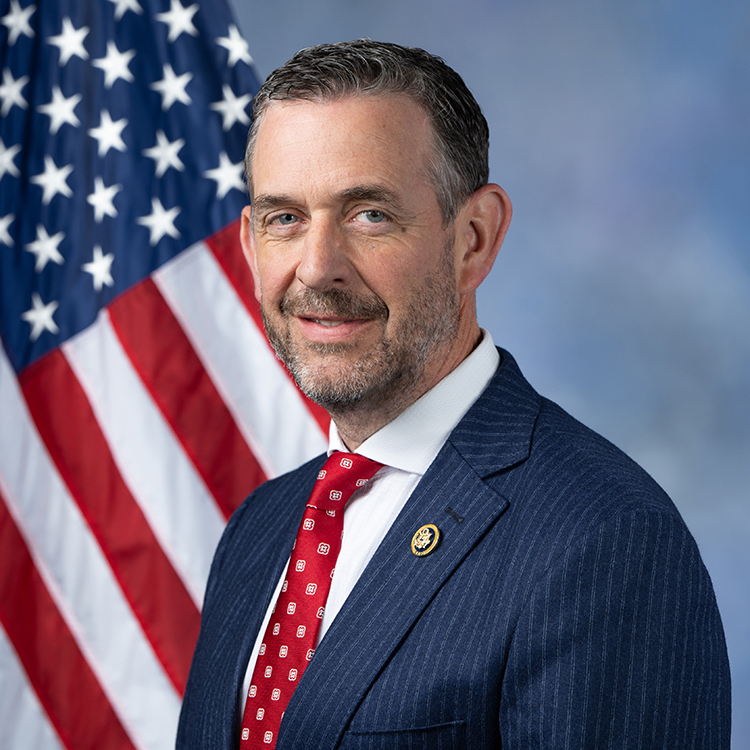
Rep. Michael A. Rulli
Sponsored bills
Maddy summaryThis bill changes how married couples filing jointly can deduct student loan interest on their federal taxes. Currently, the deduction limit of $2,500 applies to the household as a whole. The bill would amend the tax code to apply the $2,500 limit separately to each spouse, meaning both partners could each deduct up to $2,500 in interest. This directly affects married couples with student loans who file jointly, providing them with a larger potential tax benefit. The change takes effect for taxable years beginning after December 31, 2024.
Maddy summaryHR 3228, the Constitutional Hearing Protection Act, reclassifies firearm silencers as firearms under federal tax law and eliminates their separate registration under the National Firearms Act. It requires the Attorney General to destroy all existing federal silencer registration records within one year and preempts state laws that impose taxes, registration, or recordkeeping requirements on silencers. The bill defines "firearm silencer" and specifies that manufacturers must mark silencers on a "keystone part" with a serial number. This directly affects silencer owners, manufacturers, and state governments by standardizing federal regulation and removing state-level restrictions.
Maddy summaryHRES 370 is a symbolic resolution designating May 2 as "National Space Day" to honor the aerospace community's contributions. It recognizes the impact of the aerospace industry, NASA, and related partners on U.S. space exploration, security, and innovation - without creating new laws or affecting any policies. The resolution formally supports this day and acknowledges the community's role in advancing science, technology, and national security. It has no binding effect and serves only to express congressional recognition.
Maddy summary# Summary of the SHIPS for America Act This comprehensive legislation focuses on strengthening the U.S. maritime industry, shipbuilding capacity, and maritime workforce to enhance national security and economic competitiveness. ## Key Areas of Focus 1. **Shipbuilding & Maritime Infrastructure** - Establishes a United States Center for Maritime Innovation to accelerate adoption of commercial technologies - Creates a National Shipbuilding Research Program - Requires an annual survey of anticipated commercial vessel construction - Includes provisions for streamlined environmental reviews of maritime infrastructure 2. **Workforce Development** - Establishes the United States Merchant Marine Career Retention Program to maintain mariner qualifications - Creates Centers of Excellence for Domestic Maritime Workforce Training and Education - Implements military-to-maritime transition programs - Establishes a Maritime Career and Technical Education Advisory Committee 3. **Education & Training** - Expands educational assistance for merchant mariners - Creates eligibility for Naval Postgraduate School for merchant mariners - Establishes maritime education programs from K-12 through higher education - Provides for international exchanges for mariners and naval architects 4. **National Security & Strategic Readiness** - Requires reports on National Defense Reserve Fleet utilization - Includes measures to de-risk the maritime sector from Chinese influence - Enhances shipbuilding capacity for national security needs - Establishes programs to ensure sufficient mariner workforce for national defense 5. **Funding Mechanisms** - Authorizes appropriations from the Maritime Security Trust Fund - Includes funding for workforce programs, education, and shipbuilding initiatives - Establishes specific funding levels for various programs over multiple fiscal years The legislation aims to create a sustainable domestic maritime industrial base that supports both commercial shipping and national defense requirements, with a particular emphasis on developing and retaining a skilled U.S. maritime workforce.
Maddy summaryThis bill extends renewal periods for state Medicaid waivers providing home and community-based services from five to ten years. It directly affects states administering these waivers, allowing them longer planning horizons without frequent reauthorization. Key provisions amend specific sections of the Social Security Act to replace "five-year periods" with "10-year periods" for waiver extensions and renewals starting after the bill's enactment. The change aims to provide greater stability for states managing Medicaid programs serving people with disabilities and elderly individuals in community settings.
Maddy summaryThis bill temporarily allows doctors to prescribe and dispense certain Medicare-covered medications directly to seniors in their offices from 2026 to 2030, under specific conditions. It requires prior in-person visits, limits dispensing to group practices, and mandates billing through the physician’s practice. The bill also directs the GAO to study whether physician-owned pharmacies are becoming common and how such arrangements might affect prescribing. It directly affects seniors receiving Medicare Part D drugs and physician practices participating in these arrangements. The exception expires in 2030, with no changes to Medicare Part D program rules.
Maddy summaryHR 3044, the "No Vaccine Mandates in Higher Education Act," prohibits federal funding from being provided to colleges and universities that require students or staff to receive a COVID-19 vaccine for enrollment, employment, or access to services. This directly affects institutions of higher education receiving federal funds, such as those participating in student aid programs. The bill's key mechanism is withholding federal funds from any institution enforcing such vaccine mandates, as defined under the Higher Education Act of 1965. The law focuses solely on vaccine requirements, not other health or safety policies.
Maddy summaryHR 3006 would limit Medicare coinsurance for certain surgical procedures performed in ambulatory surgical centers (ASCs). Specifically, it prevents patients from paying coinsurance exceeding the annual inpatient hospital deductible for those procedures. If the coinsurance amount would surpass the deductible, the Medicare program must reduce the patient's share to match the deductible and reimburse the ASC for the difference. This change applies to services provided on or after January 1, 2026, directly affecting Medicare beneficiaries using ASCs for qualifying surgeries.
Maddy summaryHRES 337 is a symbolic House resolution honoring linemen for their critical role in maintaining power infrastructure and responding to emergencies. It recognizes them as first responders who work in dangerous conditions 24/7 to keep electricity flowing, supporting schools and businesses during storms. The resolution formally supports designating April 18, 2025, as "National Lineman Appreciation Day" to publicly acknowledge their contributions. As a non-binding resolution, it has no direct policy impact or effect on affected individuals.