John P. Parker House Study Act This bill directs the Department of the Interior to conduct a special resource study of the John P. Parker House in Ripley, Ohio, which was recognized as a National Historic Landmark in 1997. In conducting the study of the house, Interior must (1) evaluate the national significance of the house, and (2) determine the suitability and feasibility of establishing the house as a unit of the National Park System.
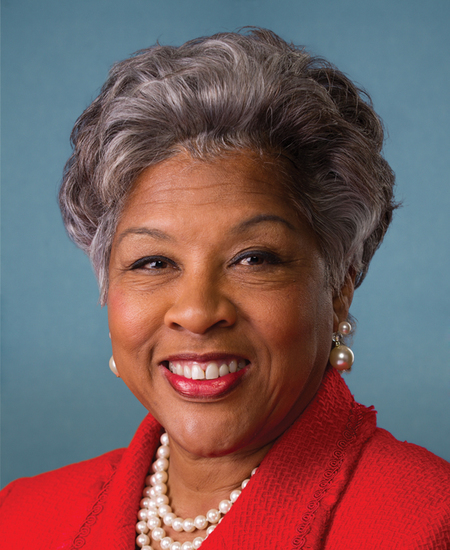
Rep. Joyce Beatty
Sponsored bills
Food Deserts Act This bill establishes a Department of Agriculture program to provide grants to states for revolving funds to support the establishment and operation of grocery stores in underserved communities. An underserved community is a community that has (1) limited access to affordable, healthy foods, including fresh fruits and vegetables, in grocery retail stores or farmer-to-consumer direct markets; and (2) a high rate of hunger or food insecurity or a high poverty rate. States must use the funds to make loans to support grocery stores in underserved communities, including for opening a store (excluding new construction), or supporting or purchasing an existing store. States may only make loans for grocery stores that meet requirements related to emphasizing unprocessed, healthful foods; providing staple foods and a variety of raw fruits and vegetables; having a plan to keep the foods in stock; charging affordable prices at or below market averages; meeting specified matching requirements using nonfederal funds; and being qualified to operate a store or having partnerships with organizations that provide technical assistance. States must prioritize loan applications from entities that meet criteria related to hiring workers from the underserved community, providing classes or educational information about a healthful diet, sourcing food from local urban farms and gardens, or demonstrating existing supply chain relationships or expertise in the grocery industry.

Lymphedema Treatment Act This bill provides for Medicare coverage of lymphedema compression treatment items. Specifically, the bill provides for coverage of standard and custom fitted gradient compression garments and other approved items that are prescribed by a physician or other specified health care professional to treat lymphedema.
Prevent All Soring Tactics Act of 2022 or the PAST Act of 2022 This bill addresses the practice of soring horses. The soring of horses includes various actions taken on horses' limbs to produce higher gaits that may cause pain, distress, inflammation, or lameness. Specifically, the bill expands soring regulation and enforcement at horse shows, exhibitions, sales, and auctions, including by establishing a new system for inspecting horses for soring. In addition, the bill increases penalties for violations.
Consumer Financial Education and Empowerment Act This bill establishes within the Consumer Financial Protection Bureau a program to award allocations to state governments, local governments, and other entities for financial literacy programs. Programs eligible for awards may include education regarding credit, student loan debt, homeownership, investments, retirement, or tax planning.
This concurrent resolution expresses opposition to the application of criminal laws to pregnancy outcomes and affirms that people deserve access to high-quality health care without fear of reprisal or punishment.
This joint resolution proposes a constitutional amendment to prohibit the Constitution from being construed to forbid Congress or the states from (1) imposing reasonable viewpoint-neutral limitations on private campaign contributions or independent election expenditures; or (2) enacting systems of public campaign financing, including those designed to restrict the influence of private wealth by offsetting campaign spending or independent expenditures with increased public funding.
Maddy summaryHJRES 53 proposes a constitutional amendment to ban slavery and involuntary servitude as a criminal punishment. Currently, the 13th Amendment to the U.S. Constitution permits such punishments for crimes, creating a legal loophole. If ratified by 3/4 of state legislatures, this amendment would eliminate that exception nationwide, making it unconstitutional to impose forced labor or slavery as part of criminal sentences. The change would directly affect all states' criminal justice systems, particularly prison labor practices, by prohibiting these punishments for any offense.
Maddy summaryHRES 1144 is a symbolic resolution designating June 3, 2022, as "National Gun Violence Awareness Day" and June 2022 as "National Gun Violence Awareness Month." It does not create new laws or policies but urges the public to wear orange, promote gun safety awareness, and hold community discussions about reducing gun violence during these dates. The resolution cites U.S. statistics on gun-related deaths and injuries as context for the designation. It directly affects the general public by encouraging voluntary observance and community engagement. The bill has no binding effect or funding provisions.
This resolution condemns racism and invidious discrimination as evil and antithetical to the U.S. Constitution and declares unconditional war on racism and invidious discrimination in America. (Invidious discrimination generally refers to discrimination based on a classification that is arbitrary or irrational and not related to a legitimate purpose.) The resolution also expresses the intention of the House of Representatives to pass legislation establishing a Cabinet-level Department of Reconciliation. The department shall be charged with developing and coordinating the implementation of a comprehensive national strategy to eliminate racism and invidious discrimination.