

Maddy summaryHJRES 72 proposes a constitutional amendment to remove the exception in the Thirteenth Amendment that allows slavery and involuntary servitude as punishment for a crime. If ratified, this amendment would ban the use of forced labor in prisons as a criminal penalty, directly affecting how the U.S. criminal justice system handles sentencing. The resolution clarifies it does not interfere with voluntary work programs in correctional facilities, existing employment protections for incarcerated people, or community service alternatives. This change aims to eliminate a historical loophole that has disproportionately impacted Black Americans since the 1860s.
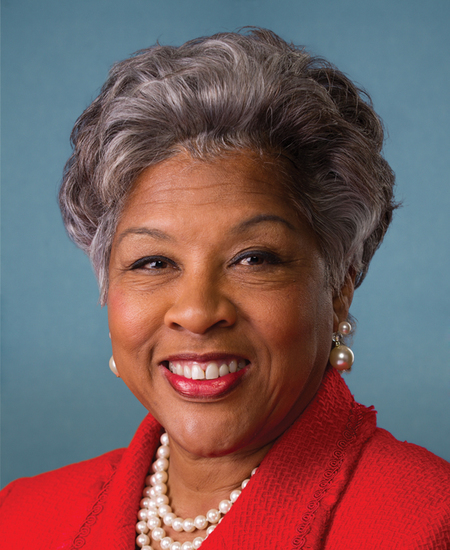
Rep. Joyce Beatty
Sponsored bills
Maddy summaryHRES 505 is a non-binding resolution recognizing June 19, 2023, as the annual observance of Juneteenth Independence Day. It acknowledges the historical significance of June 19, 1865, when Union troops announced the end of slavery in Texas, marking the first widespread celebration of freedom for formerly enslaved people in the U.S. The resolution encourages all Americans to observe the day through ceremonies and educational activities to honor this milestone in U.S. history. It does not create new policy or benefits but formally supports public recognition of Juneteenth as part of the nation's heritage.
Maddy summaryThis bill requires all high schools operated by the Department of Defense Education Activity (DoDEA) to make a financial literacy course mandatory for graduation. It applies specifically to students in DoDEA high schools, beginning with those entering ninth grade one year after the bill's enactment. The law mandates that students complete this dedicated course before graduating, replacing any existing requirements for this subject. The course aims to teach practical money management skills to military-connected students as part of their high school curriculum.
Maddy summaryHR 4122, the Henrietta Lacks Congressional Gold Medal Act, authorizes a posthumous Congressional Gold Medal to honor Henrietta Lacks for her contribution to medical science through the HeLa cell line. The bill directs the Treasury to strike the medal recognizing how her cells enabled major medical advances, including the polio vaccine and cancer treatments, without altering any laws or policies. The medal will be displayed at the Smithsonian Institution to commemorate her legacy in scientific research and bioethics. This is a purely commemorative measure with no direct effect on current legislation or affected individuals.
Woman on the Twenty Act of 2023 This bill bars the printing of any $20 note after December 31, 2026, which does not prominently feature a portrait of Harriet Tubman on the front face of the note. The Department of the Treasury shall release to the public the preliminary design of the $20 note prominently featuring a portrait of Harriet Tubman no later than December 31, 2024.
Maddy summaryHR 4015 updates the U.S. strategy for engagement with Caribbean nations by adding specific policy goals to the existing 2016 Act. It directs the U.S. government to reduce illicit firearm trafficking to the region, combat lottery scams targeting Americans, and support Caribbean security forces. The bill also requires enhanced cooperation on energy security (promoting renewable power), climate resilience, public health infrastructure, food security, and expanding internet access - especially for marginalized communities. The updated strategy must involve agencies like Defense, Justice, and Treasury, and will guide U.S. efforts to strengthen partnerships across these areas. This affects Caribbean nations partnering with the U.S. on security, climate, health, and economic initiatives.
Maddy summaryThis bill requires federal agencies collecting demographic survey data to begin including questions on sexual orientation, gender identity, and variations in sex characteristics (intersex traits) within 360 days of enactment. Agencies must review existing surveys to identify gaps, develop privacy-protective methods for collecting this data (including anonymization and data destruction protocols), and incorporate it into relevant reports within three years. The law applies to all federal surveys that collect standard demographic data (like race, ethnicity, and age), such as the census or health surveys, but does not compel individuals to disclose their status. It emphasizes maintaining confidentiality, allows limited agency waivers if standards can't be met, and mandates a congressional report on implementation within two years.
Maddy summaryThe Neighborhood Homes Investment Act creates a new tax credit for developers who rehabilitate or build affordable homes in distressed communities. The credit is calculated based on the difference between rehabilitation costs and the sale price, with homes required to be sold at affordable prices to qualified homeowners with incomes up to 140% of the local median family income. The bill targets specific "qualified census tracts" defined by high poverty rates, low homeownership, and below-average home values. Developers must ensure homes are sold to qualified homeowners who use them as primary residences for at least five years, with additional safeguards to prevent program abuse and ensure fair housing practices.
Maddy summaryHR 3850, the Pride In Mental Health Act of 2023, establishes a federal grant program to improve mental health and substance abuse services for LGBTQ+ youth (including nonbinary, intersex, and Two Spirit individuals). The bill directs the Health and Human Services Secretary to fund eligible organizations to provide trauma-informed care, cultural competency training for caregivers, school bullying prevention guidelines, and family support resources. It explicitly prohibits grant funds from being used for conversion therapy or advertising related to such therapy. The bill also requires data collection on LGBTQ+ youth mental health and a federal survey to measure psychological distress.
Maddy summaryHRES 480 is a symbolic House resolution recognizing National Caribbean American Heritage Month. It does not create new laws or affect specific groups; instead, it formally supports the goals of observing June as Caribbean American Heritage Month. The resolution encourages the public to celebrate through ceremonies and activities, while affirming that Caribbean Americans' contributions are integral to U.S. history and diversity. This is a commemorative resolution with no policy changes or funding impacts, aligning with annual proclamations since 2006.