

Maddy summaryHJRES 113 designates August 20 as Slavery Remembrance Day to commemorate the arrival of the first 20 enslaved Africans in Virginia in 1619 and honor the enduring legacy of slavery. The resolution requests the President issue a proclamation encouraging the public to observe this day through ceremonies and activities that acknowledge slavery's horrors and its lasting impacts. It includes historical context about the transatlantic slave trade, the Middle Passage, and figures like Harriet Tubman, while posthumously recognizing Reconstruction-era Black Congress members. As a symbolic commemorative resolution, it does not create new laws or directly affect any group, but serves to raise awareness about slavery's history and consequences.
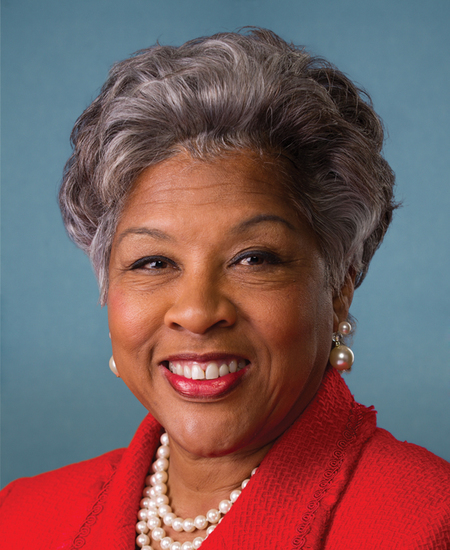
Rep. Joyce Beatty
Sponsored bills
Maddy summaryThis bill (HJRES 115) terminates a presidential emergency declaration made on August 11, 2025, which claimed a "crime emergency" in Washington, D.C. It directly affects the District of Columbia by ending federal restrictions that prevented D.C. from using $1 billion in locally-raised funds for public safety, law enforcement, fire services, and schools. The resolution cites that the emergency declaration was legally flawed - section 740 of the DC Home Rule Act does not permit federalizing the Metropolitan Police Department - and notes that D.C. violent crime has reached a 30-year low. The bill formally ends the emergency under the DC Home Rule Act, restoring D.C.'s authority over its own budget and public safety resources.
Maddy summaryHRES 655 is a symbolic House resolution supporting the designation of August 17, 2025, as "Marcus Garvey Recognition Day." It cites Marcus Garvey's role as founder of the Universal Negro Improvement Association, his focus on Black economic independence through initiatives like the Black Star Line, and his 2025 posthumous presidential pardon. The resolution asks the President to issue a proclamation encouraging the public to observe the day with ceremonies. This is a commemorative gesture with no binding legal effect, intended to honor Garvey's historical contributions.
Maddy summaryHRES 657 is a non-binding House resolution affirming that the retirement age for Social Security and Medicare should not be raised, referencing President Trump’s 2024 pledge. It states the House’s position that current eligibility ages must be preserved, rejecting proposals to delay access to benefits for seniors. The resolution highlights that raising retirement ages would disproportionately impact workers in physically demanding jobs and lower-income communities who rely on these programs for income and healthcare. As a symbolic statement - not a law - it expresses support for maintaining existing benefits but does not change policy or create new obligations.
Maddy summaryThis resolution (HRES 654) is a symbolic statement expressing the House's recognition of Marcus Garvey's historical contributions and calling for his exoneration. It states the House believes Garvey was innocent of his 1920s mail fraud conviction (which the resolution deems politically motivated), affirms his global leadership in human rights and economic self-sufficiency movements, and urges the President to clear his name. The resolution does not create new laws or policies; it is purely a statement of congressional sentiment regarding Garvey's legacy. It directly affects how Garvey is formally recognized in U.S. history but has no legal effect on his historical record or current policy.
Maddy summaryThis bill amends the Food and Nutrition Act to clarify that Social Security benefits (income under Title II of the Social Security Act) are not counted when determining eligibility for SNAP (Supplemental Nutrition Assistance Program) benefits. It directly affects seniors receiving Social Security who rely on SNAP for food assistance, ensuring their Social Security payments do not reduce their SNAP benefits. The key change adds Social Security income to the list of non-countable resources under SNAP rules. The amendment takes effect 90 days after the bill is enacted.
Maddy summaryThis bill authorizes Congress to award a gold medal to honor Africans and their descendants who were enslaved in the U.S. from 1619 to 1865. The medal, designed by the Treasury Secretary, will be displayed at the National Museum of African-American History & Culture in Washington, D.C. Duplicate bronze medals may be sold to cover production costs, with proceeds going to the U.S. Mint. The bill focuses on recognizing the historical contribution of enslaved people to America's economic foundation without proposing new laws or funding.
Maddy summaryThe Ending Homelessness Act of 2025 would expand housing assistance to reduce homelessness through several key provisions. It would allocate 500,000 additional housing choice vouchers in 2025, increasing to 1 million annually by 2028 for extremely low-income families and individuals receiving supplemental security income. The bill prohibits housing discrimination based on source of income (including housing vouchers and Social Security benefits), provides $1 billion annually for emergency relief grants targeting high-need areas, and establishes a permanent entitlement program for housing vouchers starting in 2029. It also repeals certain ineligibility criteria for housing assistance and makes faith-based and private nonprofit organizations eligible for funding.
Maddy summaryThis bill adjusts health insurance subsidies by modifying the premium tax credit structure under the Internal Revenue Code. It replaces previous income thresholds with a sliding-scale formula, increasing subsidies for households earning between 150% and 400% of the federal poverty level - reducing their required premium payments as income rises within these tiers. The changes apply to tax years beginning after December 31, 2025, directly affecting middle-income individuals and families purchasing coverage through health insurance marketplaces. It also repeals specific provisions from a prior reconciliation law related to health care.
Maddy summaryThis bill removes a barrier preventing most low-income students from accessing SNAP benefits. It amends the Food and Nutrition Act to explicitly allow students enrolled at least half-time in recognized higher education programs to qualify for SNAP, reversing a prior exclusion. The key change eliminates the previous requirement that students meet specific exceptions (now deleted) and adds a new eligibility category under Section 3(m)(5). This directly affects low-income undergraduate and graduate students at colleges and training programs who were previously ineligible. The changes take effect January 2, 2026.