

Maddy summaryThis bill withholds federal grant funding from states or local governments that implement specific policies. It prohibits funding for jurisdictions with laws that substantially limit cash bail for certain serious crimes (like violent offenses or public disorder) or allow felony convicts to be released without bail. It also blocks funding for cities classified as "urbanized areas" that reduced police budgets (unless due to a general budget shortfall). The policy directly affects local governments and states that adopt these specific approaches to criminal justice or law enforcement funding. The bill modifies two existing federal grant programs to enforce these eligibility rules.
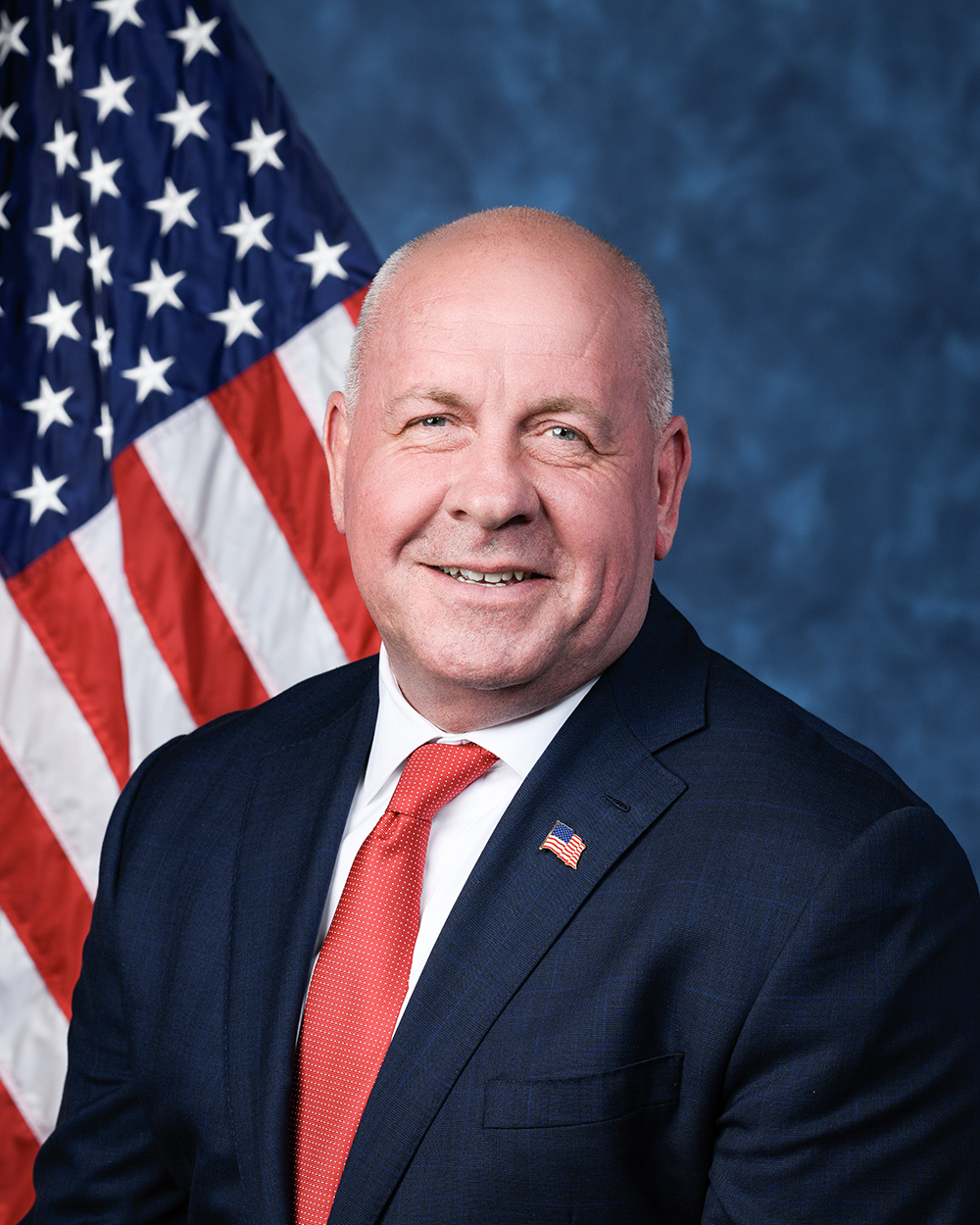
Rep. David J. Taylor
Sponsored bills
Maddy summaryThis bill extends the deadline for improving the U.S. Drought Monitor from 2023 to 2030 and establishes an interagency working group to enhance the data used in the Monitor. The working group, including representatives from USDA, NOAA, the National Drought Mitigation Center, and state mesonet programs, will develop methods to include more ground-based data, address access barriers to existing datasets, and create transparent vetting processes for remote sensing data. Within one year, the group must submit recommendations to federal agencies and congressional committees, after which the Secretary of Agriculture will incorporate feasible changes. Additionally, the Farm Service Agency and Forest Service must align their drought response efforts, including using the U.S. Drought Monitor for consistent decisions and information sharing with stakeholders.
Maddy summaryHR 5548, the Fraud Accountability and Recovery Act, blocks U.S. foreign aid to countries that fail to extradite individuals convicted of defrauding the U.S. or assist in recovering stolen federal funds. The bill directly affects foreign governments that do not take legal action to identify, freeze, seize, or repatriate funds fraudulently obtained from U.S. programs. Key provisions require the President to withhold aid under the Foreign Assistance Act if a country neglects these measures, and mandate annual reports listing non-compliant countries along with the value of unrecouped fraud funds. The bill cites examples like a $250 million pandemic food fraud scheme in Minnesota to highlight the scale of losses (estimated $233-$521 billion annually), but focuses on preventing future fraud by denying safe havens abroad. It includes a presidential waiver option for national security reasons, requiring prior congressional notification.
Maddy summaryHRES 719 is a House resolution honoring Charles "Charlie" James Kirk, the founder of Turning Point USA who was assassinated on September 10, 2025. The resolution condemns his assassination and all political violence, extends condolences to his family, and calls on Americans to reject violence while promoting civil discourse. It specifically recognizes Kirk's legacy as a defender of constitutional principles and his role in inspiring youth through free speech and faith-based civic engagement. As a commemorative resolution, it does not enact policy changes but formally expresses the House's stance on honoring his life and legacy.
Maddy summaryThis bill prohibits U.S. courts from enforcing judgments based on Shari'a or any foreign law if they conflict with constitutional rights, particularly in family law cases like divorce, child custody, or inheritance. It requires courts to apply only U.S. law when foreign legal systems would violate fundamental rights such as due process, equal protection, or freedom from coercion. Contracts may still reference foreign law, but enforcement is blocked if it infringes constitutional protections. The law aims to ensure all court decisions comply with U.S. constitutional standards nationwide.
Maddy summaryHR 5483, the Chloe Cole Act, prohibits health care professionals, hospitals, or clinics from providing certain gender-affirming treatments to minors under 18 that aim to alter their body to align with a gender identity different from their sex assigned at birth. This includes puberty blockers, sex hormones, and specific surgeries, unless the treatment falls under narrow exceptions like medically necessary care for disorders of sexual development, injuries, or detransition. The bill creates a private right for affected minors or their guardians to sue providers for damages in federal court, with strict liability for violations. It applies when interstate commerce is involved (e.g., payments, travel, communications) and sets a 25-year statute of limitations from the minor’s 18th birthday.
Maddy summaryHRES 729 is a symbolic resolution designating September 17, 2025, as "Constitution Day" to honor the 250th anniversary of the U.S. Constitution's signing (September 17, 1787). It does not create new laws or affect any specific group; instead, it urges the American public to observe the day with ceremonies and activities. The resolution emphasizes the Constitution's historical significance and its role in establishing American democracy. As a commemorative measure, it has no binding effect on policy or governance.
Maddy summaryThis bill (HR 5431) prohibits the use of federal taxpayer money to pay reparations ordered by international courts or bodies for violations of international law. It directly affects the U.S. federal government, blocking any payment from existing federal funds for such reparations. The key mechanism requires Congress to pass a new law approving any specific reparations payment after this bill takes effect. The bill does not block existing international agreements but prevents automatic federal funding for new reparations awards.
Maddy summaryThis bill permanently bans nitazenes and all structurally related synthetic opioids under federal law, creating a broad definition that covers numerous chemical variations designed to evade current restrictions. It directly affects anyone manufacturing, distributing, or possessing these substances without authorization, including illicit drug producers and users. The key mechanism is a class-wide Schedule I classification that includes specific structural features (like modified benzimidazole rings) and excludes new analogs from legal loopholes. This approach aims to prevent new nitazene variants from entering the illegal market and addresses their role in overdose deaths. Substances previously temporarily banned under similar rules will now be permanently prohibited as of the bill's enactment.
Maddy summaryHR 5401, the Pay Our Troops Act of 2026, ensures military personnel, civilian Defense workers, and supporting contractors receive pay during government funding gaps in fiscal year 2026. It appropriates emergency funds for active-duty service members, reserves, and their supporting personnel (including Coast Guard staff under DHS) if regular appropriations aren't enacted by the end of the fiscal year. The bill provides necessary pay and allowances during any period when full-year funding is unavailable, covering both active service and support roles. Funding expires when regular appropriations are passed, a funding resolution is enacted, or January 1, 2027, whichever comes first. This is a procedural measure to prevent pay delays for military and support staff during fiscal year 2026 funding lapses.