This resolution permits Members to object to the consideration of legislation if the title (including the short title, if applicable) does not adequately expresses the content of the legislation.
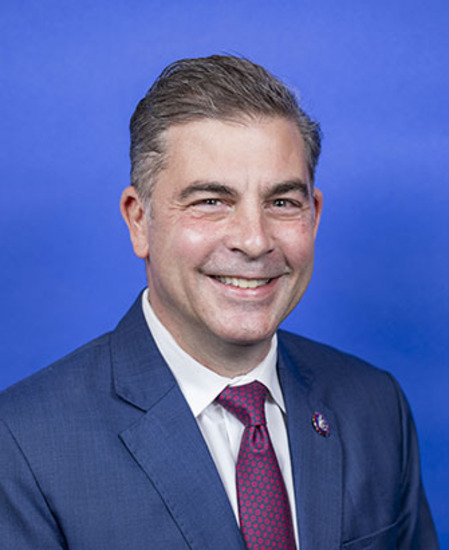
Rep. Mike Carey
Sponsored bills
This resolution expresses the sense of the House of Representatives that the President should work with Congress to develop and execute a strategy to counter the rise in violent crime across the country by reinforcing strong criminal justice policies, by laying blame on the perpetrators of violent acts, and by securing the southern border.
Maddy summaryHRES 1214 is a non-binding congressional resolution condemning specific incidents of intimidation and vandalism targeting Supreme Court Justices and crisis pregnancy centers. It calls for the Department of Justice to enforce existing law (18 U.S.C. §1507) prohibiting protests near judges' homes and demands investigations into attacks linked to the group "Jane’s Revenge," which vandalized facilities with threatening messages like "If abortions aren’t safe, then you aren’t either." The resolution does not create new laws but formally expresses Congress’s stance against these acts. It directly addresses the actions taken against judicial officials and reproductive health centers, citing documented incidents from May-June 2022. The resolution is purely symbolic, with no legal effect beyond expressing congressional disapproval.
Maddy summaryThis resolution (HRES 1164) is a symbolic House vote condemning Senator Chuck Schumer for remarks made in March 2020 where he stated justices Gorsuch and Kavanaugh "will pay the price" for Supreme Court decisions. It specifically cites his comments as potentially contributing to a violent threat against Justice Kavanaugh (by Nicholas Roske, arrested in June 2022). The resolution calls on Schumer to issue a formal apology to the justices and publicly condemn threats against federal officials. As a non-binding resolution, it does not change law or policy but reflects the House's disapproval of his rhetoric.
This resolution expresses the sense of the House of Representatives that (1) for purposes of federal law, a person's sex means the person's biological sex at birth; and (2) distinctions between the sexes are justified in certain settings, laws, and policies.
Homeland Security Fentanyl Enforcement Act This bill specifically allows Special Agents of Homeland Security Investigations to enforce the Controlled Substances Act during their normal course of duties and to the same extent as the Drug Enforcement Administration.
Pretrial Release Reporting Act This bill requires the Bureau of Justice Statistics to submit a report to Congress on individuals who are granted bail or pretrial release from state courts and are charged with violent felony offenses (e.g., murder or rape).
Sanctioning Putin's Enablers Act This bill requires the President to impose sanctions on certain individuals involved in Russia's invasion of Ukraine, including Russian legislators who voted to authorize the invasion and certain officials of Belarus who orchestrated the constitutional referendum that permitted Belarus to permanently host Russia's nuclear weapons. The President must confiscate the property and accounts of such sanctioned individuals that come within U.S. jurisdiction. The bill also requires a U.S. financial institution to take all necessary and available actions to ensure any entity or person owned or controlled by such institution complies with financial sanctions applicable to Russia or Belarus to the same extent required of that institution.
No Travel for Traffickers Act of 2022 This bill bars from the visa waiver program any country that allows individuals to obtain citizenship by making an investment in that country.
Border Czar Accountability Act of 2022 This bill prohibits any Cabinet member appointed by the President to lead efforts related to immigration or securing the U.S.-Mexico border from expending any federal funds if that Cabinet member fails to meet certain reporting requirements. The bill also requires that Cabinet member to visit the U.S.-Mexico border at least once every 60 days. Within 30 days of this bill's enactment, the Cabinet member must report to Congress and the President on policy changes that went into effect between January 20, 2021, and this bill's enactment date, including the (1) effect of such policy changes on law enforcement and Department of Homeland Security personnel, and (2) difference in funds expended in FY2021 compared to FY2020 to address the issue of non-U.S. nationals ( aliens in federal law) unlawfully present in the United States. If the report is not submitted, the Cabinet member may not obligate or expend any federal funds until the report has been delivered. After each visit to the U.S.-Mexico border required by this bill, the Cabinet member must report to the President and Congress on (1) issues observed or informed of during the visit, and (2) suggestions for improving the security and situation at the border.