

Help Extract Animals from Red Tape Act of 2021 or the HEART Act of 2021 This bill modifies notice requirements in a civil forfeiture proceeding that involves the seizure of an animal involved in animal fighting. Specifically, the government must notify interested parties of an animal's seizure within 30 days (currently, 60 days). The notice period may be extended only if a delay is warranted after considering certain factors, including the cost to the government of providing shelter for the animal, the health of the animal and the effect of a delay on its rehabilitation, any increased risk that a delay could necessitate the euthanasia of the animal, and any psychological harm incurred by the animal's owner due to the delay in disposition. Additionally, the bill authorizes amounts in the Department of Justice Assets Forfeiture Fund to be used to pay for costs associated with a seized animal, including transportation, shelter, care, veterinary services, and humane euthanasia.
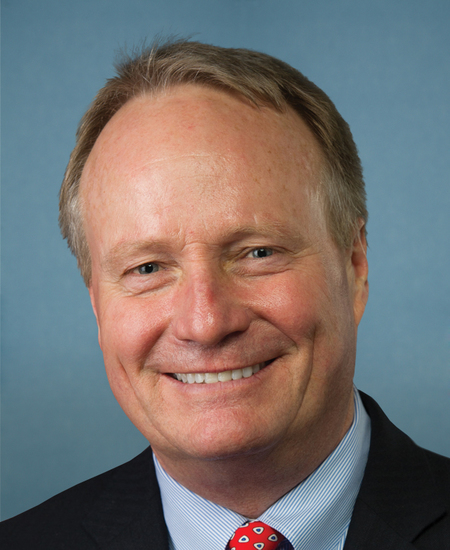
Rep. David P. Joyce
Sponsored bills
COVID-19 Border Protection (CBP) Act This bill requires the Department of Homeland Security (DHS) to devise and implement a strategy to ensure that no alien with COVID-19 (i.e., coronavirus disease 2019) in DHS or Department of Health and Human Services custody may be released into the community during a public health emergency related to COVID-19. Funds previously provided to the Department of State for supporting international efforts to help migrants and refugees respond to COVID-19 shall be transferred to DHS to implement this strategy.
Prohibiting IRS Financial Surveillance Act This bill prohibits the Department of the Treasury from requiring a financial institution to report the transfers into and out of a financial account. This prohibition does not apply to laws or regulations in effect on October 1, 2021.
Veterans Census-Enabled National Treatment Equitable Resource Supplement for Mental Health Act of 2021 or the Vet CENTERS for Mental Health Act of 2021 This bill requires the Department of Veterans Affairs (VA) to ensure the number of Vet Centers in certain states is increased by at least one additional center if the VA determines the state meets specified requirements. The VA must also establish a community-based outpatient clinic in each state that does not share a land border with another state, is located at least 2,000 miles from the contiguous United States, and contains no such clinic.
Solid Start Act of 2021 This bill permanently authorizes and expands the Solid Start program, which is an outreach program for veterans in their first year of separation from the military. Specifically, the bill requires the Department of Veterans Affairs (VA) to coordinate with the Department of Defense to collect updated contact information during transition classes or separation counseling for members of the Armed Forces who are separating from service; explain the existence and purpose of the program; call veterans three times within the first year of separation; publish information about the program in booklets and on the VA website; provide women veterans with information tailored to their health care and benefit needs; provide information on access to state and local resources, such as Vet Centers; gather and analyze data that assesses the effectiveness of the program; ensure calls are tailored to each veteran's needs by conducting quality assurance tests; and prioritize outreach to veterans who have accessed mental health resources prior to separation from the Armed Forces. Under the bill, the VA is authorized to (1) encourage members of the Armed Forces to provide additional contact information if they are unreachable following their separation, (2) follow up on missed phone calls, and (3) reach out to veterans who separated prior to the initiation of the Solid Start program.
Securing Systemically Important Critical Infrastructure Act This bill sets out a process to designate elements of critical infrastructure as systemically important. Critical infrastructure refers to the machinery, facilities, and information that enable vital functions of governance, public health, and the economy. Specifically, the Cybersecurity and Infrastructure Security Agency (CISA) must establish a methodology based on objective criteria to designate critical infrastructure as systemically important. In developing the criteria, CISA must consider, among other factors, the scale of the potential effects of a disruption to the infrastructure on domestic security, the economy, health, or safety. Using the methodology, CISA must make a preliminary designation and then provide an opportunity for the infrastructure's owner or operator to share additional information. A preliminary designation becomes final after 30 days unless, on the basis of additional information, CISA determines the infrastructure does not meet required criteria. The bill also requires CISA to maintain a list of systemically important critical infrastructure, prioritize systemically important critical infrastructure in its programs and activities, report on various matters related to the designation process, and assess processes for and benefits of enhanced risk management coordination between the federal government and the owners and operators of systemically important critical infrastructure. Additionally, the Department of Homeland Security must prioritize the security clearance applications of owners and operators of systemically important critical infrastructure.
Prince Jonah Kūhiō Kalaniana'ole Protecting Family Legacies Act This joint resolution consents to the Hawaii legislature's amendments to the Hawaiian Homes Commission Act. In 2017, the Hawaii legislature reduced the minimum Native Hawaiian blood quantum required for an individual to inherit a homestead lease under the act.
This concurrent resolution supports the designation of a national day of remembrance for the Native American children who died while attending an Indian boarding school in the United States.
One-Stop Pilot Program Act of 2021 This bill authorizes the Transportation Security Administration (TSA) to conduct a pilot program at not more than six foreign last point of departure airports to permit passengers and their accessible property to bypass domestic security rescreening at a connecting airport in the United States. Screening may be bypassed if (1) the country of departure has an aviation screening agreement with the United States setting standards and protocols comparable to those in the United States; (2) passengers cannot access their checked baggage until arriving at their final destination; and (3) upon arrival in the United States, passengers do not come into contact with other arriving international passengers (or their property) or persons who have not been screened. The TSA must ensure there is no reduction in the level of security or specific aviation security standards and requirements for screening passengers and their property prior to boarding an international flight bound for the United States, including standards or requirements regarding (1) high risk passengers; and (2) weapons, explosives, and incendiaries. If the TSA determines that the foreign countries participating in the screening agreements have not maintained and implemented comparable standards and protocols to those in the United States, it must ensure that passengers and their property arriving from the foreign airports are rescreened in the United States before they are permitted into sterile areas of the airports. The pilot program shall terminate six years after the enactment of the bill.
Addressing Care Timelines for Veterans Act or the ACT for Veterans Act This bill modifies the Veterans Community Care Program to extend the authorization period for emergency treatment in non-Department of Veterans Affairs (VA) medical facilities. Specifically, the bill requires the VA to deem as authorized emergency care or services provided by a non-VA health care provider to a covered veteran if such veteran applies for authorization within 96 hours (currently 72 hours under VA regulations) of admission for care. Covered veterans are those who are enrolled in the VA health care system or those who are not enrolled but are eligible for care due to a service-connected disability.