

Common Sense Cannabis Reform for Veterans, Small Businesses, and Medical Professionals Act This bill removes federal restrictions on, and creates new protections for, marijuana-related conduct and activities that are authorized by state or tribal law. Among other things, the bill does the following: removes marijuana from the list of scheduled substances under the Controlled Substances Act and eliminates criminal penalties for an individual who manufactures, distributes, or possesses marijuana; directs the Food and Drug Administration and the Alcohol and Tobacco Tax and Trade Bureau of the Department of the Treasury to issue rules to regulate marijuana that are similar to the federal rules regulating alcohol; creates protections for depository institutions that provide financial services to marijuana-related businesses; creates protections for veterans who use, possess, or transport medical marijuana; and requires the National Institutes of Health to study and report on the effects of medical marijuana on individuals who are impaired or in pain and the relationship between state-approved treatment programs involving medical marijuana, access to such programs, and a reduction in opioid abuse.
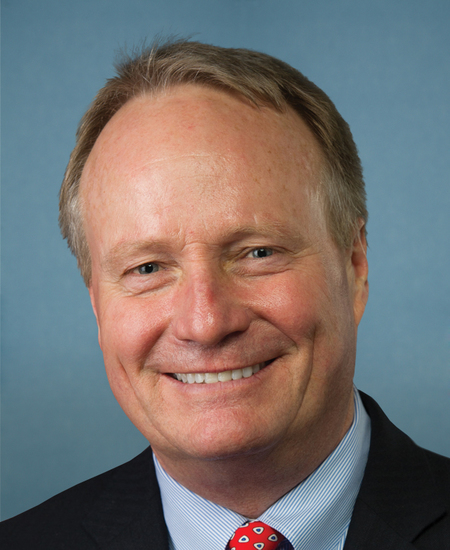
Rep. David P. Joyce
Sponsored bills
Fiscal State of the Nation Resolution This concurrent resolution requires the congressional budget committees to conduct an annual joint hearing to receive a presentation from the Comptroller General regarding (1) the Government Accountability Office's audit of the financial statement of the executive branch, and (2) the financial position and condition of the federal government.
No Vaccine Mandate Act This bill prohibits certain funding made available for the Departments of Labor, Health and Human Services, and Education and related agencies from being used for implementing or enforcing a rule that requires a COVID-19 vaccine.
Promoting Responsibility Over Moderation In the Social-media Environment Act or the PROMISE Act This bill requires interactive computer services (e.g., social media companies) to establish and publicly disclose policies for moderating content on their services. This includes the categories of information that are not permitted on the service, the process by which information posted on the service is moderated, and how the service provider notifies users that information has been moderated. These moderation policies are enforced by the Federal Trade Commission.
Brycen Gray and Ben Price COVID-19 Neurological Impact Act This bill authorizes grants and requires other activities to address neurological and psychiatric illnesses associated with COVID-19 infection. Specifically, the National Science Foundation may award competitive grants for multidisciplinary research on such illnesses. In addition, the White House Office of Science and Technology Policy must establish a temporary interagency working group to coordinate relevant federal programs, data collection, and other activities focused on neurological and psychiatric illnesses associated with COVID-19 infection. The working group must also engage with researchers and nonfederal stakeholders to ensure the sharing and dissemination of relevant research, information, and best practices pertaining to those illnesses. The working group terminates after five years.
National Domestic Violence Prevention Action Plan Act of 2021 This bill establishes an interagency steering committee within the Department of Health and Human Services (HHS) to expand, intensify, and coordinate federal and nonfederal actions to prevent domestic violence. HHS may include nonfederal subject matter experts if necessary to carry out the committee's activities. Specifically, the committee must develop an action plan to guide a whole-of-government, goal-oriented approach to domestic violence prevention. The committee must include, as part of the plan, a national media campaign to engage with the public on matters concerning domestic violence prevention.
State, Local, Tribal, and Territorial Fiscal Recovery, Infrastructure, and Disaster Relief Flexibility Act This bill allows states, tribes, territories, and localities to use certain COVID-19 relief funds for new categories of spending, including for natural disasters and infrastructure projects. It also makes changes to expenditure deadlines and other aspects of this funding. Specifically, recipients may use funds for emergency relief from natural disasters and associated negative economic impacts of natural disasters. In addition, recipients may use a portion of their COVID-19 relief funds for designated infrastructure projects, such as nationally significant freight and highway projects. Furthermore, the bill allows recipients to expend COVID-19 relief funds on these types of infrastructure projects until September 30, 2026. Under current law, recipients must expend the funds by December 31, 2024. Other changes in the bill include (1) modifying eligibility and allocation requirements for funding set aside for counties and Indian tribes that are near public lands, (2) allowing Indian tribes an additional year to expend their COVID-19 relief funds, and (3) establishing a process for government entities to decline COVID-19 relief funds and requiring any declined funds to be used to reduce the federal deficit.
Student Assisted Vaccination Effort Act or the SAVE Act This bill expands the types of medical personnel authorized to administer or use a covered countermeasure (i.e., a qualified pandemic or epidemic product, a security countermeasure, certain drugs, biomedical products, or medical devices, or a respiratory protective device) during a federally-declared public health emergency to include specified health profession students with appropriate training in administering vaccines and supervision by a licensed health professional.
This resolution recognizes the ultimate sacrifice of the unknown soldiers interred at Arlington National Cemetery and expresses gratitude and appreciation of all the members of the Armed Forces who have served during wars and peacetime. Additionally, the resolution commends all members of the 3d Infantry Regiment, specifically those who guard the Tomb of the Unknown Solider.
This resolution expresses solidarity with the Lebanese people following the explosions at the Port of Beirut on August 4, 2020, and supports their right to peacefully demonstrate to achieve political goals and anti-corruption reforms.