

CARA 3.0 Act of 2021 This bill addresses substance use disorders by expanding access to treatment and recovery services, providing for housing protections, and requiring other activities. Specifically, the bill reauthorizes, establishes, and expands support for treatment and recovery services. This includes increasing access to treatment in the criminal justice system and other settings and for particular populations, such as pregnant and postpartum individuals and youth and young adults. Additionally, the bill expands Medicare and Medicaid coverage for treatment, including by expanding telehealth access to medication to treat substance use disorders. The bill also temporarily requires that non-opioid pain treatment options be reimbursed separately, instead of on a packaged basis, under Medicare. As a condition of receiving certain federal funding, states must mandate the use of prescription drug monitoring programs (PDMPs) by prescribers and dispensers and impose additional PDMP requirements. Moreover, prescribers of potentially addictive drugs must complete continuing education requirements. The bill also revises the registration process for providers who prescribe certain medications to treat substance use disorders, including by eliminating the provider's patient limit for such medications. In addition, the Substance Abuse and Mental Health Services Administration must carry out activities to promote access to high-quality recovery housing. The bill also sets out protections for individuals with substance use disorders who live in, or apply to live in, federally assisted housing. Furthermore, the bill requires other activities to address substance use, such as support for workforce education and training; public awareness campaigns and similar outreach; and research on prevention strategies, insurance coverage, and treatment modalities.
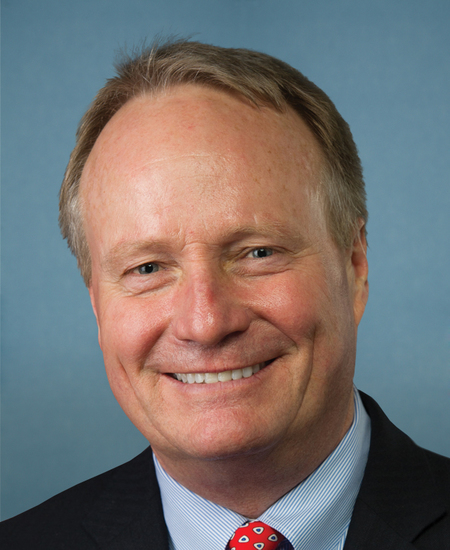
Rep. David P. Joyce
Sponsored bills
National Sexual Assault Hotline Grants Reauthorization Act This bill reauthorizes grants for the Rape, Abuse & Incest National Network for FY2022-FY2028.
This bill establishes the National Commission on Domestic Terrorist Attacks on the United States by Antifa. The commission must investigate and report on the involvement of antifa in the riots some cities experienced in 2020 and make recommendations to prevent further attacks and violent riots by antifa.
Empowering Law Enforcement To Fight Sex Trafficking Demand Act of 2021 This bill allows grants under the Edward Byrne Memorial Justice Assistance Grant program to be used for programs to combat human trafficking.
H-2B Returning Worker Exception Act of 2021 This bill modifies the H-2B (temporary nonagricultural workers) nonimmigrant visa program, including by exempting certain workers from an annual numerical limit on such visas and requiring civil penalties for program violations. Under this bill, if a worker seeking a H-2B visa has been counted toward the 66,000 annual cap on such visas in one of the three preceding fiscal years, that worker shall not be counted against the cap again. Furthermore, the Department of Homeland Security (DHS) must impose a civil monetary penalty on an employer for (1) failing to meet requirements related to an H-2B visa petition, or (2) making a willful misrepresentation of material fact in such a petition. DHS must also ensure the establishment of an electronic platform (1) for employers to submit and request approval of an H-2B petition, and (2) to act as a single point of access for applicants and the relevant government agencies. The Department of Labor must maintain a publicly available online database of all job orders by H-2B employers. Furthermore, Labor may take certain actions to enforce program requirements, such as imposing penalties and seeking injunctions. The bill provides statutory authority for the current practice of limiting the program to workers who are nationals of countries approved by DHS. DHS may make exceptions to this limitation in individual cases if it is in the U.S. interest to do so. DHS shall select approved countries based on various factors, such as the rate of overstay by H-2B visa holders from each country.
Northern Border Reopening Transparency Act This bill requires the Department of Homeland Security to submit a report on considerations relating to easing restrictions on or reopening the United States-Canada border to essential and nonessential travel.
Save Money on Auto Repair Transportation Act or the SMART Act This bill limits design patent infringement liability for component parts used to repair the exterior of a motor vehicle. Specifically, the bill limits liability for infringement of a design patent that claims the appearance of a component part of a motor vehicle's exterior, such as a hood or fender. The act of making, offering to sell within the United States, or importing into the United States an article of manufacture (such as an exterior component part from an aftermarket manufacturer) that would otherwise infringe such a design patent shall not constitute infringement if the purpose of the article of manufacture is to repair and restore a motor vehicle to its original appearance. In addition, 30 months after a motor vehicle with an exterior component part covered by a design patent is offered for sale in any country, it shall not constitute design patent infringement to use or sell within the United States an otherwise-infringing article of manufacture if the purpose of that article of manufacture is to repair and restore the motor vehicle to its original appearance.
Law Enforcement Training for Mental Health Crisis Response Act of 2021 This bill authorizes the Office of Justice Programs within the Department of Justice to award grants to law enforcement and corrections agencies for behavioral health crisis response training.
Preventing Anti-Semitic Hate Crimes Act This bill requires a designated officer or employee of the Department of Justice (DOJ) to facilitate the expedited review of anti-Semitic hate crimes and reports of anti-Semitic hate crimes. Further, the bill requires DOJ to issue guidance for state, local, and tribal law enforcement agencies on expanding public education campaigns to raise awareness of anti-Semitic hate crimes. Finally, the bill increases the statutory maximum prison term for an individual who is convicted of a federal hate crime offense after a prior conviction for a hate crime offense under federal law or a hate crime felony under state law.
Conrad State 30 and Physician Access Reauthorization Act This bill modifies the Conrad 30 Waiver program, which incentivizes qualified foreign physicians to serve in underserved communities. It also extends statutory authority for the program for three years from this bill's enactment. Aliens coming to the United States under a J-1 nonimmigrant visa to receive medical training typically must leave the country and reside for two years abroad before being eligible to apply for an immigrant visa or permanent residence. The Conrad program waives this requirement for individuals who meet certain qualifications, including serving for a number of years at a health care facility in an underserved area. The bill increases the number of waivers that a state may obtain each fiscal year from 30 to 35 if a certain number of waivers were used the previous year, and provides for further adjustments depending on demand. An alien physician may be employed at an academic medical center to meet the Conrad program's employment requirements if the alien's work is in the public interest, even if the medical center is not in an underserved area. Employment contracts for alien physicians under the Conrad program shall contain certain information, such as the maximum number of on-call hours per week the physician shall have to work. Certain alien physicians (along with the physician's spouse and children) shall be exempt from the direct annual numerical limits on immigration, including those physicians that have met certain requirements related to visas for physicians to serve in underserved areas.