

Maddy summaryThe Nurse Faculty Shortage Reduction Act of 2024 creates a new federal grant program to address nursing faculty shortages. It authorizes $28.5 million annually (2024-2028) to help nursing schools supplement faculty salaries, covering the gap between clinical nurse pay and teaching salaries. Schools must submit detailed salary data and plans to sustain higher pay after the 3-year grant period. The program prioritizes schools in high-need areas, serving vulnerable populations, or recruiting underrepresented faculty, with a report required to Congress after 3 years.
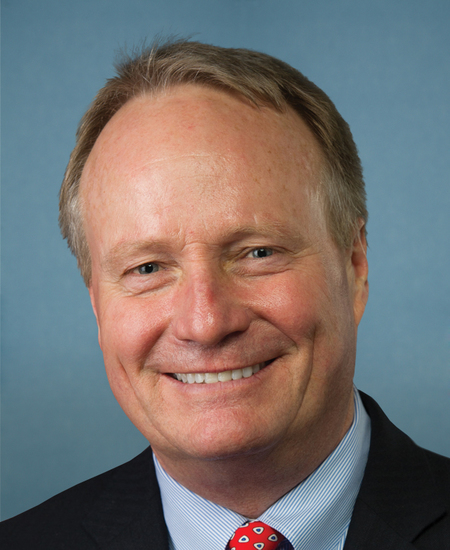
Rep. David P. Joyce
Sponsored bills
Maddy summaryThis bill requires U.S. federal agencies to prioritize native plants over non-native plants in landscape projects at federal facilities (like government buildings, military bases, and national parks). It mandates agencies to consider environmental benefits - such as supporting pollinators, reducing water use, and preventing soil erosion - when making planting decisions. Agencies must update design standards within 270 days and include these requirements in all relevant contracts. The Council on Environmental Quality will provide implementation guidance and publish biennial reports on native plant usage across federal projects.
Maddy summaryThis bill improves the administration of the Public Service Loan Forgiveness (PSLF) program, directly affecting borrowers with federal student loans who work in qualifying public service jobs (e.g., government, nonprofit roles) and their employers. It requires the Department of Education to create a public database of eligible employers, establish an online portal for borrowers to track eligibility and submit forms, and enable data sharing with agencies like the IRS to reduce paperwork. The bill also mandates annual notifications to employers about PSLF requirements, clarifies eligibility for the Temporary Expanded PSLF program, and requires annual reports on program outcomes. These changes aim to simplify the process for borrowers seeking loan forgiveness after 120 qualifying payments.
Maddy summaryHJRES 88 is a resolution seeking to block a Department of Education rule that would have improved income-driven repayment options for federal student loan borrowers. The rule, published in the Federal Register on July 10, 2023, targeted the William D. Ford Direct Loan Program and the Federal Family Education Loan (FFEL) Program. This resolution uses the Congressional Review Act process to disapprove the rule, preventing it from taking effect and preserving the current repayment structure. If enacted, it would stop the proposed changes to repayment terms without altering existing loan policies.
Maddy summaryThe STATES 2.0 Act would allow states to regulate cannabis according to their own laws without federal interference, while establishing a federal framework for interstate commerce. It would create a federal excise tax on marijuana to support regulation without adding excessive costs to consumers, and would require the FDA to regulate marijuana products as drugs, food, or cosmetics. The bill would exempt state-legal cannabis activities from federal prohibition, including removing cannabis from the federal controlled substances schedule when sold in compliance with state law. It would also allow federally recognized tribes to regulate cannabis within their jurisdictions under tribal law, and would require a study on how cannabis legalization affects traffic safety.
Maddy summaryThe Veterans HOPE Act (HR 6353) requires the Department of Veterans Affairs to review opioid overdose deaths among veterans who died between 2010 and 2016. It mandates a detailed analysis of these deaths, including demographics, medications prescribed (especially those with black box warnings), prescribing patterns, and causes of death. The review must identify veterans who died from heroin, fentanyl, or nonprescription opioids without recent opioid prescriptions, and assess VA policies on prescribing and disposal of opioids. The VA must submit a public report to Congress within 18 months, including findings and recommendations to improve veteran safety and reduce overdose rates.
Maddy summaryHRES 900 is a non-binding House resolution recognizing November 2023 as National Native American Heritage Month. It affirms the contributions of Native Americans to U.S. history, culture, and governance, and urges the public to observe the month through appropriate programs. The resolution does not create new laws or allocate funds; it solely expresses support for recognizing Native American heritage. It references prior recognition efforts like the Native American Heritage Day Act of 2009 but has no direct impact on policy or affected groups.
Maddy summaryThe Transparency for Student Veterans Act of 2023 requires the Department of Veterans Affairs (VA) to collect and publicly report detailed data about educational institutions serving veterans using VA benefits. It mandates the VA to publish specific metrics, including veteran re-enrollment rates, completion rates broken down by degree type (associate, bachelor’s, postbaccalaureate), certificate types, average program duration, and average post-graduation salaries. This information will be made available through a dedicated online database on the VA’s website. The bill directly affects student veterans and their families, providing them with transparent, comparable data to make informed decisions about educational institutions.
Maddy summaryThis bill establishes a competitive grant program to improve recycling access in underserved communities - defined as areas lacking full recycling services due to cost, distance, or insufficient processing capacity. It allocates $30 million annually (2023-2027) for grants to eligible entities like states, local governments, tribes, or public-private partnerships to fund projects such as expanding transfer stations, adding curbside collection, or creating hub-and-spoke infrastructure networks. Grants range from $500,000 to $15 million per project, with 70% of funds reserved for single or multiple underserved communities, and require 90% federal cost coverage (with possible waivers for financial hardship). The program prohibits grant use for education and mandates a congressional report on implementation and outcomes within two years.
Maddy summaryThis bill appropriates $14.3 billion in supplemental security funding to Israel following the October 7, 2023 attacks. The funding includes $4 billion for Iron Dome and David's Sling defense systems, $1.35 billion for the Iron Beam defense system development, and $3.5 billion for foreign military financing. The bill requires regular reporting to Congress on security assistance provided to Israel and designates all funds as "emergency requirements" under federal budget law. It also modifies existing laws to facilitate the transfer of defense articles and services to Israel, aiming to strengthen Israel's defense capabilities against rocket threats.