

Fair Access to Banking Act This bill places restrictions on certain banks, credit unions, and payment card networks if they refuse to do business with a person who complies with the law. Restrictions include prohibiting the use of electronic funds transfer systems and lending programs, termination of an institution's depository insurance, and specified civil penalties. Banks and other specified financial institutions are allowed to deny financial services to a person only if the denial is justified by a documented failure of that person to meet quantitative, impartial, risk-based standards established in advance by the institution. This justification may not be based upon reputational risks to the institution. The bill establishes the right for a person to bring a civil action for a violation of this bill.
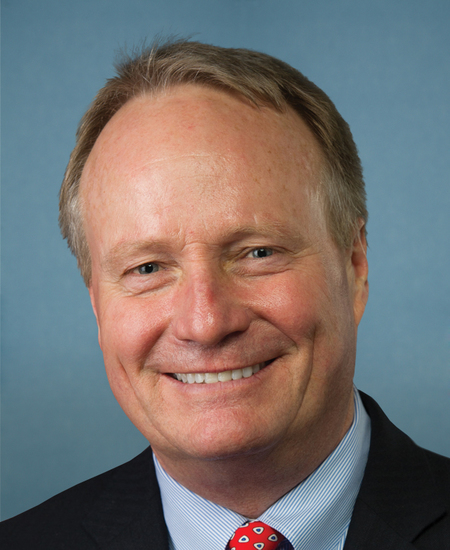
Rep. David P. Joyce
Sponsored bills
Maddy summaryHR 1006, the Higher Education Accountability Tax Act, increases the excise tax on investment income for private colleges and universities from 1.4% to 10% for all affected institutions, with an additional 20% tax for schools that raise tuition faster than inflation. It directly affects private colleges with annual investment income exceeding $250,000, particularly those increasing net tuition prices (for first-time, full-time undergraduates) at a rate exceeding the Consumer Price Index (CPI) over three years. The bill modifies existing tax code provisions to implement these rate changes, effective for taxable years beginning after December 31, 2024. This creates a tiered tax structure based on both investment income size and tuition growth relative to inflation.
Maddy summaryHRES 74 is a symbolic House resolution supporting Catholic schools and celebrating the 51st annual National Catholic Schools Week (January 26-February 1, 2025). It recognizes Catholic schools’ contributions, citing their role in educating 1.7 million students, serving diverse communities (including 20.5% racial minorities and 15.5% Hispanic students), and maintaining a 98.9% high school graduation rate. The resolution specifically applauds the National Catholic Educational Association and U.S. Conference of Catholic Bishops for their work in promoting Catholic education and the 2025 theme, "United in Faith and Community." As a procedural resolution, it has no legal effect but formally acknowledges these schools’ academic and community impact.
Maddy summaryHRES 67 is a symbolic House resolution recognizing Certified Registered Nurse Anesthetists (CRNAs) for their 150+ years of service in providing anesthesia care across the U.S. health system. It highlights CRNAs' critical role in administering over 58 million anesthetics annually, enabling rural healthcare access, supporting military and VA facilities, and responding to public health emergencies. The resolution specifically encourages the public, healthcare providers, and policymakers to fully utilize CRNAs' expertise during National CRNA Week (January 19-25, 2025). As a non-binding acknowledgment, it directly honors the 65,000+ CRNAs and student anesthetists without creating new policy or funding.
Maddy summaryHR 21, the Born-Alive Abortion Survivors Protection Act, requires medical staff at abortion facilities to provide the same immediate care and hospital admission to any infant born alive during an abortion as they would for any newborn. It mandates reporting failures to provide this care to law enforcement and imposes penalties of up to 5 years in prison for violations, with harsher penalties for intentional killing. The bill also allows women who undergo abortions to sue for civil damages, including triple the abortion cost, and provides for attorney fees. It defines "abortion" to exclude procedures performed after viability to preserve a live birth. This law directly affects healthcare providers at abortion facilities and creates new federal legal obligations for them.
Maddy summaryHR 703, the Main Street Tax Certainty Act, makes a key tax deduction permanent for small business owners. It removes the temporary sunset provision (subsection (i)) from Section 199A of the tax code, ensuring the qualified business income deduction remains available for eligible small businesses. This change directly affects pass-through business owners (like S-corps, partnerships, and sole proprietorships) who currently qualify for this deduction. The permanent change takes effect for tax years starting after December 31, 2025.
Maddy summaryThis bill amends the Harmful Algal Bloom and Hypoxia Research and Control Act of 1998 to strengthen federal efforts addressing harmful algal blooms (HABs) and hypoxia events. It requires a federal Task Force to develop a comprehensive Action Strategy every five years examining causes, ecological impacts, and economic consequences of HABs across marine, estuarine, and freshwater systems, including the Great Lakes and coastal waters. The bill establishes a National-Level Incubator Program to fund innovative prevention and control strategies, with priority given to solutions protecting public health, biodiversity, and vulnerable communities. It mandates enhanced coordination among federal agencies, states, Indian tribes, and local communities to improve monitoring, forecasting, and response capabilities for HAB events. The bill authorizes $19.5 million annually for NOAA and $8 million annually for EPA to implement these provisions from 2026-2030.
Maddy summaryThe Protecting First Responders from Secondary Exposure Act of 2025 requires federal funding to provide training and containment devices for first responders, specifically to prevent exposure to fentanyl and other dangerous substances during emergencies. This bill directly affects police, firefighters, and emergency medical personnel who face accidental exposure risks while responding to drug-related incidents. The key provision amends existing federal law to mandate both training resources and the purchase of specialized containment equipment for first responder use. The policy change aims to reduce health risks from secondary exposure without altering drug enforcement or criminal law.
Beaches Environmental Assessment and Coastal Health Act of 2025 or the BEACH Act of 2025 This bill reauthorizes through FY2029 and expands an existing program of the Environmental Protection Agency (EPA) that awards grants to states and local governments to (1) monitor the water quality of coastal recreational waters adjacent to beaches or similar points of access that are used by the public; and (2) notify the public, local governments, and the EPA when the water is not safe for recreational activities. Specifically, the bill expands the program to allow the EPA to award grants for identifying sources of contamination (i.e., pathogens) for coastal recreation waters. It also allows grants to be used for monitoring and notification of contamination in (1) shallow waters upstream from recreational waters, and (2) recreational waters on beaches.
Chiropractic Medicare Coverage Modernization Act of 2025 This bill expands Medicare coverage of chiropractic services to include all services provided by chiropractors, rather than only subluxation corrections through manual manipulation of the spine.