Maddy summaryThis bill reauthorizes federal funding for diabetes programs targeting Type 1 diabetes. It extends annual funding of $160 million for fiscal years 2026 through 2030, continuing existing support for research, treatment, and prevention initiatives. The funds remain available until expended, directly supporting programs serving people with Type 1 diabetes and the organizations delivering these services. The bill makes no changes to program eligibility or structure, only extending current funding levels.
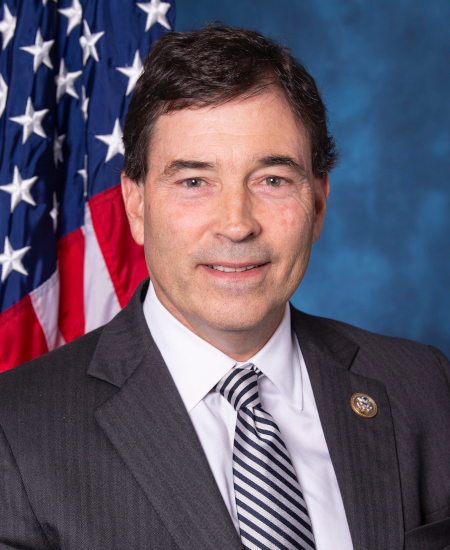
Rep. Troy Balderson
Sponsored bills
Maddy summaryHR 3157, the State Energy Accountability Act, requires states with "intermittent energy policies" (like renewable portfolio standards) to evaluate how those policies impact electricity reliability. State regulators must publicly assess five key areas: grid reliability over 10 years, ability to meet demand during emergencies, rate impacts on consumers, replacement of removed power plants, and reliance on out-of-state energy. The bill mandates these evaluations be completed within one year of enactment and made publicly available. It directly affects state regulatory authorities and electric utilities operating under such policies, focusing on accountability for grid reliability rather than changing energy requirements.
Maddy summaryThis symbolic resolution (HRES 700) condemns the assassination of Charlie Kirk, a conservative campus advocate and founder of Turning Point USA, who was killed on September 10, 2025, at Utah Valley University. It expresses the House's deepest condolences to Kirk’s family, including his wife and children, and honors his work promoting civil discourse among college students. The resolution does not create new laws or policies but serves as a formal expression of the House’s stance on the incident. It directly affects no individuals or groups through legislative action, as it is purely a ceremonial statement.
Maddy summaryHRES 702 is a symbolic resolution condemning the September 10, 2025, assassination of Charlie Kirk, founder of Turning Point USA and a conservative political activist. It expresses condolences to his family, praises first responders, and reaffirms the right to peaceful assembly. As a non-binding resolution, it does not create new laws or policies but serves as a formal statement of condemnation. The resolution directly addresses the House of Representatives' stance on this event, with no direct impact on constituents or legislation.
Maddy summaryThe RESULTS Act (HR 5269) changes how Medicare calculates payment rates for clinical diagnostic laboratory tests. It requires Medicare to collect data on private payor rates for widely available non-Advanced Diagnostic Laboratory Tests (non-ADLTs) from a qualifying independent claims data entity (a national nonprofit organization meeting specific criteria) rather than relying on data reported directly by laboratories. For tests where data is unavailable, the bill establishes default payment rates based on previous years' rates adjusted for inflation. The law also requires Medicare to publicly explain payment rates with supporting data, affecting Medicare beneficiaries, clinical laboratories, and private payors that provide services covered by Medicare.
Maddy summaryHR 5170, the CABLE Leadership Act, requires local governments to approve or deny new cable franchise requests within 120 days of receiving a complete application. If a local government fails to act within this timeframe, the request is automatically approved. The bill also mandates that denials must be in writing, supported by evidence, and publicly released the same day. This directly affects cable companies seeking new franchises and local governments responsible for reviewing these applications.
Maddy summary# Summary of Proposed FEMA Reform Legislation (FEMA Act of 2025) This comprehensive legislative document proposes significant reforms to the Robert T. Stafford Disaster Relief and Emergency Assistance Act, with four main sections addressing: ## 1. Disaster Assistance Reforms - **Expanded eligibility** for assistance, including clarifying that absence of a fixed address doesn't disqualify individuals from sheltering assistance - **Improved rental assistance** with consideration of local post-disaster rent increases - **Direct assistance** for those unable to use financial assistance, with no requirement to show other assistance can cover costs (except insurance) - **Enhanced notices** for applicants, including documentation of denial decisions - **Clarification of displacement assistance** eligibility, stating insurance shouldn't be considered a duplication of benefits ## 2. Mitigation Program Enhancements - **Preapproved project mitigation plans** requiring states to develop plans with peer review processes - **Improved allocation of funds** with formulas prioritizing vulnerable communities, high-risk areas, and rural/economically distressed communities - **Resilient buildings** requirements for housing retrofits using the latest building codes - **Streamlined application processes** for hazard mitigation funds across multiple programs - **Study on mitigation benefits** to evaluate cost savings and effectiveness ## 3. Transparency and Accountability Measures - **Public dashboards** for both individual assistance (431) and public assistance (432) showing application status, approvals, denials, and funding - **Transparency requirements** for disaster declarations with detailed justifications for approvals/denials - **GAO studies** on numerous topics including: - Identity theft in disaster assistance (409) - Insurance utilization for public assistance facilities (410) - Wildfire management plans (411) - Effectiveness of alerting systems (412) - Cost savings of repair/rebuilding reforms (415) - **Prohibition on political discrimination** in assistance distribution ## 4. Workforce and Operational Improvements - **Study on workforce retention** in noncontiguous communities - **Pilot program** for preliminary damage assessments in remote communities - **Fast-moving disasters working group** to develop best practices for rapid response The legislation focuses on improving efficiency, transparency, and effectiveness of disaster relief programs while prioritizing vulnerable populations and communities with higher risk of disasters. It also emphasizes data-driven decision making through required studies and reports to continuously improve disaster management policies.

Maddy summaryHRES 639 designates the week beginning August 3, 2025, as "National Health Center Week" and encourages all Americans to visit local community health centers during that week. The resolution highlights community health centers' role in providing accessible primary care to over 32 million people across 16,000 locations, including rural and underserved areas. It emphasizes their contributions to health outcomes (like cancer screenings and chronic disease management) and local economies without creating new laws or funding. This is a symbolic resolution, not a policy change, meant to recognize existing health centers' work. It directly affects community health centers by promoting public awareness of their services.
Maddy summaryThis bill makes Executive Order 14260 permanent law, which prohibits states from imposing regulations that conflict with federal energy policies. It directly affects state governments and federal agencies by requiring states to align energy regulations with federal directives. The key mechanism is codifying the existing executive order, ensuring it has the force of law without needing future presidential action. This does not create new regulations but solidifies current federal authority over state energy oversight.
Maddy summaryThis bill prohibits life, disability, and long-term care insurers from denying coverage, canceling policies, or increasing premiums based solely on a person's status as a living organ donor. It directly protects living organ donors by preventing insurance discrimination unrelated to actual health risks. The bill also requires the Health and Human Services Secretary to update public educational materials about organ donation benefits, risks, and insurance impacts within six months of enactment. These materials will include information on the new insurance protections established by the bill. The law relies on state insurance regulators for enforcement of the insurance provisions.