

Concealed Carry Reciprocity Act This bill establishes a federal statutory framework to regulate the carry or possession of concealed firearms across state lines. Specifically, an individual who is eligible to carry a concealed firearm in one state may carry or possess a concealed handgun (other than a machine gun or destructive device) in another state that allows its residents to carry concealed firearms. It sets forth requirements for the lawful concealed carry across state lines. The bill preempts most state and local laws related to concealed carry and establishes a private right of action for a person adversely affected by interference with a concealed-carry right established by this bill.
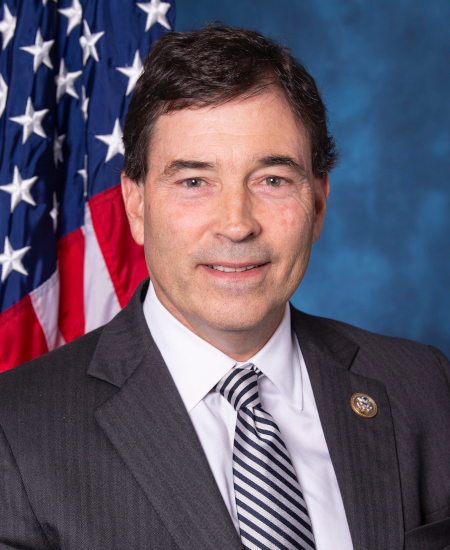
Rep. Troy Balderson
Sponsored bills
PPP Flexibility for Farmers and Ranchers Act This bill expands eligibility for agricultural producers under the Paycheck Protection Program, established to support small businesses in response to COVID-19 (i.e., coronavirus disease 2019), to include certain agricultural producers organized as partnerships. Currently, only certain agricultural producers that are sole proprietorships, independent contractors, or self-employed individuals may receive support under the program.
Main Street Tax Certainty Act This bill makes permanent the tax deduction for qualified business income. (Under current law, the deduction expires after December 31, 2025.) Qualified business income is defined as the net amount of qualified items of income, gain, deduction and loss with respect to any trade or business, excluding capital gains or losses, dividends, interest income, or income earned outside the U.S.
New Markets Tax Credit Extension Act of 2021 This bill makes the new markets tax credit permanent. It also modifies the credit to (1) provide for an inflation adjustment to the limitation amount for the credit after 2021, and (2) allow an offset against the alternative minimum tax for the credit (determined with respect to qualified equity investments initially made after 2020).
Hospitality and Commerce Job Recovery Act of 2021 This bill extends existing and establishes new tax credits that assist the hospitality and restaurant industry. Specifically, it allows a conventionand trade show restart tax credit; extends the employee retention tax credit through 2021; suspends for taxable years 2021 through 2022, the limitation on entertainment expenses related to a trade or business, allows a restaurant and dining restart credit for businesses closed or forced to reduce services due to COVID-19 (i.e., coronavirus disease 2019); allows a 50% tax credit for travel expenditures; and allows a tax credit for unmerchantable inventory for the period between December 31, 2019, and before April 1, 2021.
Keystone XL Pipeline Construction and Jobs Preservation Act This bill authorizes the TransCanada Keystone Pipeline to construct, connect, operate, and maintain the pipeline facilities in Phillips County, Montana, for the import of oil from Canada to the United States.
Living Donor Protection Act of 2021 This bill prohibits certain insurance carriers from discriminating against, and provides other protections for, living organ donors. Specifically, carriers may not deny, cancel, or otherwise impose conditions on policies for life insurance, disability insurance, or long-term care insurance based on an individual's status as a living organ donor. The bill also expressly specifies that recovery from organ-donation surgery constitutes a serious health condition that entitles eligible employees to job-protected medical leave. In addition, the Department of Health and Human Services must update educational materials on live organ donation to include information about the benefits of live organ donation and about access to insurance for living organ donors.
Rural Equal Aid Act This bill requires the Department of Agriculture (USDA) to pay the principal, interest, and any associated fees owed on loans made under certain rural development loan programs for a nine-month period. A single monthly payment of principal, interest, and associated fees with respect to a loan in the last three months of the nine-month period must not exceed $9,000. USDA must also encourage the Federal Deposit Insurance Corporation, the Office of the Comptroller of the Currency, and state bank regulators to not require lenders to increase their reserves on account of receiving such payments made by USDA. USDA must waive statutory limits on maximum loan maturities for certain loan durations where the lender provides a deferral and extends the maturity of such loans and, when necessary to provide more time because of difficulties during the COVID-19 (i.e., coronavirus disease 2019) pandemic, extend lender site visit requirements.
Next Generation Entrepreneurship Corps Act This bill establishes the Next Generation Entrepreneurship Corps Program to promote entrepreneurship in the most distressed regions of the United States, including those regions affected by COVID-19 (i.e., coronavirus disease 2019), by awarding participating fellows a two-year stipend to start and grow a new small business. Fellows will receive (1) a $120,000, two-year stipend for living and basic startup expenses; (2) health care; and (3) interest-free federal student loan deferral for two years. Further, fellows shall receive mentorship from the Service Corps of Retired Executives and be matched with a full range of lenders, investors, and insurers. The bill also establishes a fund in the Department of the Treasury from which the SBA may provide loans for qualified investors to support a small business owned and operated under the program by a fellow.
Strengthening Methods to Advance Research and Technology in Transportation Act or the SMART Transportation Act This bill establishes programs in the Department of Transportation (DOT) to develop advanced transportation technologies. Among other requirements, DOT must establish a grant program to deploy, install, and operate advanced transportation technologies to improve safety, efficiency, system performance, mobility, intermodal connectivity, and infrastructure return on investment; establish a connected vehicle deployment pilot program to provide competitive grants to spur operational deployments to meet the transportation needs of certain entities through the use of the best available and emerging intelligent transportation systems; create an automated driving system demonstration program to provide competitive grants to test the safe integration of automated driving system technologies into the on-road transportation system, ensure significant data gathering and sharing of project data, and encourage collaboration and partnerships of multiple stakeholders; and implement and deploy an advanced digital construction management system program under its technology and innovation deployment program, including by deploying advanced digital construction management systems that enable the use of digital technologies on construction sites by contractors and leverage the use of such technologies. DOT must also ensure that grant recipients represent diverse geographical areas of the United States, including urban and rural areas.