Willie O'Ree Congressional Gold Medal Act This bill provides for the award of a Congressional Gold Medal to Willie O'Ree or, if unavailable, to a member of his family, in recognition of his contributions and commitment to hockey, inclusion, and recreational opportunity.
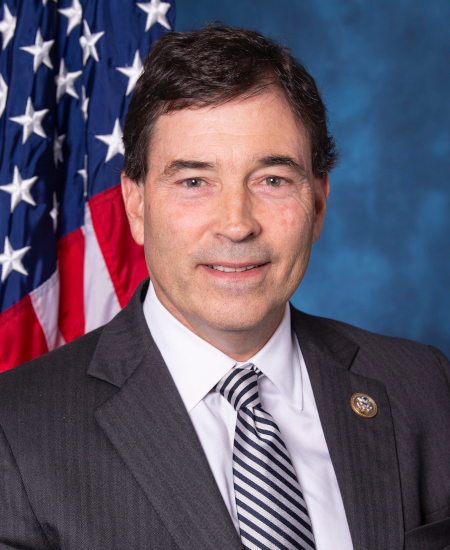
Rep. Troy Balderson
Sponsored bills
Emmett Till and Mamie Till-Mobley Congressional Gold Medal Act of 2021 This bill provides for the posthumous presentation of a Congressional Gold Medal in commemoration of Emmett Till and Mamie Till-Mobley. After the award the medal shall be given to the National Museum of African American History and Culture.
This bill directs the Department of State to include additional information in its annual reports concerning Taiwan's participation at the World Health Organization's World Health Assembly (WHA) as an observer. The report shall describe changes and improvements to the State Department's plan to support Taiwan's observer status at the WHA, following any meetings at which Taiwan did not participate under such status. (China has opposed Taiwan's participation in the WHA.)
Access to Genetic Counselor Services Act of 2021 This bill provides for coverage under Medicare of genetic counseling services that are furnished by genetic counselors. Covered services include those services, as well as incidental services and supplies, that would otherwise be covered under Medicare if provided by a physician.
Motorcyclist Advisory Council Reauthorization Act This bill provides statutory authority for the establishment of the Motorcyclist Advisory Council whose duties are to advise the Department of Transportation on transportation issues of concern to motorcyclists, including (1) barrier design; (2) road design, construction, and maintenance practices; and (3) the architecture and implementation of intelligent transportation system technologies.
Ensuring Parity in MA and PACE for Audio-Only Telehealth Act of 2021 This bill allows audio-only diagnoses that are made via telehealth to be used for purposes of determining risk adjustments to payments under Medicare Advantage. Additionally, the bill requires payments for Medicare telehealth services that are furnished during the public health emergency relating to COVID-19 (i.e., coronavirus disease 2019) to be made in the same amounts as those for in-person services.
Safe Step Act This bill requires a group health plan to establish an exception to medication step-therapy protocol in specified cases. A medication step-therapy protocol establishes a specific sequence in which prescription drugs are covered by a group health plan or a health insurance issuer. A request for such an exception to the protocol must be granted if (1) an otherwise required treatment has been ineffective, (2) such treatment is expected to be ineffective and delaying effective treatment would lead to irreversible consequences, (3) such treatment will cause or is likely to cause an adverse reaction to the individual, (4) such treatment is expected to prevent the individual from performing daily activities or occupational responsibilities, (5) the individual is stable based on the prescription drugs already selected, or (6) there are other circumstances as determined by the Employee Benefits Security Administration. The bill requires a group health plan to implement and make readily available a clear process for an individual to request an exception to the protocol, including required information and criteria for granting an exception. The bill further specifies timelines under which plans must respond to such requests.
Providing Americans with LNG Safely Act or the PALS Act This bill prohibits the Department of Transportation (DOT) from issuing any regulation or order that (1) prohibits the transportation of liquefied natural gas (LNG) by rail, or (2) restricts the transportation of LNG by rail in DOT-113 tank cars. The bill does not limit the authority of DOT to issue short-term emergency orders related to the transportation of LNG by rail.
Puppies Assisting Wounded Servicemembers Act of 2021 or the PAWS Act of 2021 This bill requires the Department of Veterans Affairs (VA) to implement a grant program for the purpose of pairing service dogs with eligible veterans. Organizations that receive grants must provide veterinary health insurance coverage, hardware, and travel expenses for each service dog and veteran participating in the program. Eligible veterans are those who (1) are enrolled in the VA health care system, (2) have been evaluated and treated for post-traumatic stress disorder (PTSD) but remain diagnosed with PTSD, (3) may benefit from a service dog, and (4) agree to successfully complete training provided by an eligible organization. Veterans are required to see a VA health care provider at least once every six months to determine whether the veteran continues to benefit from a service dog. Eligible organizations are nonprofit organizations that provide service dogs to veterans with PTSD, meet publicly available standards set forth by the Association of Service Dog Providers for Military Veterans, have expertise in the needs of veterans with PTSD, agree to cover all costs in excess of the grant amount to guarantee the benefits of the program, agree to reaccept or replace a service dog provided to a veteran, and submit an application to the VA. Any improvement in PTSD symptoms as a result of the provision of a service dog shall not affect the veteran's eligibility for any other VA benefits. The Government Accountability Office must report on the grant program.
Luke and Alex School Safety Act of 2021 This bill requires the Department of Homeland Security (DHS) to establish a Federal Clearinghouse on School Safety Best Practices for use by state and local educational and law-enforcement agencies, institutions of higher education, health professionals, and the public. The bill requires DHS to collect clearinghouse data analytics, user feedback on the implementation of best practices and recommendations identified by the clearinghouse, and any evaluations conducted on these best practices and recommendations. In addition, DHS must coordinate with the Departments of Education, Health and Human Services, and Justice to assess and identify best practices and recommendations and establish an advisory board to provide feedback and propose additional recommendations. Further, the bill specifies the criteria for best practices and recommendations of the clearinghouse, including evidence that the best practice or recommendation has had a significant effect on improving the health, safety, and welfare of individuals in school settings. Finally, the bill provides for grant program review.