

Maddy summaryThis bill exempts facilities recycling spent petroleum catalyst for metal recovery (like vanadium) from certain waste regulations under the Solid Waste Disposal Act. It specifically removes the requirement for these facilities to comply with Boilers and Industrial Furnaces (BIF) rules, applying to thermal treatment units (e.g., roasters) and metallurgical units (e.g., furnaces) that process catalyst into intermediate products or recover metals. The exemption covers spent hydrotreating and hydrorefining catalyst (EPA hazardous wastes K171/K172) and allows third-party transfer for recycling. This aims to streamline domestic recovery of critical minerals - such as vanadium used in steel for defense and infrastructure - without adding new environmental regulations, as current air permits already enforce safeguards.
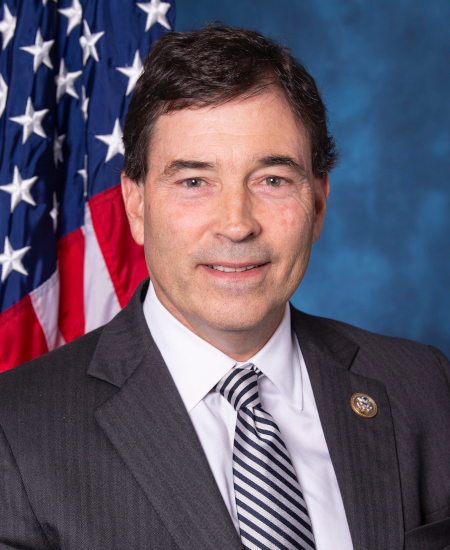
Rep. Troy Balderson
Sponsored bills
Maddy summaryThe SELF DRIVE Act of 2026 establishes federal safety standards for vehicles with automated driving systems (ADS), requiring manufacturers to develop detailed "safety cases" demonstrating their systems won't present unreasonable risks to road users. It creates a National Automated Vehicle Safety Data Repository to collect crash data from ADS-equipped vehicles, including information about vulnerable road users (pedestrians, bicyclists, etc.) and crash circumstances. The bill preempts state laws that conflict with these federal standards while allowing states to enforce identical requirements, and defines key terms related to automation levels (Level 3-5) and operational design domains. Manufacturers must demonstrate ADS capabilities for handling various driving scenarios, including detecting vulnerable road users and achieving minimal risk conditions during emergencies. The bill also establishes requirements for cybersecurity protections and reporting of crash data to the National Highway Traffic Safety Administration.
Maddy summaryHR 988 is a procedural bill that changes the legal location of the National Woman's Relief Corps. It moves the Corps' incorporation and legal domicile from the District of Columbia to Illinois, and shifts its principal office from Springfield, Illinois, to Murphysboro, Illinois. The bill also updates service-of-process requirements to reference Illinois officials instead of District of Columbia authorities. This is purely an administrative relocation with no impact on the Corps' operations or members.
Maddy summaryThe CLOSE Act terminates three federal unemployment assistance programs established under the CARES Act, ending all future payments 30 days after the bill's enactment. It cancels unspent funds that were allocated for these programs, requiring states to return unused money to the federal government. This directly affects states administering the CARES Act unemployment programs but does not change current benefits for individuals already receiving assistance. The bill focuses on ending future funding and reclaiming unused resources, with no impact on existing recipients.
Maddy summaryThis bill amends the Toxic Substances Control Act to require the EPA to exempt replacement parts for complex durable and consumer goods (like appliances or vehicles) designed before a specific regulatory rule is published. It limits EPA regulation of these parts only if the agency proves they significantly contribute to health risks, with strict evidence requirements. The bill also prevents bans on chemicals needed to make exempt parts and mandates a 10-year transition period for any existing restrictions. This directly affects manufacturers of replacement parts and the EPA's regulatory authority over them.
Maddy summaryThe CLEAR Act (HR 4218) amends the Clean Air Act to streamline state compliance with air quality standards. It extends the review cycle for national air quality standards from five to ten years, requires states to consider economic feasibility alongside technical achievability when developing plans, and gives states up to three years (instead of two) to fix deficiencies before federal intervention. The bill also creates a new exception for wildfire mitigation actions like prescribed fires, allowing states to exclude wildfire-related air quality data from violation determinations. These changes primarily affect states responsible for implementing air quality plans under federal oversight.
Maddy summaryHR 7145 defines "essential health systems" as hospitals serving large numbers of Medicaid and low-income patients, specifically targeting non-Federal, nonprofit, or government-run hospitals that meet one of three criteria for at least two of the past three years (e.g., high Medicaid patient percentage, high uncompensated care, or top 16th percentile in state rankings for low-income care). The bill requires MACPAC to annually publish an "essential health system index" ranking qualifying hospitals nationally, by state, and within local areas, using data from Medicare reporting. Hospitals designated as essential health systems receive a five-year designation, renewable if they maintain eligibility. This framework aims to identify facilities providing critical community care for vulnerable populations through standardized metrics.
Maddy summaryHR 7118, the Genomic Answers for Children’s Health Act of 2026, requires Medicaid to cover whole genome and whole exome sequencing for Medicaid-eligible children with specific medical needs, including genetic disorders, rare diseases, congenital anomalies, developmental delays, or intellectual disabilities. It mandates that this testing be ordered as a first-tier test by a physician and paid separately, not bundled with other services. The bill also requires the Department of Health and Human Services to convene stakeholders, conduct outreach to raise awareness, and publish a report within two years detailing state payment rates and usage data. Additionally, it directs a Comptroller General report assessing implementation barriers, workforce challenges, and payment alignment with market costs. The changes take effect January 1, 2027.
Maddy summaryThe SHOWER Act updates the federal definition of "showerhead" in the Energy Policy and Conservation Act to align with the ASME A112.18.1-2024 industry standard, while explicitly excluding safety showerheads. This change clarifies which showerhead products must comply with federal energy efficiency regulations, directly affecting manufacturers and sellers of standard showerheads. The bill requires the Department of Energy to revise relevant regulations within 180 days of enactment to match this new definition. As a result, safety showerheads will no longer be subject to the same energy efficiency standards as typical residential showerheads.
Maddy summaryThe Reliable Power Act requires the Electric Reliability Organization (ERO) to conduct annual assessments of the U.S. power grid's ability to maintain reliable electricity supply, including analyzing generation resources, transmission needs, and risks of shortages during extreme weather. If the ERO identifies a risk of insufficient generation, it notifies the Federal Energy Regulatory Commission (FERC), which then alerts federal agencies like the Environmental Protection Agency (EPA) and Department of Energy (DOE) developing regulations affecting power generation. These agencies must submit proposed regulations for FERC review before finalizing them, and FERC can recommend changes to prevent reliability risks, with agencies required to respond to FERC’s comments. The bill directly affects federal agencies creating energy-related rules and aims to prevent power shortages by integrating grid reliability into the rulemaking process.