This joint resolution nullifies the final rule issued by the Council on Environmental Quality titled National Environmental Policy Act Implementing Regulations Revisions and published on April 20, 2022. The rule restores regulatory provisions issued under the National Environmental Policy Act of 1969 (NEPA) that were in effect before being modified in 2020 by the Update to the Regulations Implementing the Procedural Provisions of the National Environmental Policy Act rule.
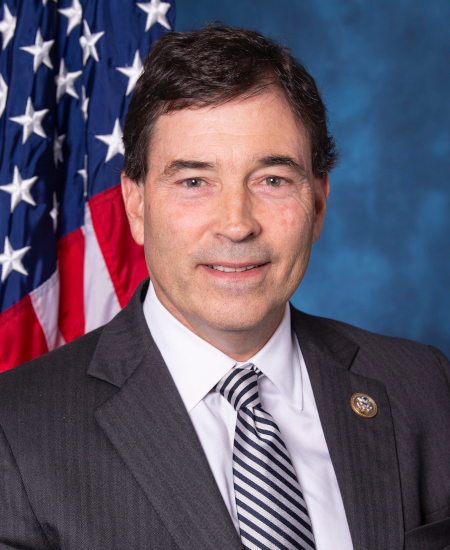
Rep. Troy Balderson
Sponsored bills
This bill expands eligibility for Department of Veterans Affairs (VA) reimbursement of emergency treatment for veterans who are treated in a non-VA facility. Specifically, the bill waives the requirement that a veteran must have received VA care within the 24-month period preceding the furnishing of emergency treatment if the veteran receives such emergency treatment within the 60-day period following their enrollment in the VA health care system.
Reducing Farm Input Costs and Barriers to Domestic Production Act This bill addresses various provisions related to the regulation of domestic agricultural products, including by requiring the Department of Agriculture to publish criteria for considering requests from meat and poultry establishments to operate at line speeds in excess of the current regulatory limitations. The bill also nullifies the final rule issued by the Council on Environmental Quality on April 20, 2022, that reinstated various National Environmental Policy Act regulatory provisions.
Advanced Aviation Infrastructure Modernization Act or the AAIM Act This bill establishes a pilot grant program to support advanced air mobility (AAM) infrastructure. AAM infrastructure refers to an air transportation system that transports individuals and property between points in the United States in both controlled and uncontrolled airspace using certain aircraft, including remotely piloted, autonomous, or vertical take-off and landing aircraft. The Department of Transportation (DOT) must award planning grants for AAM infrastructure to (1) state, local, or tribal governments; (2) airport sponsors; (3) transit agencies; (4) port authorities; (5) metropolitan planning organizations; or (6) consortia of such entities. Entities that receive these grants must develop a comprehensive plan for AAM infrastructure, including vertiports (sites that support the landing, takeoff, loading, and other operations of vertical take-off and landing aircraft). Topics covered in the plan must address matters such as identifying locations for AAM infrastructure and available sources of funding. DOT must brief Congress about the plans it receives. The briefing must include an evaluation of the planned or proposed locations for vertiports and a description of best practices or lessons learned through the review of comprehensive plans. If the Federal Aviation Administration issues type certificates for at least two aircraft models designed to provide AAM transportation and other requirements are met, DOT may award construction grants to entities that submitted comprehensive plans. Recipients may use grant funds for design, environmental studies, and other capital costs related to the construction of a public-use vertiport or associated infrastructure. Grants may not be awarded after September 30, 2023.

Promoting Cross-b order Energy Infrastructure Act This bill establishes a new process for approving the construction and operation of energy infrastructure across an international border of the United States and replaces the existing process established under specified executive orders. Specifically, this bill requires a person to obtain a certificate of crossing before constructing, connecting, operating, or maintaining a border-crossing facility for the import or export of oil, natural gas, or electricity across an international border. A certificate must be obtained from the Federal Energy Regulatory Commission (FERC) for a facility consisting of oil or natural gas pipelines or the Department of Energy (DOE) for an electric transmission facility. As a condition of issuing a certificate, DOE must require that an electric transmission facility be constructed, connected, operated, or maintained consistent with specified policies and standards. FERC and DOE must meet a deadline for issuing a certificate as set forth by this bill. The bill also requires FERC to meet a deadline for approving applications to import or export natural gas to or from Canada or Mexico.
Producing Responsible Energy and Conservation Incentives and Solutions for the Environment Act or the PRECISE Act This bill incorporates support for precision agriculture into various programs of the Department of Agriculture (USDA). Precision agriculture refers to an information- and technology-based management system used to identify, analyze, and manage variability in agricultural production for optimum profitability, sustainability, and environmental protection. Specifically, the bill makes changes to eligibility criteria, administrative procedures, and other aspects of the Conservation Loan Program, the Environmental Quality Incentives Program, and the Conservation Stewardship Program. These changes include allowing the programs to support the adoption of precision agriculture practices and acquisition of precision agriculture technologies. In addition, the bill expands a program through which USDA makes and insures loans to for-profit and nonprofit organizations that invest in rural areas by allowing the loans to be used for precision agriculture practices. The bill also requires USDA to emphasize the use of third-party providers with respect to technical assistance on matters related to soil health for participants in certain USDA conservation programs.
This resolution recognizes domestically produced natural gas as affordable, green , and necessary for energy independence while asserting that the United States should take a broad approach to meet energy needs.
Community Services Block Grant Modernization Act of 2022 This bill reauthorizes the Community Services Block Grant program through FY2032 and otherwise modifies the program. The program supports various antipoverty activities, primarily through formula-based allotments to states, Indian tribes, and territories. In particular, the bill makes changes to the program's administration and leadership; performance measurement; and allotments to states and territories. The bill also expands eligibility for services and activities funded by the program to 200% of the federal poverty line (FPL). Under current law, eligibility is generally set at the FPL.
This resolution condemns the unauthorized leak of a draft Supreme Court opinion concerning abortion and the related violence, property damage, and attempted intimidation of Supreme Court Justices by activists. It also encourages the enforcement of federal criminal laws that prohibit protests and picketing outside of the homes of federal judges, jurors, witnesses, and others involved in the U.S. court system.
This resolution expresses the sense of the House of Representatives that the United States should support the development of hydrocarbons via drilling, including by repealing administrative precedent that limits the exploration, drilling, and production of domestic natural resources on federal lands.