

Maddy summaryHRES 771 is a non-binding resolution expressing the U.S. House of Representatives' support for Israel following Hamas' October 7, 2023, attack. It condemns Hamas' actions, affirms Israel's right to self-defense, and calls for the immediate release of hostages. The resolution also urges enforcement of existing laws restricting aid to terrorists and sanctions against Iran for supporting Hamas. It does not create new policies or allocate funds, as it is a symbolic statement of congressional support.
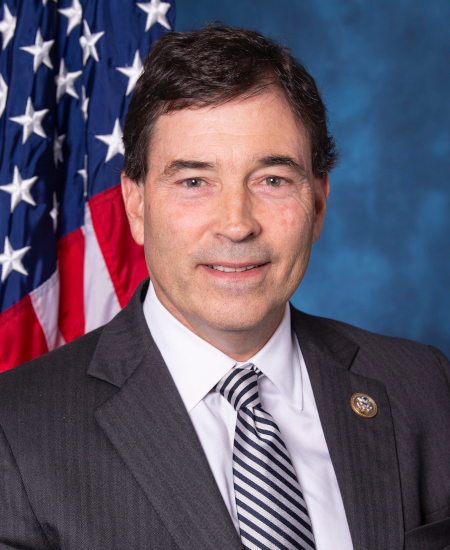
Rep. Troy Balderson
Sponsored bills
Maddy summaryHRES 768 is a symbolic House Resolution expressing congressional support for Israel following Hamas' October 7, 2023 attacks. It condemns Hamas' actions, reaffirms Israel's right to self-defense, and calls for the immediate release of hostages. The resolution references the U.S. commitment to Israel's security through existing military aid programs, including the 2016 U.S.-Israel Memorandum of Understanding, and emphasizes enforcement of laws like the Taylor Force Act to prevent U.S. aid from reaching terrorist groups. As a symbolic resolution, it does not create new policy but serves as a statement of congressional support for Israel.
Maddy summaryHR 6055, the Schools Want Accountability for Threats Act (SWAT Act), increases penalties for threats targeting schools. It amends federal laws to add specific provisions making it a crime to threaten or spread false information about public, private, or religious schools offering early childhood through career education (as defined by state law), with penalties of up to 20 years in prison or fines. The bill applies to threats involving fire/explosives (18 U.S.C. §844), mail/interstate communications (§§875, 876), and false information (§1038). This creates a clear federal criminal penalty for individuals making such threats against qualifying schools, without changing existing school safety protocols.
Maddy summaryHR 5996, the "Stop Taxpayer Funding of Hamas Act," restricts all U.S. federal funding in Gaza until the President certifies two conditions to Congress: (1) funds won't benefit Hamas, Palestinian Islamic Jihad, or designated terrorist groups, and (2) all hostages taken by these groups have been freed. The bill also prohibits U.S. funding through UN entities in Gaza if they promote anti-Israel or anti-Semitic content. It applies to all U.S. government spending in Gaza, including aid delivered via international organizations. The law directly affects federal budget allocations for Gaza operations and requires specific congressional oversight before any funds can be used.
Maddy summaryThis bill amends the State Department Basic Authorities Act of 1956 to establish a "crisis evacuation loan program" for U.S. citizens needing emergency evacuation abroad during crises. It replaces the previous "repatriations loan program" name and directs existing funding from the Department of Homeland Security’s Shelter and Services Program to the State Department to administer these loans. The program allows the State Department to provide loans for evacuation costs, which must be repaid by the affected citizens. This change primarily affects U.S. citizens abroad facing sudden emergencies requiring urgent travel assistance.
Health Care Practitioner Disaster Protection Act This bill extends certain liability protections available for health care practitioners who provide voluntary health care services in declared emergencies through a community health center other than the one that initially sponsored them. Current law makes the liability protections available to volunteer practitioners that are sponsored by a particular community health center. This bill maintains the liability protections for a volunteer practitioner who provides services through a different community health center if the center (1) seeks the assistance of the volunteer practitioner to respond to a declared emergency, and (2) promptly notifies the Department of Health and Human Services that the volunteer practitioner will be providing services.
Maddy summaryHRES 758 is a symbolic resolution designating the first Wednesday in October as National Energy Appreciation Day. It expresses the House's support for recognizing energy workers - across oil, gas, coal, nuclear, hydro, and renewable sectors - who power the U.S. economy and improve quality of life. The resolution cites statistics on energy's role in job creation (7.8 million U.S. jobs), poverty reduction, and national security, but does not create new laws or funding. As a non-binding resolution, it solely aims to raise awareness of the energy industry's contributions. (HRES 758, introduced October 3, 2023)
Maddy summaryThis resolution designates the week of September 25-29, 2023, as "National Clean Energy Week" to recognize the growing role of clean energy in the U.S. economy. It expresses support for clean energy jobs and innovation, noting the sector employed about 8.1 million people in 2022. The resolution encourages federal, state, and local investment in affordable clean energy technologies and promotes "commonsense solutions" for energy needs. As a symbolic gesture, it has no legal force or funding implications - it simply urges recognition of clean energy's economic and environmental contributions.
Maddy summaryThis resolution symbolically supports designating September 30, 2023, as "National Veterans Suicide Awareness and Prevention Day." It does not create new laws or funding but formally recognizes the need to raise awareness about veteran suicide and support families affected by it, referencing statistics showing an average of 17 veteran suicides daily. The resolution aims to highlight this issue and encourage community engagement, though it has no direct policy impact.
Maddy summaryHR 5791, the "Define the Mission Act," requires the President to submit a comprehensive strategy report to Congress within 30 days of the bill's enactment, detailing U.S. involvement in the Ukraine conflict. The report must define U.S. national interests in the conflict, set specific objectives with timelines, benchmarks, and resource estimates (including personnel and funding), list expected European NATO security contributions, and assess Russia’s natural gas market impact on resolving the conflict. It mandates the strategy must aim for a Russia-Ukraine cease-fire agreement and explicitly cannot depend on U.S. funding for Ukrainian reconstruction. The report must be unclassified but may include a classified annex for full transparency. This bill establishes a formal process for Congress to review and oversee U.S. policy toward Ukraine.