

Maddy summaryThe Momnibus Act is a comprehensive legislative bill designed to improve maternal health outcomes across the United States by addressing social determinants of health, expanding access to care, and reducing disparities among pregnant and postpartum individuals. The bill establishes a federal task force to coordinate efforts between agencies and stakeholders to eliminate preventable maternal mortality and severe morbidity, while providing sustained funding to community-based organizations to address nonclinical factors like housing, nutrition, and transportation. Key provisions include extending WIC eligibility to 24 months postpartum, creating grants to grow and diversify the perinatal workforce, implementing respectful maternity care training for all healthcare employees, and establishing compliance programs to track and address bias in maternity care settings. The legislation also includes specific measures for incarcerated mothers, veterans, and vulnerable populations affected by climate change, alongside funding for maternal mental health services and technology-enabled care models to expand access in underserved areas.
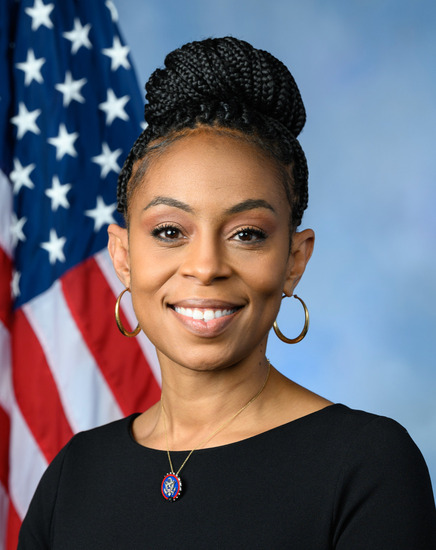
Rep. Shontel M. Brown
Sponsored bills
Maddy summaryThis House Resolution supports designating the week of April 11 through April 17, 2026, as "Black Maternal Health Week." The resolution aims to bring national attention to the maternal and reproductive health crisis in the United States, specifically highlighting the importance of reducing maternal mortality and morbidity among Black women and birthing people.
Maddy summaryThis bill establishes a 17-member Commission on Presidential Capacity to Discharge the Powers and Duties of the Office. This commission, composed primarily of medical professionals and former high-ranking executive officials, would be activated by a concurrent resolution of Congress. Its duty would be to conduct a medical examination of the President to determine if they are mentally or physically unable to discharge the powers and duties of the office due to conditions such as illness, disability, or substance use. Following the examination, the commission would report its findings and a declaration on the President's capacity to Congress and the Vice President, with any refusal by the President to undergo examination taken into consideration.
Maddy summaryThis concurrent resolution formally recognizes the ongoing disparity between wages paid to men and women in the United States and reaffirms Congress's commitment to supporting equal pay. It highlights statistical data showing that women earn approximately 81 cents for every dollar earned by men, with significant variations across racial and ethnic groups, and notes that the gender wage gap has widened over the past two years. The document also identifies contributing factors such as occupational segregation, lack of family-friendly workplace policies, and workplace harassment, while emphasizing the economic impact on women's retirement security and family incomes.
Maddy summaryThis bill directs the Joint Committee of Congress on the Library to commission and install a statue of Shirley Chisholm in a permanent public location within the United States Capitol. The legislation requires the committee to secure the statue within two years of enactment and authorizes the Architect of the Capitol to handle related contracts on the committee's behalf. Funding is authorized to cover the costs of obtaining and placing the statue, with appropriated funds remaining available until used. This measure directly affects the Capitol's art collection and honors Shirley Chisholm through physical representation in the legislative building.
Maddy summaryThis resolution supports designating March 21, 2026, as National Women in Agriculture Day to recognize the contributions of women in the agricultural sector. It highlights that over 1.2 million women in the U.S. are agricultural producers, representing more than one-third of all producers, and notes their significant economic impact through farm sales and roles in research, education, and agribusiness. The measure encourages citizens to acknowledge and celebrate women working in agriculture during National Ag Week, aligning with the 2026 International Year of the Woman Farmer.
Maddy summaryThe Energy Bills Relief Act aims to lower household energy costs and accelerate the development of low-cost, clean energy by modifying federal tax credits, expanding weatherization programs, and streamlining permitting processes. Key provisions include restoring tax incentives for renewable energy projects, increasing funding for low-income heating assistance, and requiring federal agencies to treat wind, solar, and storage projects with the same procedural fairness as oil and gas projects. The bill also establishes new incentives for upgrading the electricity grid, such as tax credits for transmission lines and grants for wildfire prevention measures, while creating mechanisms to ensure utilities serve public interests and protect consumers from price volatility.
Maddy summaryThe Feeding Families Not Fear Act of 2026 reverses specific provisions from the One Big Beautiful Bill Act of 2025 by restoring funding and benefits that were previously cut. It directly affects low-income families and individuals who rely on the Supplemental Nutrition Assistance Program (SNAP) by reinstating benefits that were reduced under earlier legislation. The bill achieves this by repealing two sections that increased funding for immigration and customs enforcement and another section that modified SNAP benefits under the Food and Nutrition Act of 2008. By removing these changes, the legislation returns SNAP provisions to their previous state as if the 2025 law had not been enacted.
Enhanced Iran Sanctions Act of 2025 This bill imposes sanctions on certain foreign persons (individuals and entities) that are involved in Iran's petroleum sector as well as certain associated persons. The bill also requires or authorizes actions to facilitate the enforcement of sanctions on Iran. Specifically, the bill requires the President to impose visa- and property-blocking sanctions on any foreign person that, after the bill's enactment, knowingly engages in any transaction related to the processing, export, or sale of oil, condensates, gas, liquefied natural gas, or other petrochemical products in whole or in part from Iran. The President must also impose sanctions on certain foreign persons associated with a sanctioned individual or entity. For example, the President must sanction the subsidiaries and corporate officers of a sanctioned business. The bill provides certain exceptions to these sanctions, including specifying that sanctions do not apply to the importation of goods or to conducting or facilitating transactions for humanitarian assistance. The Department of State must establish an interagency working group that shall seek to establish a multilateral contact group to coordinate international efforts to enforce sanctions on Iran. The bill expands the State Department rewards program to authorize a reward payment to any individual who furnishes information leading to the identification of a person (1) subject to sanctions under this bill, or (2) that has attempted or is attempting to evade sanctions under this bill.
Maddy summaryThis bill directs the Joint Committee of Congress on the Library to commission and place a statue of Clarence Mitchell, Jr. in a permanent public location within the United States Capitol. The legislation authorizes the committee to enter into agreements with an artist or organization to create the statue and permits the Architect of the Capitol to handle related contracts on the committee's behalf. Funding is authorized to cover the costs of obtaining and installing the statue, with no specific time limit for spending the allocated funds. The bill honors Mitchell, Jr., a civil rights leader and former NAACP Washington Bureau director, by recognizing his contributions to civil rights legislation through a physical memorial in the Capitol.