

Maddy summaryThe Access to School Supplies Act of 2026 establishes a five-year pilot program that provides competitive grants to up to ten local school districts serving high-poverty schools. These funds are intended to help districts purchase books, supplies, and other materials for students and instructional staff at no cost. The legislation authorizes $100 million annually from fiscal years 2027 through 2031 and requires recipients to submit annual reports detailing how the money was spent and which schools benefited. A small portion of the total funding is reserved for outlying areas and Bureau of Indian Education schools, while the program sunsets on September 30, 2031.
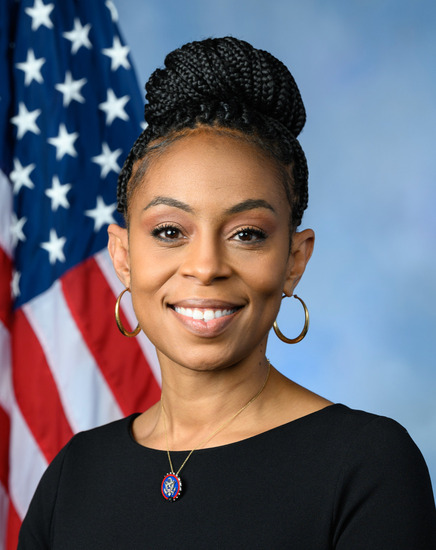
Rep. Shontel M. Brown
Sponsored bills
Maddy summaryThe Equal Pay for Equal Work Act establishes a new National Equal Pay Enforcement Task Force composed of representatives from the Equal Employment Opportunity Commission, the Department of Justice, the Department of Labor, and the Office of Personnel Management. The task force is charged with coordinating these agencies to close gaps in enforcement and improve public education regarding equal pay laws. Its specific duties include investigating challenges related to pay inequity, advancing recommendations to address those issues, and creating action plans to implement the proposed solutions.
Maddy summaryThe Hands Off Our Great Lakes Act prohibits the President and federal officials from changing the official names of Lake Superior, Lake Michigan, Lake Huron, Lake Erie, or Lake Ontario. The bill specifically nullifies Executive Order 14422, which had renamed Lake Ontario to Lake America, and bans any further attempts to alter these geographic names through similar executive actions. Additionally, it forbids the use of federal funds to implement or enforce the revoked order or any comparable measures.
Maddy summaryThis resolution designates the week of August 2 through August 8, 2026, as "National Farmers Market Week" to recognize the importance of local food markets. It highlights how these markets support farmers' incomes, connect urban and rural communities, and promote sustainable farming practices. The measure serves as a symbolic gesture to celebrate the role farmers markets play in strengthening local economies and improving public access to fresh food.
Maddy summaryThe Opening Programs to Organic Farms Act requires the Secretary of Agriculture to conduct a study on the obstacles preventing certified organic farms and those transitioning to organic production from participating in federal programs. Within 180 days of enactment, the Department must publish a report detailing specific barriers related to eligibility, payment rates, application processes, and staff knowledge across various agricultural initiatives. The report will also include data on farm participation levels and outline administrative actions the Secretary intends to take to address these issues. Additionally, the law mandates annual updates for three years to track progress in removing these barriers and to provide any necessary recommendations for statutory changes.
Maddy summaryThe Head Start Expansion and Improvement Act of 2026 broadens eligibility for early childhood education services by including recipients of various public assistance programs, such as food stamps and Medicaid, in the definition of qualifying families. The bill authorizes $36 billion annually from fiscal years 2027 through 2032 to support these expanded operations and creates a separate grant program providing $1 billion per year until 2030 for agencies to repair or upgrade aging facilities with safety hazards. Additionally, the legislation establishes a loan forgiveness program that cancels federal student loans for childcare workers who complete three years of full-time service in Head Start or Early Head Start programs. Finally, it authorizes $6.8 billion annually through 2032 to provide salary supplements to Head Start employees, with funding allocated based on local wage gaps and cost-of-living factors.
Maddy summaryThe Temporary Protected Status Review Act restores the ability of courts to review decisions by the Department of Homeland Security to end Temporary Protected Status (TPS) designations for foreign nationals. Under this bill, the government must publish detailed written findings explaining why a country no longer qualifies for TPS protection, and these decisions would be subject to a legal challenge in federal court. If a TPS designation is terminated, the affected individuals would remain in the United States with their current status and work authorization intact while the legal challenge is pending. Additionally, the legislation requires the government to follow specific administrative procedures, such as considering all available evidence and avoiding bias, before making any termination decisions.
Maddy summaryThe WINGS Act of 2026 expands federal financial aid eligibility to cover specific aviation training expenses for students enrolled in qualifying aviation programs at colleges and universities. Under this bill, students could use federal funds to pay for costs such as flight simulator hours, aircraft instruction, aviation training materials, and licensing exam fees. The legislation defines eligible programs as those offering associate's or bachelor's degrees in aviation-related fields and includes professional degree programs that meet specific regulatory training standards. These changes would take effect on July 1, 2027, allowing students to access financial support for practical aviation training components starting with the 2027-2028 award year.
Maddy summaryThe GET THE LEAD OUT Act of 2026 establishes a comprehensive national strategy to eliminate lead-based pipe hazards in housing by providing federal grants to states and local governments for evaluating and removing lead pipes in affordable homes. This legislation mandates risk assessments and inspections for federally assisted housing, requires disclosure of lead pipe conditions during property sales, and creates a task force to develop financing standards and training for certified contractors. Additionally, the bill authorizes significant funding for the Department of Housing and Urban Development and the Environmental Protection Agency to support these abatement efforts and public education campaigns.
Maddy summaryThe REPLACE Act updates federal programs to better address lead hazards in housing and drinking water systems. It expands grant requirements for lead paint removal to include evaluations of water pipes and plumbing, ensuring that both paint and water risks are managed together. The bill also broadens the definition of pipes needing replacement to include certain galvanized lines and mandates coordination between water and housing remediation efforts. Additionally, the legislation provides new technical support for workforce training, data management, and local implementation capacity to help communities complete these safety projects.