

Metastatic Breast Cancer Access to Care Act This bill expedites payment of Social Security Disability Insurance (SSDI) benefits and eligibility for Medicare coverage for those with metastatic breast cancer (i.e., breast cancer that has spread to other sites in the body). Specifically, the bill eliminates the 5-month waiting period for SSDI benefits and the subsequent 24-month waiting period for Medicare coverage for individuals with metastatic breast cancer. Under current law, individuals generally must wait five months after the onset of disability to begin receiving SSDI benefits and an additional 24 months to become eligible for Medicare.
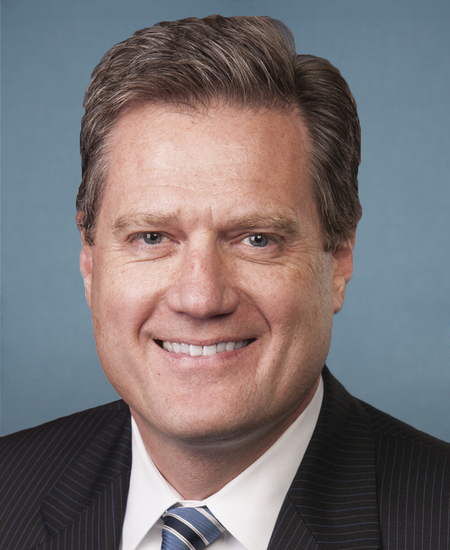
Rep. Michael R. Turner
Sponsored bills
Homes for Every Local Protector, Educator, and Responder Act of 2021 or the HELPER Act of 2021 This bill establishes a program administered by the Department of Housing and Urban Development to provide mortgage assistance to law enforcement officers, elementary and secondary school teachers, firefighters, or other first responders. Specifically, these individuals may be eligible for a one-time mortgage on a primary family residence with no down payment and no monthly mortgage insurance premium.
Military Child Care Expansion Act of 2021 This bill modifies and implements policies to update child care facilities and administration at the Department of Defense (DOD). Specifically, the bill removes certain requirements for members of the Armed Forces to receive funding for an in-home child care provider under the DOD pilot program that provides financial assistance to such members who pay for in-home child care. The bill also allows DOD to expand the pilot program to additional locations (currently it is authorized for five). DOD must establish a 10-year pilot program to expand access to child care for members of the Armed Forces by entering into agreements with public or private child care facilities or development centers. Under the bill, DOD must determine the (1) root causes contributing to poor or failing facility conditions at its child development centers, and (2) total cost to improve the conditions of such centers. The Government Accountability Office must review the determinations and make recommendations on how to improve DOD child development center conditions. Lastly, DOD must utilize its existing authority to carry out minor military construction projects to construct child development centers.
Servicemember Parental Leave Equity Act This bill modifies Department of Defense parental leave provisions for members of the Armed Forces. Specifically, the bill increases parental leave for primary caregivers to 18 weeks (currently 12) following the birth of a child and to 12 weeks (currently 6) following the adoption of a child. The bill increases parental leave for a secondary caregiver from 21 days to 12 weeks in connection with the birth or adoption of a child. Primary or secondary caregivers of a long-term foster child are authorized to take up to 12 weeks of leave in connection with such placement. Parental leave for a primary or secondary caregiver for a birth, adoption, or foster child placement may be taken in more than one increment. For primary caregivers, the leave must be utilized within one year of the event. The bill authorizes up to 12 weeks of leave to certain service members who would have been secondary caregivers but for a miscarriage, stillbirth, or infant death. The following activities required of an active-duty member within a 12-month postpartum period must have the approval of a health care provider and be at the election of the member or in the interest of national security: (1) an order of temporary duty overnight travel or to participate in physically demanding field training exercises, (2) meeting of body composition standards, or (3) passing a physical fitness test. The bill also reduces the service commitment required for participation in the Career Intermission Program.
Personal Health Investment Today Act of 2021 or the PHIT Act of 2021 This bill allows a medical care tax deduction for up to $1,000 ($2,000 for a joint return or a head of household) of qualified sports and fitness expenses per year. The bill defines qualified sports and fitness expenses as amounts paid exclusively for participating in a physical activity, including (1) fitness facility memberships, (2) physical exercise or activity programs, or (3) equipment for a physical exercise or activity program.
Military and Veteran Caregiver Student Loan Relief Act of 2021 This bill makes designated primary family caregivers of veterans eligible for student loan forgiveness under the Public Service Loan Forgiveness (PSLF) program. Under the PSLF program, the Department of Education must cancel the balance of interest and principal due on a borrower's Federal Direct Loans after the borrower makes 120 monthly loan payments while employed in a public service job. This bill broadens the definition of public service job to include service as a primary family caregiver of an eligible veteran participating in the Program of Comprehensive Assistance for Family Caregivers.
Mainstreaming Addiction Treatment Act of 2021 This bill removes the requirement that a health care practitioner apply for a separate waiver through the Drug Enforcement Administration (DEA) to dispense certain narcotic drugs (e.g., buprenorphine) for maintenance or detoxification treatment (i.e., substance use disorder treatment). Further, a community health aide or community health practitioner may dispense certain narcotic drugs for maintenance or detoxification treatment without registering with the DEA if the drug is prescribed by a health care practitioner through telemedicine. It preempts state laws related to licensure for this activity. The bill also directs the Substance Abuse and Mental Health Services Administration to conduct a national campaign to educate health care practitioners and encourage them to integrate substance use disorder treatment into their practices.
Countering Chinese Propaganda Act This bill directs the President to impose asset- and visa-blocking sanctions on foreign individuals and entities engaged in certain acts of malign disinformation. Specifically, the President shall impose sanctions on an individual or entity that knowingly commits a significant act of malign disinformation on behalf of a foreign government or political party to influence certain activities in the United States for the purpose of harming (1) U.S. national security, or (2) the safety and security of a U.S. citizen or legal permanent resident. The Department of State shall report to Congress a determination of whether the Chinese Communist Party's United Front Work Department, which engages in disinformation campaigns and other activities, or any of its officials, falls within the sanctions provided under this bill.
Pain-Capable Unborn Child Protection Act This bill establishes a new criminal offense for performing or attempting to perform an abortion if the probable post-fertilization age of the fetus is 20 weeks or more. A violator is subject to criminal penalties—a fine, a prison term of up to five years, or both. The bill provides exceptions for an abortion (1) that is necessary to save the life of the pregnant woman, or (2) when the pregnancy is the result of rape or incest. A physician who performs or attempts to perform an abortion under an exception must comply with specified requirements. A woman who undergoes a prohibited abortion may not be prosecuted for violating or conspiring to violate the provisions of this bill.
This joint resolution proposes a constitutional amendment requiring Representatives to be apportioned according to the number of U.S. citizens in each state, rather than the number of persons in each state.