

Maddy summaryHR 3179, the Supporting Apprenticeship Colleges Act of 2023, provides federal grants to colleges offering construction and manufacturing apprenticeship programs. It funds two key initiatives: (1) Community Outreach Grants to help colleges recruit students and partner with employers, especially in rural areas and for underrepresented groups like first-generation, minority, and nontraditional students; and (2) Student Support Grants to improve retention through services like career advising, mental health resources, and childcare. The bill allocates $5 million annually (2024-2028) for these programs, with each college receiving up to $500,000 per grant. It directly affects apprenticeship colleges, their students, and local employers by expanding access to skilled trades careers.
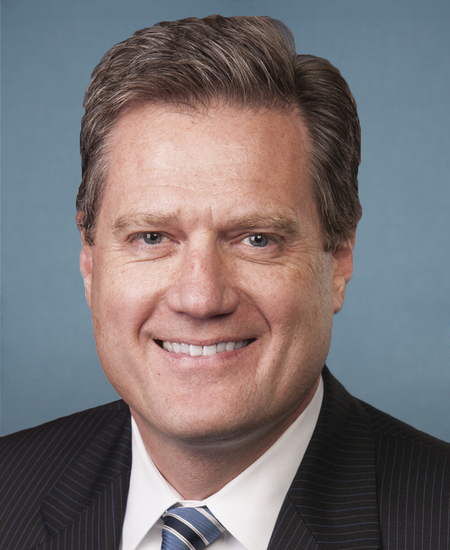
Rep. Michael R. Turner
Sponsored bills
Maddy summaryThe HELPER Act of 2023 creates a new FHA mortgage insurance program specifically for first responders and K-12 teachers. It allows eligible first-time homebuyers in these professions to secure mortgages with 100% financing (no down payment required) for purchasing or repairing a primary residence. To qualify, applicants must be employed as law enforcement, firefighters, paramedics, or K-12 teachers, have completed housing counseling, and meet specific employment history requirements (e.g., 4 years in the role or disability-related release). The program authorizes $660,000 for fiscal year 2024 and $160,000 annually through 2030, with authority expiring after 5 years.
Maddy summaryHRES 376 is a non-binding resolution expressing the House of Representatives' view that the U.S. Postal Service (USPS) must maintain door-to-door delivery for all residential and business customers. It cites concerns that ending this service would disproportionately affect elderly and disabled individuals who rely on secure, convenient mail access for essential items like medications. The resolution notes that voluntary shifts to centralized pickup in 2013 affected only 0.8% of businesses, highlighting dependence on in-person delivery for security and revenue. It urges USPS to avoid reducing door delivery or requiring customers to pay for it.
Maddy summaryThis bill removes a restriction that previously barred people in jail or prison while awaiting trial from receiving Medicaid health benefits. It directly affects individuals in custody pending legal proceedings by allowing states to provide Medicaid coverage for their medical care during this time. The bill also allocates $50 million in planning grants to help states develop systems to enroll these individuals, recruit healthcare providers who can serve them, and establish electronic billing for services provided in correctional facilities or through outpatient care. Key provisions require states to assess healthcare needs, eliminate policy barriers, and create plans to increase provider participation in Medicaid for this population.
Tax-Free Pell Grant Act This bill excludes from gross income, for income tax purposes, any amount received as a federal Pell Grant. It also expands the definition of qualified tuition and related expenses under the American Opportunity and Lifetime Learning tax credit to include computer or peripheral equipment (up to a maximum of $1,000), child and dependent care expenses, and course materials.
Maddy summaryThis bill authorizes $350 million annually for fiscal years 2024-2026 to establish the "Baltic Security Initiative," a U.S. defense program focused on strengthening security cooperation with Estonia, Latvia, and Lithuania (the "Baltic countries"). It requires the Secretary of Defense to develop a strategy within one year to enhance military capabilities like missile defense, cyber resilience, long-range weapons, and coordination with NATO allies - including Poland - to deter Russian aggression and address security threats from Russia and China. The initiative operates under existing U.S. defense authorities (Title 10, U.S. Code) and mandates a report to Congress detailing how these security objectives will be achieved. The bill directly affects U.S. defense funding and the security planning of the three Baltic nations.
Maddy summaryThis bill creates a federally chartered National Center for the Advancement of Aviation to develop the U.S. aviation and aerospace workforce. The Center will provide grants for education and training programs, including scholarships, internships, and curriculum development for middle schools, high schools, and colleges focused on aviation careers. It will specifically support underrepresented groups and veterans transitioning to aviation careers while coordinating with government agencies to avoid duplicating existing programs. The Center must operate as a non-profit entity, maintain tax-exempt status, and submit annual reports to Congress on its activities.
Performing Artist Tax Parity Act of 2023 This bill modifies the above-the-line tax deduction for the expenses of performing artists (including commissions paid to managers or agents) to provide for a phaseout of such deduction for taxpayers whose adjusted gross income exceeds $100,000 ($200,000 for joint return filers). The $100,000 phaseout threshold is adjusted for inflation annually for taxable years beginning after 2023.
Maddy summary# Summary of the National Apprenticeship Act of 2023 This proposed legislation establishes a comprehensive framework to modernize and expand apprenticeship programs in the United States, creating a National Apprenticeship System designed to address current workforce needs and increase opportunities for underrepresented populations. ## Key Provisions ### System Framework - Establishes clear quality standards for apprenticeship, pre-apprenticeship, and youth apprenticeship programs - Requires programs to meet specific criteria including: - Minimum 2,000 hours of on-the-job learning (with flexibility for some occupations) - Structured related instruction (minimum 144 hours per year for time-based programs) - Progressive wage scales - Safety training and equipment - Equal opportunity for participation ### Program Types - **Apprenticeship Programs**: Time-based, competency-based, or hybrid models for full-time workers - **Pre-apprenticeship Programs**: Designed to prepare individuals without meeting minimum qualifications for apprenticeship - **Youth Apprenticeship Programs**: For high school students, integrating academic and work-based learning ### Diversity & Inclusion Requirements - Requires programs to actively recruit and support nontraditional apprenticeship populations: - Women, minorities, individuals with disabilities - Long-term unemployed - Individuals impacted by the criminal or juvenile justice system - Foster and former foster youth - Individuals with barriers to employment ### Registration & Oversight - Requires formal registration of programs with a registration agency - Mandates annual performance data collection and reporting - Establishes procedures for program review, technical assistance, and deregistration ### Grant Program (Title II) - Authorizes $4 billion over five years ($400M-$800M annually) for competitive grants - Funds will support: - Creation and expansion of apprenticeship programs in high-demand sectors - Encouraging employer participation, particularly with small- and medium-sized businesses - Supporting intermediaries (national and local) - Strengthening educational alignment with secondary and postsecondary systems ### Evaluation Requirements - Mandates independent evaluations of grant programs - Requires collection of disaggregated data by program type and demographic factors - Focuses on measuring outcomes including: - Program completion rates - Employment rates in related fields - Wage growth - Increased participation of underrepresented groups ### Conforming Amendments - Repeals outdated sections of the American Competitiveness and Workforce Improvement Act of 1998 - Amends the Immigration and Nationality Act to align with the new apprenticeship system This legislation represents a significant investment in workforce development, aiming to create a more inclusive, high-quality apprenticeship system that responds to 21st-century labor market needs while expanding opportunities for historically underrepresented groups.
Maddy summaryHR 2785, the REEF Act, amends a 2020 law to change when certain payments from the Railroad Unemployment Insurance Account take effect. It retroactively applies changes to these payments as if they had been in place before the national emergency related to the COVID-19 pandemic ended. This directly affects railroad workers who receive unemployment benefits through this account, ensuring they receive payments under the revised timing. The bill's key change is making the effective date of these payment rules apply retroactively from before the pandemic emergency period.