

Maddy summaryHR 1435, the Preserving Choice in Vehicle Purchases Act, amends the Clean Air Act to restrict states from implementing vehicle emissions rules that limit the sale or use of new gasoline-powered cars. It directly affects states with stricter emissions standards (like California) by adding a new definition that blocks state rules "directly or indirectly" limiting internal combustion engine vehicles as defined in federal regulations as of January 1, 2023. The bill requires the EPA to revoke existing state emissions waivers granted between January 2022 and the bill’s enactment if they don’t comply with this new definition. This creates a concrete federal standard preventing states from advancing policies that could reduce demand for conventional vehicles.
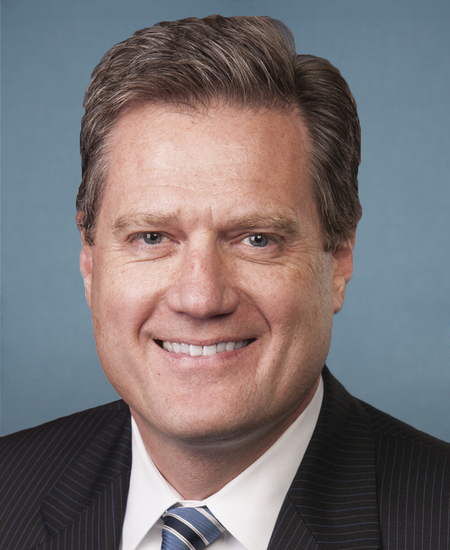
Rep. Michael R. Turner
Sponsored bills
Maddy summaryHJRES 89 requires the President to obtain Senate approval (with a two-thirds vote) or new congressional legislation to suspend, terminate, or withdraw from the North Atlantic Treaty (NATO). It prohibits using federal funds for such actions until Congress passes a two-thirds resolution or enacts a law authorizing withdrawal. The bill mandates 180-day written notification to relevant congressional committees (Foreign Affairs and Foreign Relations) before any withdrawal action and authorizes Congress to sue to block unilateral executive moves. This directly affects the executive branch's ability to act unilaterally on NATO membership, reinforcing congressional oversight of treaty obligations.
Maddy summaryHR 5453 amends the 1992 Dayton Aviation Heritage Preservation Act to add approximately 1 acre of land in Dayton, Ohio, to the Dayton Aviation Heritage National Historical Park. The adjustment, based on a February 2023 map, expands the park's existing boundary to include this specific parcel. The bill directly affects the park's physical boundaries but does not alter park operations, funding, or visitor access. This is a procedural boundary update with no new regulations or financial impacts.
Maddy summaryThis bill prohibits U.S. foreign aid to countries determined by the President to use foreign commercial spyware against U.S. persons. It requires the President to assess if a country has acquired such spyware, used it against journalists or activists, or failed to address misuse before blocking aid. The prohibition excludes military assistance and allows a presidential waiver for national security reasons. The President must annually report to Congress on spyware use by countries receiving aid, using intelligence community data.
Maddy summaryThis bill requires the Bureau of Prisons to develop and implement a strategy for scanning all incoming mail at federal prisons to stop fentanyl and other synthetic drugs from entering facilities. It directs the Bureau to evaluate existing scanning technology within 180 days and submit a detailed plan to Congress within 90 days, including how to provide digital copies of mail to inmates within 24 hours and physical copies within 30 days (if safe). The strategy must achieve 100% mail scanning capacity at all federal prisons, prioritize high-security facilities, and include a budget proposal for fiscal years 2024-2026. This directly affects federal prisons, inmates, and Bureau employees by changing mail processing procedures to enhance safety and reduce staffing burdens from manual mail checks.
Maddy summaryThis bill requires the Department of Defense to assess potential exposure to PFAS chemicals (perfluoroalkyl and polyfluoroalkyl substances) during routine health exams, separation physicals, and deployment evaluations for active-duty military members. If an assessment indicates possible exposure, the military must provide blood testing to document it, with results added to the service member's health record. The bill also creates a registry for service members with PFAS exposure, mandates sharing this data with the Department of Veterans Affairs, and allows former members and their families living near affected bases to access free blood testing through TRICARE or vouchers. It directly affects current and former military personnel and their families who lived at locations with known or suspected PFAS contamination.
Maddy summaryHR 5261, the PFAS Training For DoD Providers and Servicemembers Act, requires the Department of Defense to provide mandatory training to all its health care providers about the potential health effects of PFAS chemicals (perfluoroalkyl and polyfluoroalkyl substances). This training aims to ensure military health care providers understand PFAS exposure risks when treating servicemembers. The bill directly affects DoD health care providers, who must complete this training. The key provision is the mandatory nature of the training, which must cover specific health effects of PFAS without altering existing medical protocols.
Maddy summaryHR 3932, the Intelligence Authorization Act for Fiscal Year 2024, authorizes funding for U.S. intelligence agencies' operations during fiscal year 2024. It specifically authorizes $650 million for the Intelligence Community Management Account (Section 103) and includes classified funding details for broader intelligence activities (Sections 101-102). The bill does not create new intelligence policies or activities but legally authorizes existing operations under current constitutional and statutory frameworks (Section 301). It directly affects all intelligence agencies, including the CIA and National Security Agency, by providing the necessary funding mechanism for their ongoing work.
Maddy summaryThis bill amends the Higher Education Act to provide Pell Grant flexibility for students with disabilities. It allows students whose institution determines a reduced course load is appropriate (due to a disability covered under the Americans with Disabilities Act) to count that reduced load (or 5 credits, whichever is greater) as full-time enrollment for calculating their Pell Grant amount. The change applies only to the grant calculation itself, not to semester eligibility rules. This directly affects qualifying students with disabilities enrolled in postsecondary education who require part-time schedules due to their disability.
Maddy summaryThis bill directs the U.S. Treasury to mint commemorative coins marking the Marine Corps' 250th anniversary in 2025. It authorizes three coin types: $5 gold coins (max 50,000), $1 silver coins (max 400,000), and half-dollar coins (max 750,000), with surcharges of $35, $10, and $5 respectively. The surcharge proceeds will fund the Marine Corps Heritage Center's educational programs, with no net cost to taxpayers as the Treasury must recover all minting costs through the surcharges. The coins can only be issued during 2025, and the Treasury must ensure all costs are covered before distributing funds to the Heritage Foundation.