

Maddy summaryHR 3241, the Defense Workforce Integration Act of 2025, creates pathways for military personnel medically disqualified from service to transition into civilian defense jobs. It requires the Defense Department to establish a process within one year for entry-level service members (like those in basic training or ROTC) who can't serve due to medical reasons to qualify for civilian roles in the Department of Defense. The bill also mandates a new program to connect medically disqualified individuals with employment opportunities in the defense industrial base, cybersecurity, research, and other national security support roles. Additionally, it directs the Navy to provide career information about Military Sealift Command and shipbuilder training to personnel during transition assistance. The Secretary of Defense must report on implementation to Congress within one year.
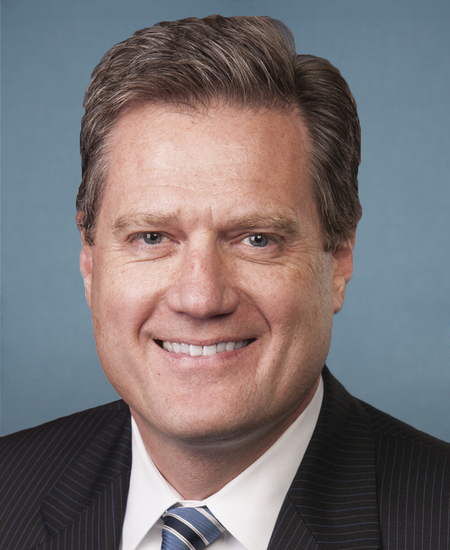
Rep. Michael R. Turner
Sponsored bills
Maddy summaryHR 3184, the PFAS Alternatives Act, funds research to develop turnout gear (firefighter safety clothing) without harmful PFAS chemicals, directly affecting firefighters who wear this gear. It authorizes $25 million annually (2025-2029) for grants to eligible organizations to research and test PFAS-free gear, requiring partnerships with firefighting groups to translate findings into practice. The bill also allocates $2 million yearly (2027-2031) for training programs on safe gear use and decontamination. Its goal is to reduce firefighters' exposure to chemicals linked to occupational illnesses during operations.
Maddy summaryThe MEGOBARI Act (HR 36) is a U.S. legislative proposal that aims to strengthen Georgia's democratic development and Euro-Atlantic integration. It directs the U.S. Secretary of State to suspend the U.S.-Georgia Strategic Partnership Commission until Georgia meets specific democratic standards, including respecting citizens' democratic wishes and advancing EU/NATO membership. The bill establishes potential sanctions against Georgian officials who block Euro-Atlantic integration or undermine Georgia's sovereignty, requiring the President to determine if officials have engaged in significant corruption or actions against Georgia's territorial integrity. Additionally, it mandates reports on Russian intelligence assets in Georgia and a 5-year U.S. strategy for bilateral relations, with the Act set to sunset after 5 years from enactment.
Maddy summary# Summary of the SHIPS for America Act This comprehensive legislation focuses on strengthening the U.S. maritime industry, shipbuilding capacity, and maritime workforce to enhance national security and economic competitiveness. ## Key Areas of Focus 1. **Shipbuilding & Maritime Infrastructure** - Establishes a United States Center for Maritime Innovation to accelerate adoption of commercial technologies - Creates a National Shipbuilding Research Program - Requires an annual survey of anticipated commercial vessel construction - Includes provisions for streamlined environmental reviews of maritime infrastructure 2. **Workforce Development** - Establishes the United States Merchant Marine Career Retention Program to maintain mariner qualifications - Creates Centers of Excellence for Domestic Maritime Workforce Training and Education - Implements military-to-maritime transition programs - Establishes a Maritime Career and Technical Education Advisory Committee 3. **Education & Training** - Expands educational assistance for merchant mariners - Creates eligibility for Naval Postgraduate School for merchant mariners - Establishes maritime education programs from K-12 through higher education - Provides for international exchanges for mariners and naval architects 4. **National Security & Strategic Readiness** - Requires reports on National Defense Reserve Fleet utilization - Includes measures to de-risk the maritime sector from Chinese influence - Enhances shipbuilding capacity for national security needs - Establishes programs to ensure sufficient mariner workforce for national defense 5. **Funding Mechanisms** - Authorizes appropriations from the Maritime Security Trust Fund - Includes funding for workforce programs, education, and shipbuilding initiatives - Establishes specific funding levels for various programs over multiple fiscal years The legislation aims to create a sustainable domestic maritime industrial base that supports both commercial shipping and national defense requirements, with a particular emphasis on developing and retaining a skilled U.S. maritime workforce.
Maddy summaryHR 3112, the Better CARE for Animals Act of 2025, strengthens enforcement of the federal Animal Welfare Act by requiring dealers and exhibitors to hold valid licenses for animal sales or transport (Section 4). It expands enforcement authority by allowing the Attorney General to sue violators for up to $10,000 per day, seize animals, and seek injunctions (Section 20), while clarifying that courts can address violations of related rules and regulations. The bill directly affects animal dealers, exhibitors, the USDA, and the Department of Justice, creating clearer pathways for holding violators accountable. Key provisions include updating definitions, broadening inspection powers to cover all regulations, and directing penalty funds toward temporary animal care costs during legal proceedings.
Maddy summaryHR 2939, the Drone Espionage Act, updates existing espionage law to explicitly prohibit taking or transmitting video footage of defense information. It amends Title 18, U.S. Code, Section 793 by inserting "video" after "photographic negative" in the definition of prohibited materials. This change directly affects individuals who capture or share video of classified military or defense-related information, whether using drones or other devices. The bill makes no new criminal penalties but ensures video evidence is covered under current espionage statutes.
Maddy summaryThis bill increases the federal tax credit for rehabilitating historic buildings. It raises the standard credit rate from 20% to 30% for qualifying small projects (with a $3.75 million expenditure cap) and further increases the cap to $5 million for projects in rural areas. The bill also allows taxpayers to transfer all or part of this credit to another taxpayer, creating a new market for the credit. These changes apply to properties placed in service after the bill's enactment date. The bill directly affects developers and owners of historic properties seeking tax incentives for rehabilitation projects.
Maddy summaryThe DRIVE Act of 2025 requires the Department of Veterans Affairs (VA) to set mileage reimbursement rates for veterans at the federal government's current standard rate for employees using personal vehicles on official business, replacing the previous fixed rate of 41.5 cents per mile. It also mandates that the VA process and pay these reimbursements within 90 days of a veteran's valid request. This directly affects veterans who travel for VA medical appointments or services using their personal vehicles. The bill aligns veteran travel reimbursements with federal employee standards and ensures timely payments.
Maddy summaryHRES 324 is a symbolic resolution designating April 2025 as "Esophageal Cancer Awareness Month." It does not create new laws or allocate funding but expresses congressional support for raising public awareness about esophageal cancer. The resolution encourages federal, state, local, and nonprofit entities to promote education on symptoms (like persistent heartburn), risk factors (such as GERD), and the importance of early screening for Barrett’s esophagus. It highlights that early detection significantly improves survival rates (up to 49% for early-stage cases) but does not directly affect individuals or healthcare policies.
Maddy summaryHR 1793, the Veterans Readiness and Employment Transparency Act of 2025, requires the Department of Veterans Affairs (VA) to improve access to vocational rehabilitation services for veterans with service-connected disabilities. The bill mandates a dedicated VA hotline, updated regional office websites with contact details, and requires VA counselors to hold monthly staff Q&A sessions and provide in-person briefings at local educational institutions (or virtual briefings for institutions over 150 miles away). It also requires the VA to submit an annual report detailing the number of veterans requesting, receiving, and being denied extensions to their rehabilitation program periods. These provisions directly affect veterans using VA vocational rehabilitation programs and VA regional office staff responsible for delivering those services.