

Maddy summaryThe Autism CARES Act of 2024 reauthorizes and enhances federal programs supporting individuals with autism spectrum disorder. It requires the National Institutes of Health to expand research to include more fields like gerontology and psychiatry, and to ensure research reflects the full range of needs of people with autism, including those with co-occurring conditions. The bill mandates regular reports to Congress on progress, mental health needs, and transition services for young adults with autism, while increasing funding for autism-related programs from fiscal year 2025 through 2029. This legislation directly affects individuals with autism, their families, caregivers, and healthcare providers by improving access to evidence-based services and research.
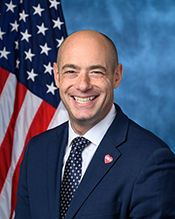
Rep. Greg Landsman
Sponsored bills
Maddy summaryThe Stop Campus Hazing Act requires colleges and universities to publicly report hazing incidents involving student organizations. It defines hazing as intentional acts causing physical or psychological harm during initiation or membership in student groups, including activities like forced substance consumption, sleep deprivation, or sexual acts. Institutions must include hazing statistics in annual security reports and publish a "Campus Hazing Transparency Report" on their websites by July 1, 2025, detailing findings about organizations violating hazing policies. The reports must include organization names, violation descriptions, and key dates while excluding personally identifiable student information. This applies to all colleges participating in federal student aid programs.
Maddy summaryThis bill, HR 1097 (Everett Alvarez, Jr. Congressional Gold Medal Act of 2023), authorizes the award of a Congressional Gold Medal to Everett Alvarez, Jr., in recognition of his service as a U.S. Navy pilot and Vietnam War prisoner of war. It directly honors Alvarez, who was the first U.S. pilot shot down in the Vietnam War, spent over 8.5 years in captivity, and later served in the Peace Corps and Veterans Administration. The bill’s key mechanism is directing the U.S. Mint to strike a gold medal bearing his name and image, with bronze duplicates available for sale to cover costs. It does not create new policies or affect any group beyond the honoree.
Maddy summaryHR 3396, the Fire Department Repayment Act of 2023, requires the Secretaries of Agriculture, Interior, Homeland Security, and Defense to establish standard procedures for federal fire suppression cost share agreements within one year. It mandates reviewing existing agreements to align them with local cooperative fire protection agreements and conducting second-level reviews after wildfires, involving state and local fire organizations. The bill directly affects fire departments and agencies participating in these cost-sharing arrangements under the Reciprocal Fire Protection Act. Key changes include standardized procedures for agreement management and post-wildfire reviews to ensure cost-sharing compliance.
Maddy summaryThe STAR Plus Scholarship Act creates a federal program to fund scholarships for students pursuing careers in mental health and substance use disorder treatment. It requires scholarship recipients to work full-time in designated mental health professional shortage areas for one year for each year of scholarship funding received. The program authorizes $75 million annually (2025-2029) to cover tuition and educational expenses for students enrolled in approved programs at accredited institutions. This directly affects students in behavioral health fields and aims to address workforce shortages in underserved communities by linking scholarship support to service requirements.
Maddy summaryHR 9152, the "SCHOOL Professionals Act of 2024," clarifies that contractors primarily providing operations or logistics services to educational organizations must be treated like direct employees for health coverage purposes under federal tax law. This means educational institutions using such contractors must determine if these workers qualify as "full-time" for health insurance requirements, similar to their own employees. The bill directly affects schools and colleges that rely on external contractors for facility or support services, requiring them to apply the same full-time employee rules to these contractors when assessing health coverage obligations. The rule change applies to months beginning after the bill's enactment date.
Maddy summaryThe Patient Debt Relief Act requires Medicare-participating hospitals to establish clear financial assistance policies by January 2026, including publicly available eligibility criteria and 30-day pre-payment screening for charity care. It prohibits hospitals from placing home liens, garnishing wages, or selling debt to collectors without offering income-based repayment plans (capping payments at 4% of gross monthly income) and eliminates interest for patients earning under 250% of the poverty line. Hospitals failing to comply face civil penalties up to $1 million per violation. The bill also creates a $100 million grant program to fund nonprofits that discharge medical debt for individuals meeting income thresholds (5% of income or under 400% of poverty line), with quarterly reporting requirements. These provisions apply directly to hospitals and low-income patients with medical debt.
Maddy summaryThe Pharmacists Fight Back Act (HR 9096) sets new rules for Pharmacy Benefits Managers (PBMs) working with federal health care programs like Medicare Part D and Medicaid. It requires PBMs to reimburse in-network pharmacies at a rate covering the drug's actual cost plus a small fee (capped at $25), and to reduce patient cost-sharing by at least 80% of rebates received from drug manufacturers. The bill bans PBMs from steering patients to specific pharmacies, charging patients more than pharmacies are paid, or using rebates to lower pharmacy payments after claims are processed. It also mandates public reporting of drug pricing data to improve transparency, ensuring patients and pharmacies receive fairer treatment under federal health programs.
Maddy summaryHR 8796, the "Stop Comstock Act," removes outdated restrictions from federal law that previously banned the distribution of materials related to contraception and abortion as "obscene" or "indecent." The bill amends Title 18 and the Tariff Act by deleting references to "indecent," "immoral," "unlawful abortion," and "procuring abortion" from provisions governing obscene materials. It clarifies that the law only prohibits "obscene materials" in commerce, eliminating broad restrictions on reproductive health information. This directly affects internet platforms, healthcare providers, and individuals sharing reproductive health resources by removing legal barriers to their distribution.
Maddy summaryThis bill requires Medicare Advantage plans to implement electronic prior authorization systems by 2027 and publish detailed data on their approval and denial rates for medical services by 2026. It directly affects Medicare Advantage plans (private insurers offering Medicare coverage) and their enrollees (seniors 65+), mandating transparency about prior authorization decisions, processing times, and appeal outcomes. Key provisions include requiring plans to report annual statistics on request approvals/denials, average processing times, and use of technology, with this data published publicly by the Centers for Medicare & Medicaid Services. The bill also sets timelines for plan responses to prior authorization requests and mandates reports to Congress on implementation and impacts.